


This view is generated from the clustered articles, so it is best read as a map of coverage rather than a replacement for the source reporting.
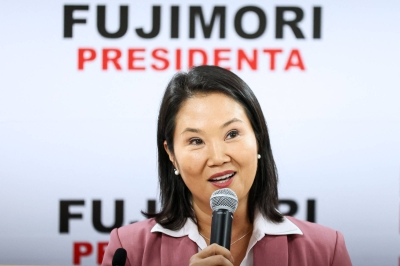
- All covering sources confirm Keiko Fujimori won the presidential election with approximately 50.13% of the vote after 100% of ballots were counted.
- Sources agree this is Fujimori's fourth presidential campaign and that she will be Peru's first female president.
- Multiple sources confirm official proclamation of results is scheduled for July 3.
- Le Monde frames the result through the lens of dynastic autocracy returning; CNA and Straits Times present it as a clean democratic outcome without examining the authoritarian legacy.
- Folha de S.Paulo notes outstanding legal resources that could still affect the outcome; other outlets report the result as effectively final.
Whether outstanding legal challenges to the result will proceed and whether they have any realistic prospect of altering the outcome has not been confirmed in available summaries.
No Latin American outlets beyond Folha de S.Paulo cover the Fujimori family's human rights record or the political implications for regional democratic trends; the dynastic and authoritarian dimension is largely absent from Asian and African coverage.
Election results are confirmed but legal finality is not yet formal; authoritarian legacy is disputed in coverage.
- Outstanding legal challenges acknowledged but 'realistic prospect of altering outcome' is unconfirmed
- Result margin ('approximately 50.13%' / '49,641 votes') is mathematically tight—note precision vs. uncertainty
- Dynastic/authoritarian legacy framing present in Le Monde but absent from Asian outlets—not an omission failure, editorial choice
- Official proclamation scheduled for July 3 but not yet completed per summaries
CNA and Straits Times report Fujimori's win and her vow to restore 'order and hope,' framing it as a straightforward democratic outcome without deeper political analysis.
Deutsche Welle frames the result through the electoral commission's weeks-long ballot review process, emphasising institutional procedural legitimacy rather than political implications.
Japan Times focuses on the dynasty dimension — 'daughter of disgraced late President Alberto Fujimori won by the slimmest of margins' — treating it as a political continuity story.
Korea Herald reports the victory factually, noting Keiko's conservative platform and vow to restore order.
SCMP frames the result as the 'Fujimori dynasty returns to Peru,' positioning the election through a structural political economy lens focused on conservative restoration.
Folha de S.Paulo notes the 100% count giving Keiko 50.13% of the vote and that the outcome still depends on pending legal challenges, maintaining institutional process scrutiny.
Le Monde provides the most analytical profile — 'daughter of an autocrat and first lady, to President of the Republic' — using elite intellectual framing to examine what the dynastic return means for Peruvian democracy.