
Editorial comparison
Most outlets report Fujimori's narrow victory as a democratic outcome; Le Monde and Japan Times explicitly invoke authoritarian legacy; Folha notes outstanding legal challenges.
CNA, Deutsche Welle, Korea Herald, and Straits Times report Fujimori's victory straightforwardly: 'Peruvian political heir Fujimori wins presidency,' 'Keiko Fujimori narrowly wins Peru vote.' Straits Times notes she is 'the first woman ever elected president in Peru,' treating the outcome as a clean democratic result. Le Monde leads with historical context: 'Peru: Keiko Fujimori, from daughter of an autocrat and first lady, to President of the Republic,' explicitly invoking her father's authoritarian rule and her entire life in politics. Japan Times similarly frames her as 'Dynasty daughter Keiko Fujimori wins Peru presidency on fourth go,' with 'the slimmest of margins.'
Folha de S.Paulo uniquely reports that while Peru's electoral body concluded counting with Fujimori at 50.13% of votes, 'the outcome in Peru still depends on resources'—indicating outstanding legal challenges that could affect the final result. SCMP uses the 'dynasty returns' framing but focuses on her campaign promises. Most outlets report the 50,000-vote margin as narrow but effectively final, while Folha presents it as subject to legal contestation.
How each outlet opened the story
CNA
Singapore
Peruvian political heir Fujimori wins presidency
Deutsche Welle
Germany
Peru Fujimori declared winner of election
Japan Times
Japan
Dynasty daughter Keiko Fujimori wins presidency
Korea Herald
South Korea
Peruvian political heir Fujimori wins presidency
Fujimori dynasty returns to Peru narrowly
Straits Times
Singapore
Keiko Fujimori narrowly wins Peru vote
Folha de S.Paulo
Brazil
Keiko obtained 50.13% but outcome depends resources
Coverage map
What coverage agrees on, contests, or leaves unclear.
Broadly agreed
- All covering sources confirm Keiko Fujimori won the presidential election with approximately 50.13% of the vote after 100% of ballots were counted.
- Sources agree this is Fujimori's fourth presidential campaign and that she will be Peru's first female president.
- Multiple sources confirm official proclamation of results is scheduled for July 3.
Contested framing
- Le Monde frames the result through the lens of dynastic autocracy returning; CNA and Straits Times present it as a clean democratic outcome without examining the authoritarian legacy.
- Folha de S.Paulo notes outstanding legal resources that could still affect the outcome; other outlets report the result as effectively final.
Still unclear
Whether outstanding legal challenges to the result will proceed and whether they have any realistic prospect of altering the outcome has not been confirmed in available summaries.
Notable omissions
No Latin American outlets beyond Folha de S.Paulo cover the Fujimori family's human rights record or the political implications for regional democratic trends; the dynastic and authoritarian dimension is largely absent from Asian and African coverage.
Regional framing
How different outlets describe the same story.
Singaporean
CNA and Straits Times report Fujimori's win and her vow to restore 'order and hope,' framing it as a straightforward democratic outcome without deeper political analysis.
German
Deutsche Welle frames the result through the electoral commission's weeks-long ballot review process, emphasising institutional procedural legitimacy rather than political implications.
Japanese
Japan Times focuses on the dynasty dimension — 'daughter of disgraced late President Alberto Fujimori won by the slimmest of margins' — treating it as a political continuity story.
South Korean
Korea Herald reports the victory factually, noting Keiko's conservative platform and vow to restore order.
Chinese
SCMP frames the result as the 'Fujimori dynasty returns to Peru,' positioning the election through a structural political economy lens focused on conservative restoration.
Brazilian
Folha de S.Paulo notes the 100% count giving Keiko 50.13% of the vote and that the outcome still depends on pending legal challenges, maintaining institutional process scrutiny.
French
Le Monde provides the most analytical profile — 'daughter of an autocrat and first lady, to President of the Republic' — using elite intellectual framing to examine what the dynastic return means for Peruvian democracy.
Source trail
Original reporting behind this perspective.
This page maps the coverage. The 9 articles below are the original reports the comparison is drawn from — open them for each publisher's full reporting.
Show 9 source articles
Peru: Fujimori declared winner of presidential election
After weeks of reviewing the ballots, Peru’s electoral commission declared Keiko Fujimori the winner of the presidential election.
Dynasty daughter Keiko Fujimori wins Peru presidency on fourth go
The daughter of disgraced late President Alberto Fujimori won by the slimmest of margins.
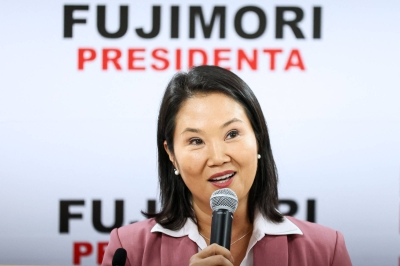
Peruvian political heir Fujimori wins presidency
Peru's conservative president-elect Keiko Fujimori vowed Monday to restore "order and hope" after defeating left-winger Roberto Sanchez in the latest victory for a resurgent Latin American right. Fujimori…
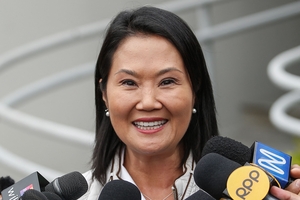
Fujimori dynasty returns to Peru as ex-leader’s daughter wins presidency
Peru’s conservative president-elect Keiko Fujimori vowed to restore “order and hope” as final results showed she narrowly won the election in the latest victory for a resurgent Latin American right. She inherits the…

Keiko Fujimori narrowly wins Peru vote on her fourth bid
The result makes Fujimori the first woman ever elected president in Peru.
With 100% count, Keiko obtained 50.13% of the votes, but the outcome in Peru still depends on resources
Peru's electoral body concluded this Monday (29) the counting of votes for the presidential election, after several weeks in which contested ballots were reviewed. According to the final result of the investigation, the…
Peru: Keiko Fujimori, from daughter of an autocrat and first lady, to President of the Republic
The one who was a presidential candidate four times and spent her entire life in politics becomes the ninth president of Peru in ten years. While his left-wing opponent, Roberto Sanchez, contests the…
Elections in Peru: Counting of minutes reaches 100% and Keiko Fujimori is the elected president by a difference of 49,641 votes against Roberto Sánchez
The National Election Jury plans to officially proclaim the results on Friday, July 3.
