


This view is generated from the clustered articles, so it is best read as a map of coverage rather than a replacement for the source reporting.
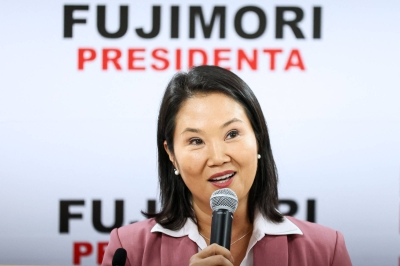
- All covering sources confirm Keiko Fujimori won the presidency by a narrow margin of approximately 49,641 votes.
- Multiple sources confirm she is the first woman elected president of Peru.
- Official proclamation is scheduled for July 3 according to El Tiempo.
- Le Monde foregrounds her father's autocratic legacy as the defining context; CNA and Korea Herald report her win without engaging that history.
- Folha de S.Paulo emphasises ongoing legal resource challenges; Singaporean and German outlets treat the result as settled.
Whether legal challenges filed against the result will delay or alter the official proclamation on July 3 has not been resolved in available summaries.
African and Middle Eastern outlets are entirely absent from Peru election coverage, reflecting its regional rather than global editorial salience.
The narrow victory margin is established; authoritarian legacy context and legal challenge outcomes remain live and contested.
- Consensus states 'all sources confirm' the narrow 49,641-vote margin, but available summaries show only El Tiempo provides the precise number—single-source consensus is weak.
- Legal challenges are listed as Unknowns ('whether legal challenges will delay proclamation'), yet the June 30 deadline is presented in 'Why it matters' as an established fact—unclear whether this deadline is firm.
- Le Monde's engagement with 'autocratic legacy' framing is flagged as contested, but other outlets' *avoidance* of that framing is presented as neutral reporting rather than a choice.
- The 'first woman elected president' claim requires verification across sources (summaries confirm this).
CNA reports the result factually—Fujimori vowing to restore 'order and hope'—without historical contextualisation of her father's authoritarian legacy.
Deutsche Welle frames the win as a 'declared winner' after weeks of ballot review, emphasising the electoral process integrity dimension.
Japan Times focuses on the dynastic dimension ('dynasty daughter') and the slim margin, treating it as a political resilience story on her fourth bid.
Korea Herald reports Fujimori vowing to restore 'order and hope' after defeating Roberto Sánchez, framing this through conservative political normalisation.
Folha de S.Paulo notes the 100% count giving Fujimori 50.13% but that the outcome still depends on legal challenges, maintaining its institutional critique and uncertainty framing.
SCMP highlights that Fujimori vowed to restore 'order and hope' as final results showed a narrow win, noting she is Peru's first elected woman president.
Straits Times frames it as Fujimori's 'fourth bid' and the first woman elected president of Peru, leading with the historic gender milestone.
Le Monde profiles Fujimori as 'daughter of an autocrat and first lady, to President of the Republic'—emphasising the authoritarian lineage through its elite intellectual analytical lens.
El Tiempo provides the most detailed Latin American coverage, tracking the 100% vote count, the 49,641-vote margin, and the official proclamation timeline.