While Trump celebrated a ruling expanding presidential power to remove and replace regulators, other decisions were major setbacks.
How the world covered this
Read the editorial comparison
Prose synthesis of how each outlet framed the story, with side-by-side outlet quotes and divergence notes.
15 articles from 9 sources
01

02
The decision, seen as a win for central bank independence, sends the fight over removal back to the lower courts.

03
The court reversed a 1935 precedent restricting presidential powers to remove heads of independent agencies. However, it barred Trump from firing Fed Governor Lisa Cook, preserving the central bank's independence.
04
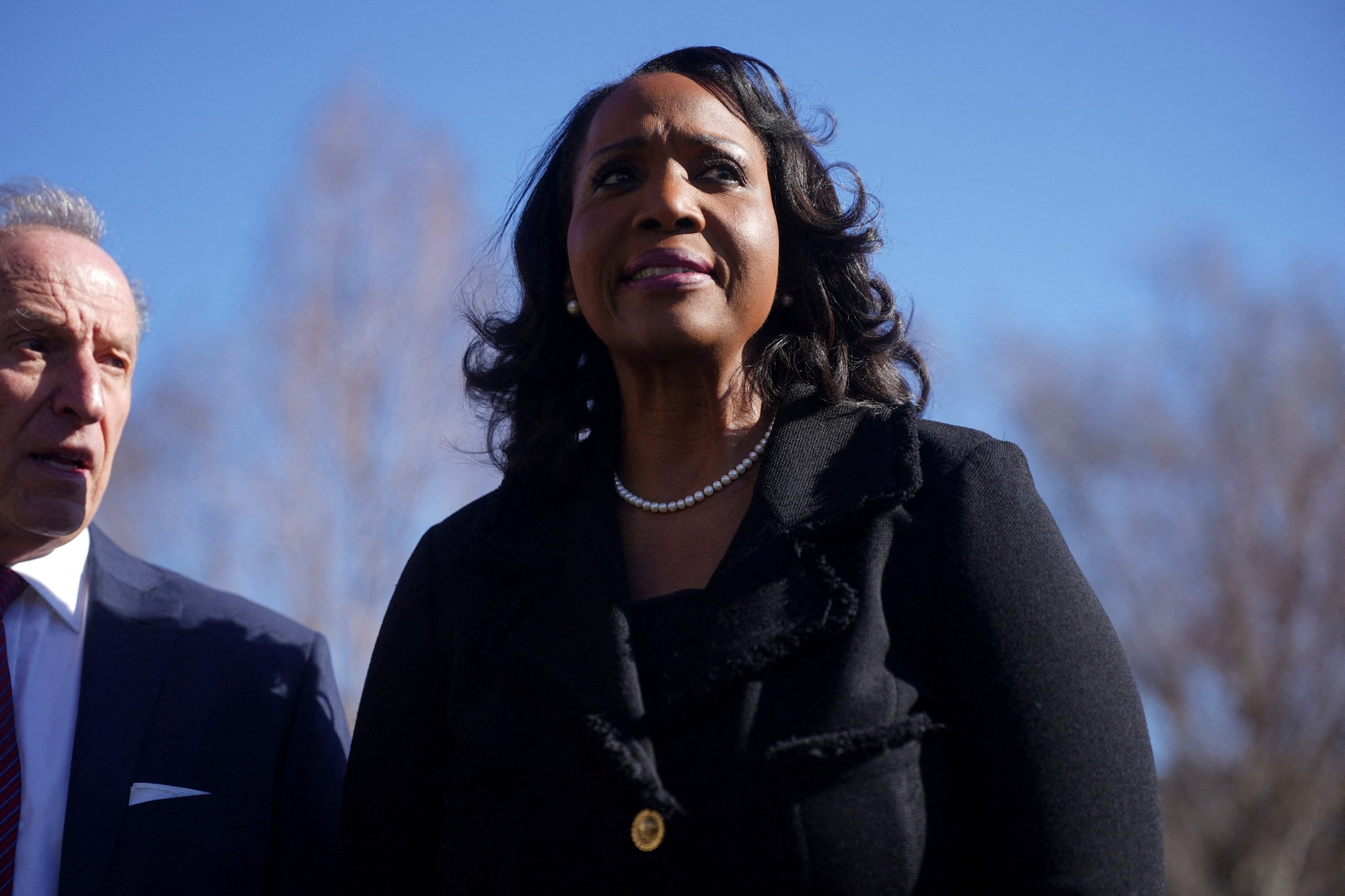
The U.S. Supreme Court ruled narrowly on Monday to block President Donald Trump from being able to immediately fire Federal Reserve (Fed) Governor Lisa Cook over mortgage fraud all...
05
The US Supreme Court refused on Monday to let Donald Trump fire Federal Reserve Governor Lisa Cook as it stood firm to preserve the central bank's cherished independence against an unprecedented challenge by the…
06
The US Supreme Court on Monday fortified President Donald Trump’s powers to fire members of independent government agencies, but carved out protections for the Federal Reserve by blocking the firing of Governor Lisa…

07
The Supreme Court on Monday rejected a push by President Donald Trump to throw out a jury’s finding that he sexually abused the writer E. Jean Carroll at a New York City department store in the mid-1990s and later…

08
John Roberts fought for decades to overturn Humphrey’s Executor CNN
09
The Supreme Court handed Trump an election case defeat. Is a bigger win for him coming?
10
Takeaways from the Supreme Court’s decisions expanding Trump’s firing power but preserving Fed for now CNN
11
Ty Cobb on Supreme Court's E. Jean Carroll ruling: 'this is one of three women that he has lied openly about' CNN
12
Police must obtain a warrant when seeking sweep of cellphone location data, Supreme Court rules CNN
13
La Cour suprême américaine autorise Donald Trump à couper les têtes dans l’administration, à l’exception de la Fed
With a conservative majority, the highest judicial authority in the United States gave President Trump, Monday, June 29, the power to dismiss heads of independent agencies as he wishes, except those of the...
14
In May 2023, the federal civil court in Manhattan found Mr. Trump liable for a "sexual assault" on E.


AI read
What the coverage agrees on, and where it splits
This view is generated from the clustered articles, so it is best read as a map of coverage rather than a replacement for the source reporting.
Broadly agreed
- All covering sources confirm the Supreme Court reversed the 1935 Humphrey's Executor precedent, expanding Trump's power to fire heads of independent agencies.
- Multiple sources confirm the Court specifically blocked Trump from immediately firing Federal Reserve Governor Lisa Cook.
- The Court also rejected Trump's push to throw out the E. Jean Carroll sexual abuse verdict.
Contested framing
- BBC frames the day as net negative for Trump ('one win, three defeats'); French Le Monde and SCMP frame the ruling primarily as a power expansion, treating the Fed carve-out as secondary.
- CNN provides granular case-by-case analysis treating each ruling as distinct; Deutsche Welle frames the aggregate outcome as a significant structural shift in US institutional architecture.
Still unclear
The full downstream consequences of the Humphrey's Executor reversal for specific agencies—the FTC, SEC, NLRB—and whether Trump will move immediately to fire their heads has not been confirmed in available summaries.
Notable omissions
TASS and People's Daily are absent from US Supreme Court coverage, consistent with their patterns of avoiding Western institutional accountability analysis that could be applied analogously to their own systems.
Quality check
The Humphrey's Executor precedent is reversed (fact); downstream agency impacts and Trump's intentions remain unconfirmed.
- The 'Why it matters' section claims the Humphrey's Executor reversal has 'sweeping long-term implications' but Unknowns state that 'full downstream consequences...has not been confirmed'—overstated certainty.
- BBC's framing of 'one win, three defeats' is cited as a contested interpretation, but it's actually a reasonable aggregate characterization; the real contest is about whether power expansion or constraint matters more, not about the accuracy of the count.
- The claim that Trump 'will' move immediately to fire agency heads is speculative; summaries show only discussion of whether he *can*, not intentions.
- TASS/People's Daily omission explanation is interpretive (avoiding accountability analysis) rather than factually grounded.
Review confidence: 80%
Signal strength
4/5
Narrative divergence
9
Sources compared
1
Days in coverage
How each outlet frames this story
Divergence
4/5
Narrative Divergence
How differently the sources covering this story frame it — measured by tone, emphasis, and what each outlet chooses to highlight or omit.
1 — Sources frame the story almost identically
2 — Minor differences in tone or emphasis
3 — Noticeable differences; some outlets highlight what others omit
4 — Stark contrasts; conflicting narratives
5 — Sources tell fundamentally different stories
British
BBC frames the day as 'one big win and three defeats' for Trump, emphasising institutional balance and credibility examination of which specific powers were expanded and which blocked.
American
CNN provides multiple analytical pieces on the Supreme Court decisions—covering the Humphrey's Executor reversal, the E. Jean Carroll ruling, cellphone location data warrant requirements, and mail-in ballot grace periods—framing Trump's day as a mixed legal outcome.
French
Le Monde frames the Supreme Court decision as authorising Trump to 'cut heads in the administration, except the Fed,' emphasising the presidential power expansion through elite institutional analysis.
German
Deutsche Welle covers the Supreme Court's expansion of Trump's firing powers as a significant US institutional shift, consistent with its de-escalatory framing that emphasises sustainability questions.
Indian
The Hindu reports the Supreme Court upholding the $5 million Trump sex assault judgment and Trump's housing bill comments, maintaining a South Asia-adjacent institutional accountability lens.
South Korean
Korea Herald reports the Supreme Court rejecting Trump's attempt to fire the Fed's Cook while expanding presidential powers, framing this through alliance-positive US institutional stability.
Chinese
SCMP frames the Supreme Court as 'boosting Trump's power' while the Fed's Cook keeps her job, emphasising the structural institutional balance from a business-strategic perspective.
Emirati
The National reports the Supreme Court increased Trump's powers but rejected his bid to overturn the sexual abuse verdict, presenting both outcomes neutrally.