WASHINGTON/DUBAI, July 27 (Reuters) - President Donald Trump said on Monday the United States was having “good talks” with Iran and there was a chance of a deal over their conflict, but he warned that U.S. strikes would…
How the world covered this
Read the editorial comparison
Prose synthesis of how each outlet framed the story, with side-by-side outlet quotes and divergence notes.
21 articles from 16 sources
01

02
Tehran had earlier denied that there were any talks with the U.S. to end the conflict.
03
الأهداف تنفد والوسطاء يتحركون.. لماذا أوقف ترمب قصف إيران؟
US President Donald Trump threatened to resume bombing Iran if communications failed, while Iranian Foreign Ministry spokesman Ismail Baghaei denied the existence of direct negotiations, amid a move by mediators regarding the Strait of Hormuz.
04
Donald Trump ordena detener todos los ataques de Estados Unidos contra Irán para negociar un acuerdo para poner fin a la guerra
The president warned that he will resume attacks if talks fail. Tehran, for its part, denied any ongoing dialogue.

05
Irã rejeita negociar após fracasso de ataques de Trump, que diz conversar
Although Donald Trump suspended targeted attacks on Iran over the weekend, after being warned by the United States military leadership that the campaign was not having any effect, the theocracy's government...
06
Iran has not asked to resume talks with the US, Foreign Ministry spokesperson Esmaeil Baghaei said. He added that the Strait of Hormuz remains closed and that messages are being relayed through mediators.
07
Iran and the United States held their fire on Monday, handing Gulf shipping and the oil industry a respite from missile strikes as Donald Trump’s UN envoy said the president was “giving talks some space”. Tehran said it…

08
AFTER two weeks of escalating violence, the US has halted its strikes on Iran , with Tehran also silencing it guns. But rather than any newfound belief in the benefits of peace, the Trump administration may have made…

10
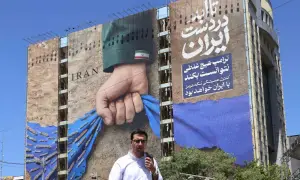
U.S. President Donald Trump said Monday that Washington is engaged in 'very deep talks' with Iran but warned that the window for diplomacy is rapidly closing, saying the United Sta...

11
Iran threatens to expand war if US resumes strikes, which it says Israel is pushing for The Times of Israel
12
イラン 米が攻撃停止なら報復停止
13
米大統領 イラン空爆中止を指示か
14
Netanyahu before takeoff: Iran will be focus of conversation with Trump The Times of Israel
15
Netanyahu, amid reported Iranian security threat, takes off quietly for Trump meeting The Times of Israel
16
Donald Trump has warned that US attacks will resume if negotiations do not deliver agreement

17
Iran's Foreign Minister had the call with his Omani and Saudi counterparts.
18
Under the proposal, Iran would not exercise sole control of the vital waterway.
19
EN DIRECT, guerre au Moyen-Orient : des échanges diplomatiques entre l’Iran, Oman et l’Arabie saoudite après plusieurs jours consécutifs d’accalmie
The Iranian, Omani and Saudi foreign ministers discussed the state of the Strait of Hormuz, and called for cooperation with the United States, Iranian media report. Donald Trump said he had decided to…
20
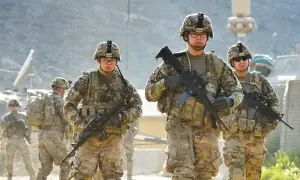
AT least 624 US military service members have been wounded since President Donald Trump ordered strikes against Iran in February, according to the Pentagon’s most recent update on 25 July, BBC News reported. Among those…
21
The US has fired thousands of hard-to-replace missiles during its war with Iran. We unpack whether its "arsenal of freedom" is perilously low.

AI read
What the coverage agrees on, and where it splits
This view is generated from the clustered articles, so it is best read as a map of coverage rather than a replacement for the source reporting.
Broadly agreed
- All covering sources confirm that the US paused strikes against Iran around July 26-27, creating a temporary ceasefire.
- Multiple sources confirm Iran's foreign ministry publicly denied any direct ongoing dialogue with the US even as Trump claimed 'good talks' were underway.
- Sources broadly agree that Oman and Saudi Arabia are playing active diplomatic mediation roles, including a proposal for regional Hormuz management.
Contested framing
- BBC and The Hindu report Iran denies direct talks; CNN and Yahoo Japan report Trump claims 'good talks' are happening—a direct factual contradiction neither side has resolved.
- Daily Sabah frames the war pause as driven by institutional accountability failure measured in collapsing US public support; Al Jazeera Arabic frames it as driven by running out of viable targets—two incompatible causal explanations.
- Times of Israel reports Israel is allegedly pushing the US to resume strikes; Iranian officials publicly accuse Israel of the same; neither claim has been confirmed by Washington.
Still unclear
Whether any direct US-Iran diplomatic channel exists, what the specific terms of Oman's Hormuz management proposal contain, and whether Trump will resume strikes if talks stall remain unverified from available summaries.
Notable omissions
People's Daily and TASS provide no substantive analysis of the ceasefire dynamics; Russian state media omits any framing of Iran's vulnerability or the US military depletion debate that Western outlets cover prominently.
Quality check
Read as preliminary reporting on a fluid situation with unresolved contradictions between key parties; avoid treating either side's claims as settled fact.
- Direct factual contradiction: BBC/Hindu report Iran denies talks; CNN/Yahoo Japan report Trump claims talks happening—neither side has resolved this
- Two incompatible causal explanations for ceasefire (US public support collapse vs. running out of targets) both unverified
- Israel-US strike resumption claims unconfirmed from Washington
- People's Daily and TASS provide no substantive analysis; Russian framing of Iran vulnerability absent
Review confidence: 65%
Signal strength
5/5
Narrative divergence
16
Sources compared
2
Days in coverage
↗ fracturing
How each outlet frames this story
Divergence
5/5
Narrative Divergence
How differently the sources covering this story frame it — measured by tone, emphasis, and what each outlet chooses to highlight or omit.
1 — Sources frame the story almost identically
2 — Minor differences in tone or emphasis
3 — Noticeable differences; some outlets highlight what others omit
4 — Stark contrasts; conflicting narratives
5 — Sources tell fundamentally different stories
British
BBC frames the pause as a window for diplomacy while underscoring uncertainty, noting Trump says talks are 'good' while Iran publicly denies any direct dialogue is underway.
Indian
The Hindu frames the ceasefire as a conundrum for Trump, emphasising the gap between stated diplomatic optimism and Iran's public denial of talks, without aligning with either Washington or Tehran.
Turkish
Daily Sabah frames US public support collapsing as an institutional accountability failure, noting only one-in-three Americans backs the war and questioning decision-maker credibility.
German
Deutsche Welle emphasises endurance framing—whether Iran war tensions can be sustained economically—positioning the ceasefire as an energy infrastructure relief rather than a military triumph.
Qatari
Al Jazeera Arabic frames Trump's bombing pause through the lens of diminishing military targets and mediator movement, asking why Trump stopped rather than crediting diplomacy.
Brazilian
Folha de S.Paulo highlights Iran's public rejection of negotiations alongside Trump's suspension of strikes, emphasising the gap between US and Iranian public narratives.
Emirati
The National focuses on Gulf-region consequences—Saudi drone intercepts, Lebanon oil routes, and Iraq probe—framing the ceasefire as a regional collective security moment rather than a bilateral US-Iran matter.
Israeli
Times of Israel frames the ceasefire through Israeli security stakes, reporting Iran threatened to expand war if strikes resume and that Israel is allegedly pushing the US to continue attacks.
Irish
Irish Times reports Oman presented Iran with a plan for regional management of the Strait of Hormuz under which Iran would not exercise sole control, framing diplomacy through multilateral institutional mechanism.
Japanese
Yahoo Japan provides brief factual updates on Trump's threat to attack Iran again if talks break down, foregrounding energy price and oil supply implications for Japan.
Singaporean
Straits Times focuses on Hormuz Strait diplomatic signals—Iran's calls with Oman and Saudi Arabia and a proposed regional management mechanism—analysed through shipping route vulnerability.
Pakistani
Dawn's editorial frames the lull as a precarious pause rather than peace, warning the ceasefire could collapse and noting over 600 US troops have been wounded since the war began.
Colombian
El Tiempo frames the ceasefire as a US institutional decision-making accountability story, positioning Trump's order to halt attacks as an executive responsibility subject to civic scrutiny.
South African
Daily Maverick reports Trump says US and Tehran are having 'good talks' while drones continue hitting Iran's neighbours, framing this as a concealment-exposure tension between diplomatic messaging and ground reality.