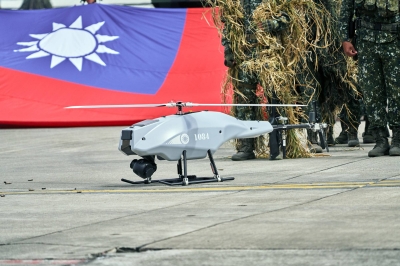
The debate is being closely watched because use of unmanned systems elsewhere has shown how the technology can be leveraged to defend against larger adversaries.
How the world covered this
Read the editorial comparison
Prose synthesis of how each outlet framed the story, with side-by-side outlet quotes and divergence notes.
3 articles from 1 source
01
02
The raids mark an expansion of Taiwan's first public crackdown on artificial intelligence chip diversion after years of pressure from Washington.

03
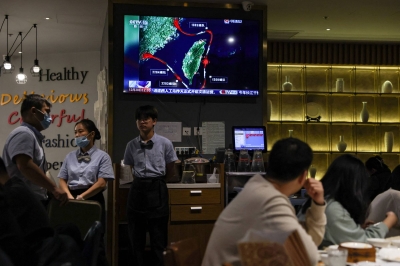
Beijing says the talks infringe on maritime rights it claims through Taiwan and sees discussions as part of a broader effort by Manila and Tokyo to deepen strategic coordination.
AI read
What the coverage agrees on, and where it splits
This view is generated from the clustered articles, so it is best read as a map of coverage rather than a replacement for the source reporting.
Broadly agreed
- Japan Times confirms Taiwan authorities raided Super Micro facilities as part of a widening AI chip smuggling probe.
- Japan Times confirms the Taiwan opposition has proposed a $7.5 billion drone programme as an alternative to the government's stalled bid.
Contested framing
- Japan Times frames the Japan-Philippines maritime talks as Beijing seeing them as part of a broader encirclement effort; no Chinese outlet provides a counterpoint in this cycle.
Still unclear
Whether the Super Micro raids will result in criminal charges and how many chips were diverted to China or Russia has not been confirmed in available summaries.
Notable omissions
SCMP, which regularly covers Taiwan tech and chip supply chain stories, does not appear to have covered the Super Micro raids or drone debate in this cycle.
Quality check
Raids and drone proposal are confirmed; criminal outcomes, chip diversion scale, and strategic significance of maritime talks remain unconfirmed.
- The three separate developments (drone proposal, Super Micro raids, Japan-Philippines talks) are bundled together, but the summaries do not establish a coherent connection beyond 'all feed into tech competition.'
- Whether the drone programme is actually competing with government procurement or is opposition political positioning is not clarified—'stalled bid' suggests government failure, but scope unclear.
- Super Micro raid details are sparse: criminal charges uncertain, chip diversion scale unconfirmed, victims unidentified.
- The Japan-Philippines maritime talks framing (Beijing sees encirclement) is sourced to Japan Times but no Chinese outlet provides counterpoint in this cycle, creating one-sided framing.
Review confidence: 75%
Signal strength
3/5
Narrative divergence
1
Sources compared
1
Days in coverage
How each outlet frames this story
Divergence
3/5
Narrative Divergence
How differently the sources covering this story frame it — measured by tone, emphasis, and what each outlet chooses to highlight or omit.
1 — Sources frame the story almost identically
2 — Minor differences in tone or emphasis
3 — Noticeable differences; some outlets highlight what others omit
4 — Stark contrasts; conflicting narratives
5 — Sources tell fundamentally different stories
Japanese
Japan Times treats all three stories through the lens of how they affect China's strategic calculations—the drone debate as a deterrence signal, the chip raids as part of broader US-led export control enforcement, and maritime talks as a component of China's regional encirclement concerns.