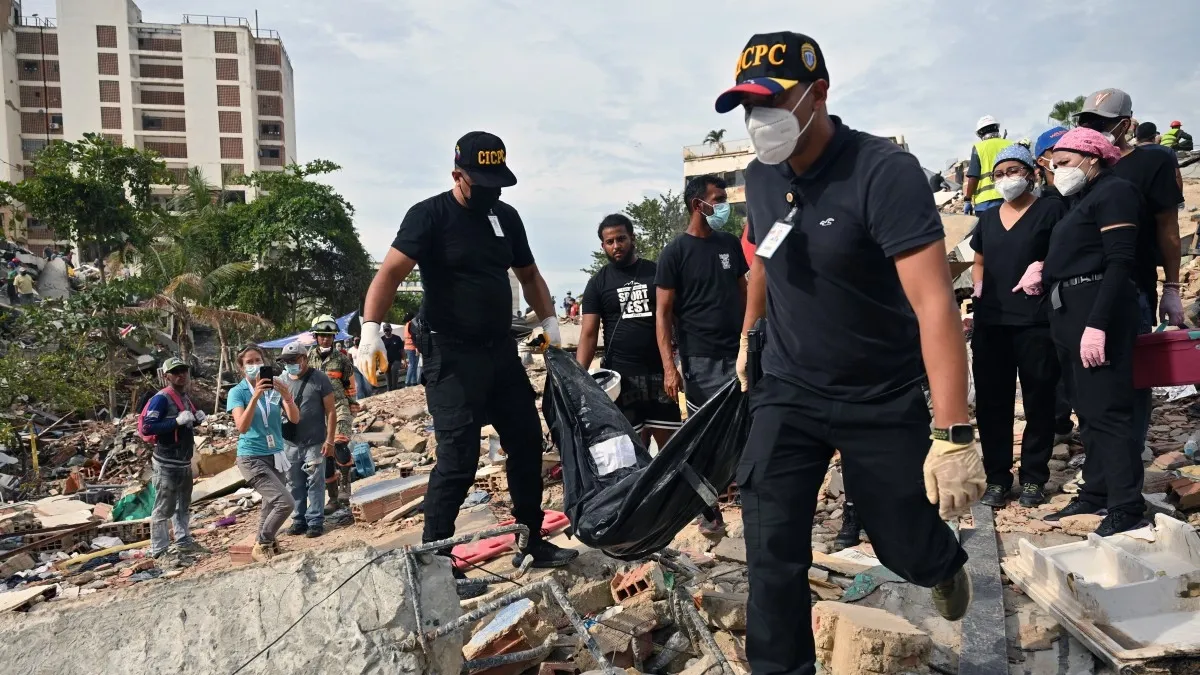
The disaster has overwhelmed local services, with bodies put outside or in tents for identification.
How the world covered this
Read the editorial comparison
Prose synthesis of how each outlet framed the story, with side-by-side outlet quotes and divergence notes.
22 articles from 8 sources
01

02
A nueve días del terremoto, Venezuela se enfoca en la asistencia y el rescate de cadáveres: 'Hasta que no recupere los cuerpos, no estaré tranquilo'
The most recent official balance this Friday raised the number of deaths to 2,645. The situation is aggravated by the handling of the corpses.
03
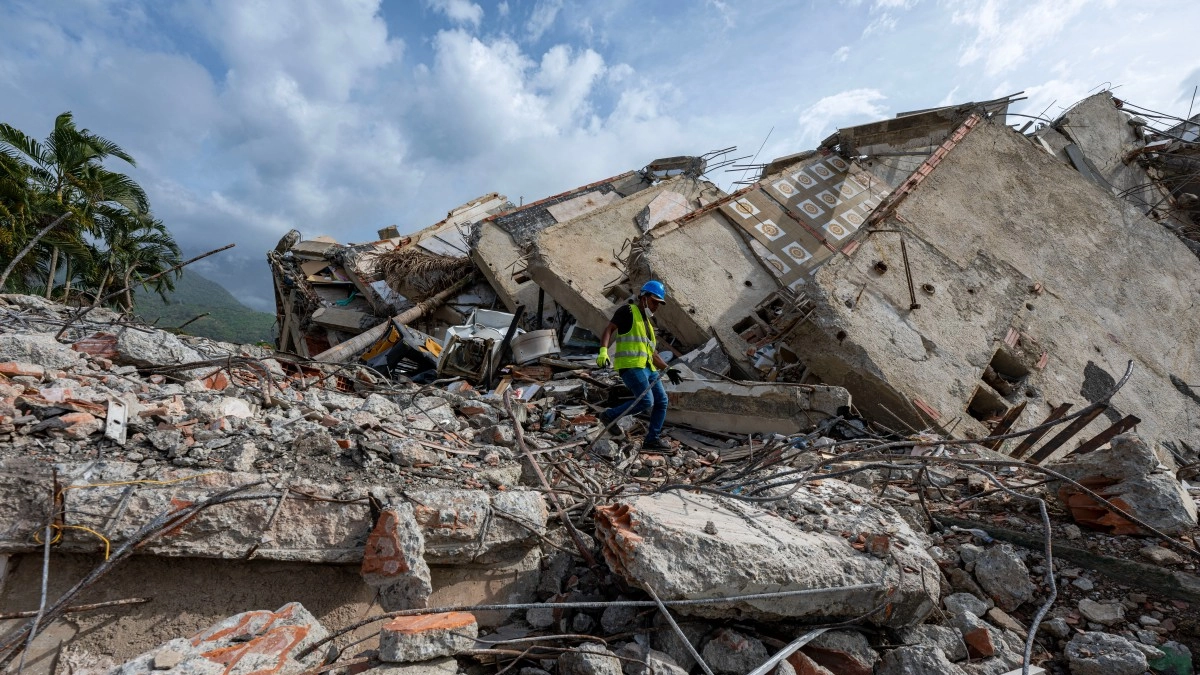
Nuevo balance este 3 de julio tras los terremotos en Venezuela: suben a 2.645 los muertos y a 12.666 los heridos; aquí cifras de rescates y réplicas
According to authorities, 6,462 people were rescued from 885 collapsed buildings in the country.
04
Equipo de María Corina Machado denuncia la desaparición de 'El Topo de La Guaira', voluntario que criticó la gestión del terremoto en Venezuela
The man last seen on the 1st. July while participating in rescue efforts in the OPP-26 Caribe, in La Guaira.

05
Caracas vive dividida entre normalidade e vidas arruinadas por terremotos
At first glance, Caracas, the capital of Venezuela located among the mountains and transformed into a metropolis in the 1950s, operates normally. There is no shortage.
06
Equipes de São Paulo se juntam a buscas por pai de brasileiro que desapareceu após terremoto na Venezuela
Teams from Brazil working in areas hit by the devastating earthquakes in Venezuela joined, this Friday (3), a search operation following requests made by a Brazilian-Venezuelan man looking for his father…
07
María Corina diz que seu retorno estabilizaria Venezuela após terremotos
Exiled from Venezuela since the end of last year, opposition leader María Corina Machado stated this Friday (3) that her return would contribute to the stabilization of the country after the twin earthquakes on June 24...
08
Sobe para 2.645 o número de mortes confirmadas em terremotos na Venezuela
Nine days after the twin earthquakes that devastated regions in Venezuela, the country's regime reported this Friday (3) that the number of confirmed deaths as a result of the earthquakes had increased to 2,645. Still according to…
09
Falta de diesel dificulta resgates após terremotos na Venezuela
Excavators and cranes have stopped operating at some rescue sites in Venezuela as fuel shortages have hampered recovery efforts after last week's earthquake, leaving teams unable to…
10
The fallout from Venezuela’s powerful twin quakes has evolved into a major test for acting President Delcy Rodriguez, sending her scrambling to prevent the humanitarian disaster from becoming a political one as her…

11
Venezuela’s Interim President Delcy Rodriguez on Thursday rejected allegations that her government reacted too slowly to destruction caused by two earthquakes which killed more than 2,000 people, after days of…

12
Ms. Rodriguez blamed public outrage over the government’s response on what she called “narratives manufactured in propaganda laboratories”

13
The Tahiti Residence has highlighted how desperation is fraying the nerves of survivors and relatives.
14
At the counter where hamburgers were once served, donated arepas and sandwiches are now handed out.
15
El emotivo mensaje de Cristiano Ronaldo para cumplir el sueño de un niño herido tras doble terremoto en Venezuela: 'Te quiero invitar a un partido'
The Portugal player spoke out in the midst of the emergency that the country is facing due to the strong earthquakes.

16
De restaurante a hospital: un McDonald’s en La Guaira atiende a damnificados y mascotas heridas tras los fuertes terremotos en Venezuela
Volunteers adapted a fast food establishment to provide first aid.

17
Nearly half of respondents to a poll conducted after the disaster said that holding new elections is more urgent than rebuilding.
18
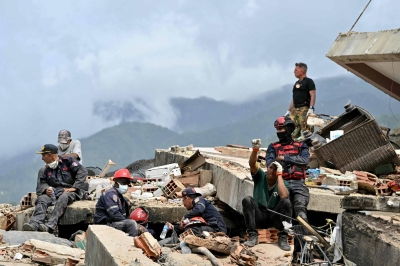
Equipo de María Corina Machado denuncia la desaparición de 'El Topo de La Guaira', voluntario que criticó la gestión del terremoto en Venezuela
The man last seen on the 1st. July while participating in rescue efforts in the OPP-26 Caribe, in La Guaira.
19
WhatsApp se convierte en la esperanza de miles de familias que buscan desaparecidos en Venezuela; otras plataformas ya localizaron a 78.000 personas
In the absence of efficient official channels, WhatsApp and other initiatives became the tools to report missing people.

20
Delcy Rodríguez reveló que tiene un problema de salud y aseguró que eso no le impedirá afrontar la catástrofe por el doble terremoto en Venezuela
The statements were made this Thursday, July 2, during a press conference in which he presented an assessment of the emergency in the country.

21
Delcy Rodríguez asegura que continúa la fase de rescate en Venezuela mientras se activa fondo de 200 millones de dólares del FMI para reconstrucción
The person in charge of Venezuela denied that her government's response to the double earthquake of June 24 has been slow, as citizens denounce.

22
بالفيديو.. ميسي يوجه رسالة تضامن قوية لفنزويلا وسط أجواء مونديال 2026
Lionel Messi affirms his solidarity with Venezuela in a humanitarian message that carries the power of hope and support for the affected areas.
AI read
What the coverage agrees on, and where it splits
This view is generated from the clustered articles, so it is best read as a map of coverage rather than a replacement for the source reporting.
Broadly agreed
- All covering sources confirm the official death toll reached 2,645 with 12,666 injured as of July 3, nine days after the earthquake.
- Multiple sources confirm rescue operations are hampered by fuel shortages stopping heavy machinery at collapse sites.
Contested framing
- Venezuelan government sources (via SCMP and The Hindu) blame 'manufactured narratives' for public anger over the response; BBC and Folha frame the overwhelmed morgues and fuel shortages as documented institutional failures.
- Japan Times highlights polling showing Venezuelans prioritising elections over rebuilding; Colombian El Tiempo focuses on daily rescue operations — different emphases on political vs. humanitarian urgency.
Still unclear
The actual number of missing persons remains disputed, with UN estimates suggesting official figures are a significant undercount but no independent verification is confirmed.
Notable omissions
The Venezuelan government's stated justification for its response pace is largely absent from Western humanitarian coverage; conversely, the detailed infrastructure collapse data is absent from coverage that focuses on political opposition manoeuvring.
Quality check
Official death toll likely understates true impact; government and opposition framings are presented separately without synthesis.
- Death toll figure (2,645) is confirmed consensus but UN estimates suggest significant undercount; note explicitly that missing persons count is disputed.
- Government 'manufactured narratives' defense is characterized as blame-shifting by BBC/Folha but not examined substantively—Venezuelan government justification largely absent.
- Infrastructure collapse data detailed in some sources but absent from opposition-focused coverage—comparison is incomplete on institutional response scope.
- Polling data cited (elections prioritized over rebuilding) sourced only to Japan Times; no corroboration of public sentiment data.
Review confidence: 81%
Signal strength
3/5
Narrative divergence
8
Sources compared
1
Days in coverage
How each outlet frames this story
Divergence
3/5
Narrative Divergence
How differently the sources covering this story frame it — measured by tone, emphasis, and what each outlet chooses to highlight or omit.
1 — Sources frame the story almost identically
2 — Minor differences in tone or emphasis
3 — Noticeable differences; some outlets highlight what others omit
4 — Stark contrasts; conflicting narratives
5 — Sources tell fundamentally different stories
British
BBC foregrounds anguished families identifying victims at makeshift morgues, emphasising institutional overwhelm and the human cost of collapsed infrastructure rather than political framing.
Brazilian
Folha de S.Paulo uses personal narratives of Brazilian missing persons and rescue teams to interrogate institutional failures, including fuel shortages stopping excavators and the regime's inadequate response.
Indian
The Hindu covers the political fallout — opposition leader María Corina Machado seeking return — and the government's attempts to blame 'manufactured propaganda' for public anger.
Chinese
SCMP frames the disaster as a political test for acting President Delcy Rodriguez, examining her institutional credibility under pressure.
Colombian
El Tiempo provides rolling daily death toll updates, profiles of improvised first aid at a McDonald's restaurant, and Cristiano Ronaldo's solidarity message — combining institutional reporting with human interest.
Japanese
Japan Times reports a poll showing nearly half of Venezuelans now say new elections are more urgent than rebuilding — linking disaster governance failure to democratic legitimacy.
Singaporean
Straits Times covers the psychological desperation of survivors clinging to rumours of life under the rubble, emphasising humanitarian framing over political analysis.
Qatari
Al Jazeera Arabic covers Messi's solidarity message from the World Cup, displacing institutional analysis in favour of celebrity humanitarian framing consistent with its sports/entertainment dominance pattern.