It comes after the US Supreme Court struck down many of US President Donald Trump's previous duties in February.
How the world covered this
Read the editorial comparison
Prose synthesis of how each outlet framed the story, with side-by-side outlet quotes and divergence notes.
9 articles from 8 sources
01

02
米 日本に12.5%の追加関税を検討
03
The action follows investigations launched against 60 countries over what the USTR described as their failure to impose and effectively enforce bans on imports made with forced labour

04
Droits de douane : la « lutte contre le travail forcé », dernière manœuvre de Donald Trump pour contourner la décision de la Cour suprême
The Trump administration intends to impose new taxes on products from around sixty countries accused of being too lax towards forced labor. An attempt to escape his obligation to repay…
05
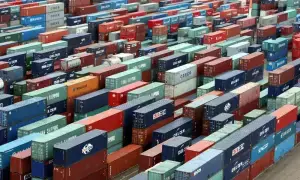
KARACHI: Representatives of exporters are confident that a proposal under consideration in Washington to impose 10 per cent additional duties on imports would not hurt Pakistan’s exports. The US Trade Representative…
06
Nueva ofensiva arancelaria de Trump podría golpear a Colombia: propuesta de EE. UU. elevaría al 12,5 % la tarifa sobre exportaciones nacionales
Washington included the country on a list of States that, according to its assessment, do not have mechanisms to prevent goods produced with forced labor.

07
Estas son las nuevas preguntas que podrían hacerle en su proceso de green card en Estados Unidos: miles colombianos se verían afectados
Although immigration officials will maintain the authority to decide on a case-by-case basis, the risk is that the responses will be different.

08
Brazilian President Luiz Inacio Lula da Silva thanked China for clearing the country’s beef of foot-and-mouth disease and fired a barb at US President Donald Trump, saying “I will sell to someone else”, after Washington…

09
It may prove difficult for the EU to reconcile the enthusiasm of member states led by France with the reticence of Germany and Spain

AI read
What the coverage agrees on, and where it splits
This view is generated from the clustered articles, so it is best read as a map of coverage rather than a replacement for the source reporting.
Broadly agreed
- All covering sources confirm the US proposed additional tariffs of approximately 12.5% on imports from approximately 60 countries based on forced labor investigation findings.
- Multiple sources confirm the action follows the Supreme Court invalidating earlier Trump tariff mechanisms in February 2026.
Contested framing
- Le Monde frames the forced labor tariffs as a deliberate executive maneuver to circumvent the Supreme Court, while BBC reports them as a policy response to forced labor concerns without imputing strategic legal circumvention.
- Brazil's Folha de S.Paulo frames Lula's response as assertive trade independence, while Colombian El Tiempo treats the tariffs as a threat requiring defensive diplomatic engagement.
Still unclear
Whether the forced labor tariff mechanism will survive legal challenge, and which of the 60 targeted countries will face the full 12.5% rate versus negotiated exemptions, remains unconfirmed.
Notable omissions
African countries affected by the proposed tariffs are entirely absent from coverage despite Premium Times and Daily Nation being in the source set; the African trade dimension is wholly missing.
Quality check
Read as proposed tariff framework with legal, geographic, and implementation uncertainties across 60 target countries.
- Critical omission: African impact entirely absent despite African outlets (Premium Times, Daily Nation) in source set—geographic bias toward Asia and Latin America
- Forced labor tariff legal vulnerability is disputed (Le Monde sees circumvention; BBC sees policy response) but remains untested
- Which of 60 countries faces full 12.5% vs. negotiated exemptions is unconfirmed—aggregation masks country-level variation
- Brazil and Colombia framings diverge on whether tariffs warrant defensive diplomacy (Colombia) vs. assertive independence (Brazil)
Review confidence: 70%
Signal strength
3/5
Narrative divergence
8
Sources compared
1
Days in coverage
How each outlet frames this story
Divergence
3/5
Narrative Divergence
How differently the sources covering this story frame it — measured by tone, emphasis, and what each outlet chooses to highlight or omit.
1 — Sources frame the story almost identically
2 — Minor differences in tone or emphasis
3 — Noticeable differences; some outlets highlight what others omit
4 — Stark contrasts; conflicting narratives
5 — Sources tell fundamentally different stories
British
BBC reports new US tariffs framed around forced labor concerns, noting they come after the Supreme Court struck down many previous Trump duties in February.
Japanese
Yahoo Japan reports the US is considering additional 12.5% tariffs on Japan, framing it as a direct threat to Japanese export competitiveness.
Indian
The Hindu reports the US proposed 12.5% tariffs on India and other countries, with the Indian government saying it 'remains engaged' with Washington, maintaining a strategic autonomy framing.
French
Le Monde frames the forced labor tariff as Trump's 'latest maneuver to circumvent the Supreme Court decision', emphasizing the executive institutional workaround dimension.
Pakistani
Dawn reports Pakistani exporters are confident a proposed 10% US duty will have no significant impact on their exports, reflecting a sector-level pragmatic assessment.
Colombian
El Tiempo warns the tariff proposal could hit Colombia, noting Washington included Colombia on a list of states lacking mechanisms to prevent goods from countries with forced labor from entering US markets.
Irish
Irish Times frames EU-China trade war tensions as potentially difficult for the EU to reconcile French enthusiasm with German reticence, emphasizing intra-EU institutional divergence.