The countries reject "any attempt, by any state or non-state actor, to hold Lebanon's future hostage", the US State Department says.
How the world covered this
Read the editorial comparison
Prose synthesis of how each outlet framed the story, with side-by-side outlet quotes and divergence notes.
20 articles from 13 sources
01

02
The agreement comes as hostilities between Israel and Lebanese militants Hezbollah have intensified in recent weeks. It is unclear if the renewed truce will affect stalled talks between the US and Iran.
03
June 3 (Reuters) - Lebanon and Israel said on Wednesday that they had agreed to the implementation of a ceasefire following negotiations in Washington aimed at ending the conflict that flared up alongside the war in…

04
Libano, accordo con Israele per il cessate il fuoco. Altri 49 morti durante i negoziati
The White House: “We want to separate the conflict from the one with Iran”
05
Israel and Lebanon agreed Wednesday to implement a ceasefire but said it would require a “complete cessation” of fire by Iran-backed Hezbollah, according to a joint statement after US-led talks in Washington. The two…

06
It comes following negotiations in Washington.
07
Deal reached following negotiations in Washington aimed at ending conflict that flared up alongside war in Iran

08
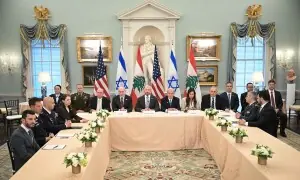
Israel and Lebanon agreed on Wednesday to implement a ceasefire but said it would require a “complete cessation” of fire by Hezbollah, according to a joint statement after US-led talks in Washington. The two sides,…
09
Israel and Lebanon, which do not have formal diplomatic relations, also agreed to create “pilot zones” in which the Lebanese armed forces “will take exclusive control of the territory to the exclusion of all non-state…

10
Lebanese security sources said Israeli drones struck at least 10 vehicles across south Lebanon on Wednesday

11
Iran has repeatedly insisted that any deal to end the wider West Asia war — which its ally Hezbollah joined on March 2 — must also halt the fighting in Lebanon.

12
Governo Trump anuncia que Israel e Líbano concordaram com novo cessar-fogo
Lebanon and Israel agreed to implement a ceasefire, according to a joint statement released by the US State Department this Wednesday (3), following negotiations in Washington. Read more…
13
Israel and Lebanon agree on ceasefire; Trump says he wants to separate talks on Lebanon and the war in Iran but Tehran warns that any attack on Beirut would trigger a "full-scale resumption" of the war
14
وسط تصعيد ميداني.. واشنطن تنشر تفاصيل اتفاق لوقف إطلاق النار بين إسرائيل ولبنان
Israel and Lebanon reached a ceasefire agreement, amid a field escalation that left dozens of victims as Tel Aviv's attacks continued on southern and central Lebanon.
15
عراقجي: أي هجوم على بيروت سيؤدي لاستئناف الحرب في المنطقة
Iranian Foreign Minister Abbas Araqchi warned of the consequences of any Israeli attack on the Lebanese capital, Beirut, at a time when Israel intensified its military operations against Lebanon in flagrant violation of the ceasefire agreement.
16
حرب إيران مباشر.. واشنطن تعلن اتفاقا لوقف القتال بلبنان و"النواب" الأمريكي يقيد صلاحيات ترمب بشأن إيران
The American President stressed that he will not allow Iran to possess a nuclear weapon, and if it signs the agreement, this means that it will agree not to obtain a nuclear bomb, stressing that the opportunity to sign an agreement is approaching.
17
Libano, Michael Young: “Israele vuole espandere la propria egemonia. Solo Trump può fermarlo”
The Carnegie Endowment's Middle East manager: "The US president wants to end this war, he knows that an agreement with Iran would help"
18
"ميدان صيد بالمسيّرات".. والد جندي إسرائيلي يصف معارك جنوب لبنان
The father of an Israeli soldier participating in military operations in southern Lebanon said that the soldiers there face a constant threat that makes them depend on luck to stay alive, describing the battle as “a hunting field for soldiers with Hezbollah marches.”
19
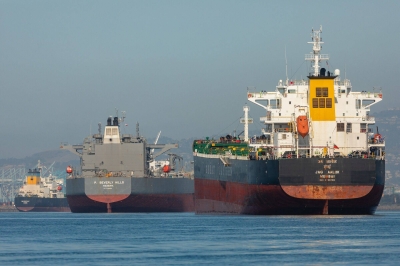
The oil market's main focus remains on the Strait of Hormuz, a key waterway through which one-fifth of global crude normally passes.
20
イスラエルとレバノン 停戦再合意
AI read
What the coverage agrees on, and where it splits
This view is generated from the clustered articles, so it is best read as a map of coverage rather than a replacement for the source reporting.
Broadly agreed
- All covering sources confirm Israel and Lebanon agreed to implement a ceasefire requiring a complete cessation of fire by Hezbollah.
- Multiple sources confirm that Iran warned any attack on Beirut would trigger full-scale resumption of war.
- Sources agree the ceasefire was reached following US-brokered negotiations in Washington.
Contested framing
- La Repubblica quotes a Carnegie analyst saying Israel wants to 'expand its hegemony' and only Trump can stop it, while BBC frames the agreement as a mutual rejection of any actor holding Lebanon's future hostage.
- Irish Times explicitly links the Lebanon ceasefire to the Iran war as a single diplomatic package, while Trump statements reported by multiple outlets suggest he wants to keep the two tracks separate.
- Al Jazeera Arabic contextualizes the ceasefire alongside ongoing Israeli raids killing civilians in Gaza, while most Western outlets treat the Lebanon ceasefire as a standalone diplomatic achievement.
Still unclear
Whether Hezbollah will comply with the ceasefire's conditions, and whether the 'pilot zones' with Lebanese army deployment will be practically implemented, remains unconfirmed.
Notable omissions
The civilian toll in Lebanon during the weeks of intensified fighting preceding the ceasefire is noted briefly in La Repubblica (49 dead during negotiations) but is largely absent from Western outlet summaries.
Quality check
Read with awareness that ceasefire implementation is unconfirmed and civilian casualty context is minimized in Western coverage.
- Significant omission: Civilian toll in Lebanon (49 dead during negotiations per La Repubblica) is buried and absent from most Western outlet coverage
- Framing divergence on whether ceasefire is 'standalone' vs. linked to Iran diplomacy remains unresolved across sources
- Hezbollah compliance and 'pilot zone' implementation are entirely unverified—present-tense framing assumes success
- Source diversity weighted toward Western outlets (BBC, DW, SCMP); Middle Eastern and Israeli perspectives underrepresented
Review confidence: 75%
Signal strength
3/5
Narrative divergence
13
Sources compared
2
Days in coverage
→ stable
How each outlet frames this story
Divergence
3/5
Narrative Divergence
How differently the sources covering this story frame it — measured by tone, emphasis, and what each outlet chooses to highlight or omit.
1 — Sources frame the story almost identically
2 — Minor differences in tone or emphasis
3 — Noticeable differences; some outlets highlight what others omit
4 — Stark contrasts; conflicting narratives
5 — Sources tell fundamentally different stories
British
BBC reports the ceasefire as requiring Hezbollah to stop attacks, with both sides rejecting any state or non-state actor holding Lebanon's future hostage, framing it as a conditional institutional agreement.
German
Deutsche Welle reports the ceasefire as US-brokered following intensification of hostilities, treating it as a governance-level diplomatic achievement without speculating on durability.
South African
Daily Maverick reports the ceasefire implementation agreement via Reuters wire without distinct editorial framing.
Pakistani
Dawn reports the ceasefire as conditional, noting both sides agreed to 'pilot zones' with Lebanese army deployment, and that Trump wants to separate Lebanon and Iran talks.
Indian
The Hindu covers the conditional ceasefire and creation of 'pilot zones', and Iran's Foreign Minister warning that any attack on Beirut will trigger full-scale resumption of war, emphasizing fragility.
Irish
Irish Times reports the ceasefire deal was reached following Washington negotiations aimed at ending conflict that flared up alongside the Iran war, linking the two theaters explicitly.
Singaporean
CNA and Straits Times both report the ceasefire as boosting hopes for a broader Iran deal, framing it through regional stability and energy security implications.
Italian
La Repubblica reports 49 people died during the negotiations leading to the ceasefire, with a Carnegie Endowment analyst saying only Trump can stop Israeli expansion ambitions.
Chinese
SCMP reports the ceasefire with Trump and Netanyahu playing down their heated call, contextualizing the diplomatic friction between US and Israeli leadership.
Qatari
Al Jazeera Arabic covers the ceasefire announcement alongside continued Israeli raids killing civilians in Gaza and the father of an Israeli soldier describing drone warfare in south Lebanon.
Japanese
Yahoo Japan confirms Israel and Lebanon re-agreed ceasefire, and Japan Times reports oil prices fell on the ceasefire news while the Strait of Hormuz remains the market's main focus.
Framing shifts since last cycle
Indian
Shift from Iran's veto power framing to emphasis on ceasefire fragility through 'pilot zones' mechanism, recontextualizing the agreement's stability narrative.
Italian
Moved focus from concurrent Gaza bombing to civilian casualties during negotiations themselves, personalizing the human cost of the diplomatic process.
Pakistani
Added Trump's explicit desire to decouple Lebanon from Iran talks, introducing U.S. strategic intent previously absent from coverage.
Qatari
Shifted from isolated ceasefire announcement to simultaneous Gaza raids and individual soldier accounts, fragmenting the regional narrative across multiple theaters.