Iran’s Foreign Ministry denied that negotiations with Washington were taking place, but Donald Trump insisted they were; "We are talking right now," he said.
How the world covered this
Read the editorial comparison
Prose synthesis of how each outlet framed the story, with side-by-side outlet quotes and divergence notes.
29 articles from 12 sources
01
02
The rebuttal by the Iranian Foreign Ministry follows Mr. Trump saying he had held off launching new strikes on the Islamic republic to allow for further diplomatic efforts, a familiar pattern in the conflict

03
Mr. Trump, speaking at the Oval Office, said he expects negotiations that will reopen the Strait of Hormuz and create a pathway for Iran to address the United States' concerns about its nuclear programme will begin in…


05
The latest pause in the United States-Iran confrontation should not be confused with a return to stability. President Donald Trump’s decision to hold off on another round of strike...
06
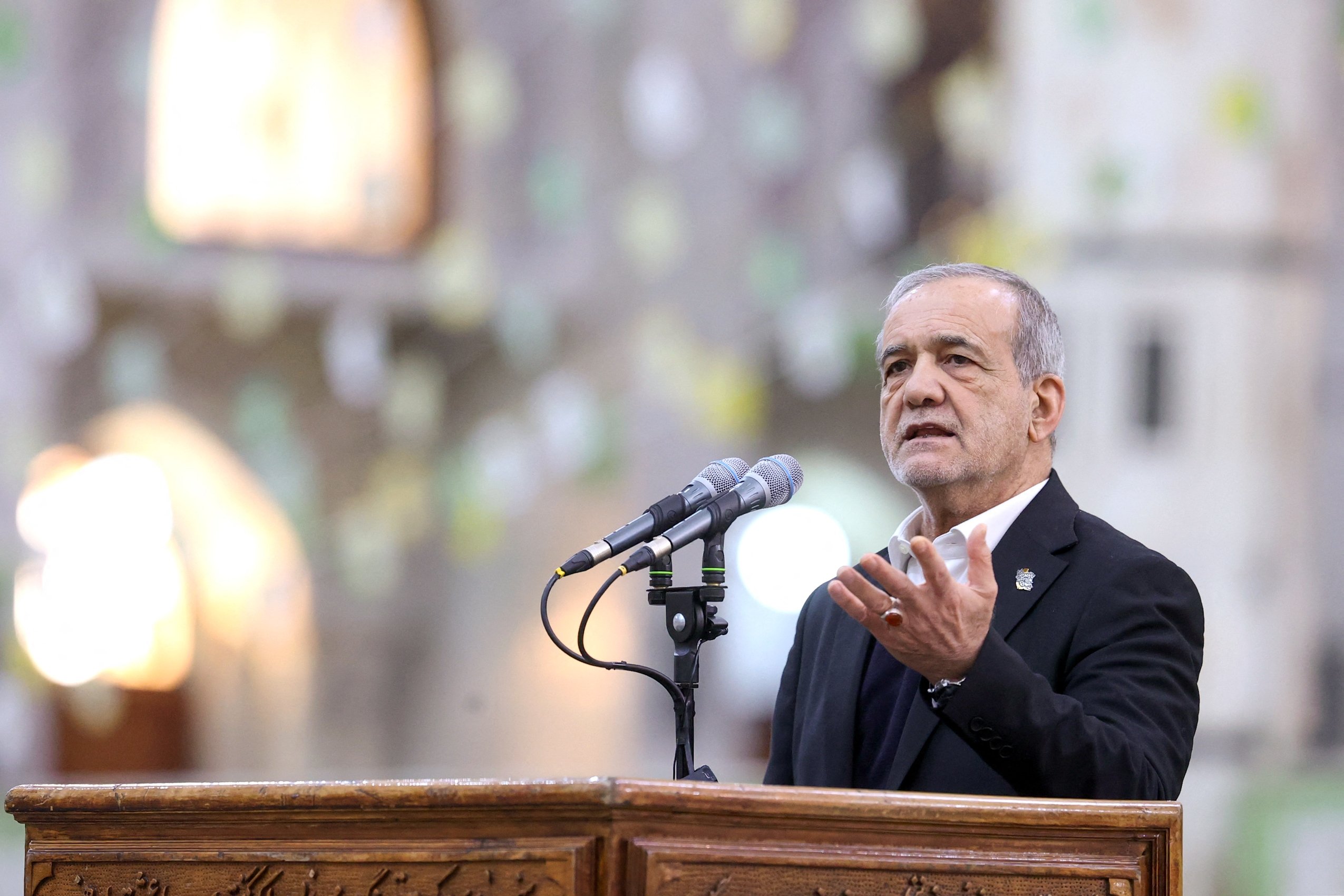
Iranian President Masoud Pezeshkian said Monday that Tehran has no intention of escalating tensions in the region, while pledging that Iran would use all available means to safegua...
07
Egypt and Saudi Arabia on Monday renewed calls for diplomacy to defuse mounting regional tensions, with their top diplomats urging an immediate halt to military escalation and emph...

08
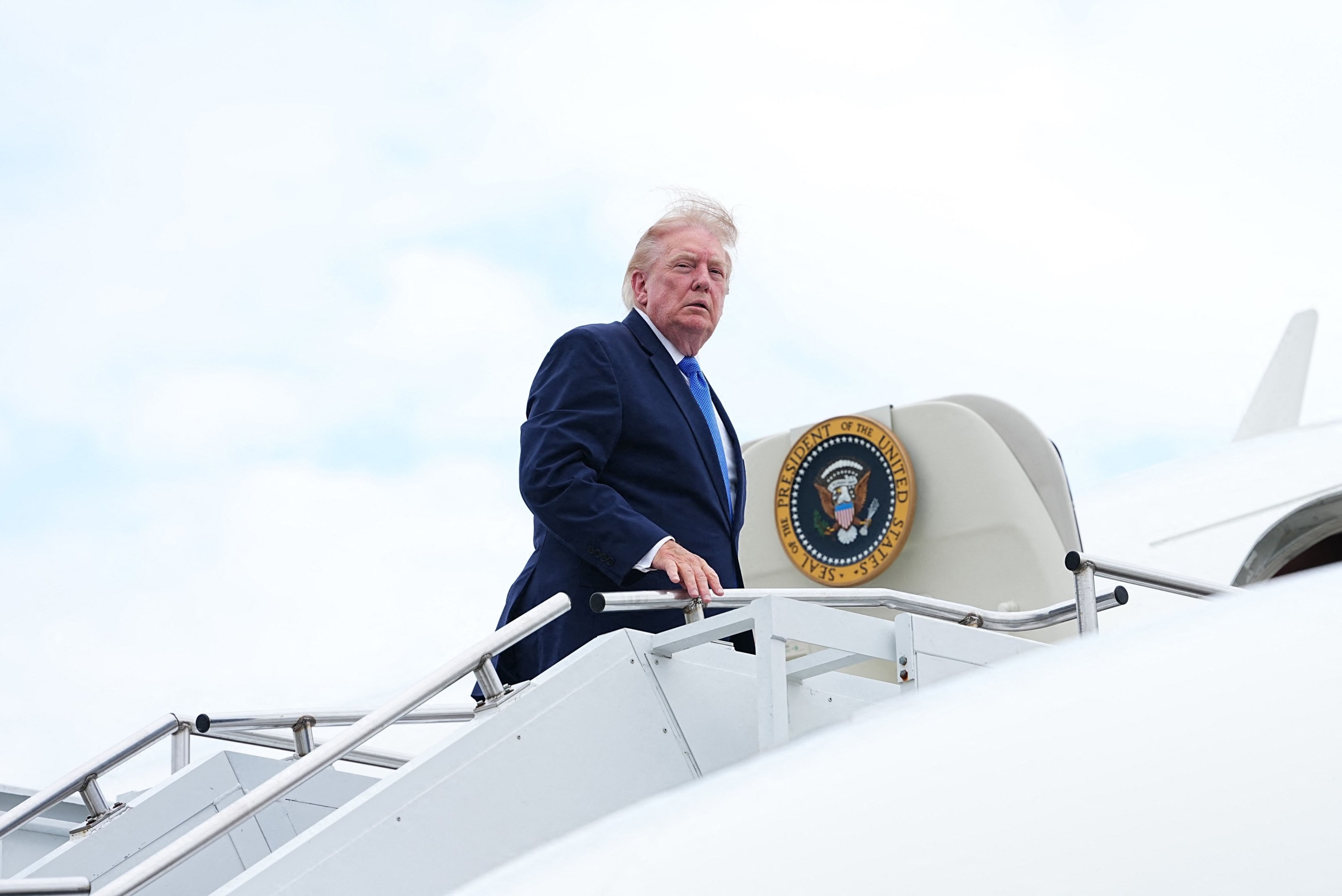
U.S. President Donald Trump on Monday accused Iran's leadership of sending mixed signals over diplomacy, saying Tehran privately sought talks to end the war while publicly den...
09
WASHINGTON, Aug 3 (Reuters) - U.S. President Donald Trump on Monday said Iran faced “decapitation” if it did not agree a pact to end the conflict between the two nations, saying Tehran had one last chance to strike a…


11
Trump says he and Israel have called off Iran attack after being assured deal is imminent The Times of Israel
12
Iranian MP says mediators trying to revive MOU with Washington The Times of Israel
13
Iran treats all threats as credible, even if meant as scare tactic, defense minister says The Times of Israel
14
DUBAI/WASHINGTON, Aug 4 - Conflicting signals from the United States and Iran over the status of talks to end their five-month-old war boosted uncertainty on Tuesday, with the latest attack on shipping in the Strait of…
15
It would give Iran strategic leverage it did not have before the war.
16
イランが協議否定 米大統領は批判
17
米大統領 対イラン発言は二転三転
18
Donald Trump’s incentive to compromise over conflict is strongest over the next few weeks, but that changes as US midterms move closer

19
Contradictory statements from Donald Trump and Iranian foreign ministry cast doubt on diplomatic efforts

20
Israeli officials: We were left in the dark on nixed Iran attack; we don't know what Trump's endgame is The Times of Israel
21
Trump says talks with Iran will start Monday on deal to reopen Hormuz The Times of Israel
22
No indication Israel will take part in planned US strikes on Iran — CNN The Times of Israel
23
Iranian media denies deal on opening Hormuz; outlets mock Trump’s climbdown The Times of Israel
24
Iran’s Araghchi agreed to deal opening Hormuz, leading Trump to cancel attack — report The Times of Israel
25
Donald Trump anuncia negociaciones con Irán el lunes tras pausar ataques, mientras Teherán busca nueva ruta en Ormuz
According to the president, US allies

26
米大統領 イラン大規模攻撃を中止
27
EN DIRECT, guerre au Moyen-Orient : un cargo touché par un « projectile inconnu » dans le détroit d’Ormuz ; des discussions en cours entre l’Iran et les Etats-Unis, selon Donald Trump
The cargo ship made no mention of possible injuries or damage. The incident occurred off the coast of Oman.
28
Reuters узнало об объеме перевозок через Ормузский пролив на фоне переговоров
Transit remains minimal, the agency noted
29
US President Donald Trump earlier said talks were underway, warning of a "last chance" for Tehran to sign a good deal, but Iran denied that negotiations were being held or planned.

AI read
What the coverage agrees on, and where it splits
This view is generated from the clustered articles, so it is best read as a map of coverage rather than a replacement for the source reporting.
Broadly agreed
- All covering sources confirm the US and Iran are issuing contradictory public statements about whether negotiations are taking place.
- All sources confirm Trump has threatened further military escalation including 'decapitation' if Iran does not reach a deal.
- All covering sources confirm Strait of Hormuz shipping remains severely disrupted, with transit at minimal levels.
Contested framing
- The Hindu and Irish Times report Iran denied talks; CNN and Yahoo Japan report Trump insisted talks were underway — a direct factual contradiction neither side has resolved.
- Times of Israel frames the situation as an Israeli-US rift over being left in the dark; Daily Sabah frames it as a collective regional institutional failure requiring accountability.
- Straits Times argues a deal would give Iran strategic leverage; Daily Maverick and CNN frame it primarily as a Trump political calculation, not a strategic gift to Iran.
Still unclear
Whether any back-channel negotiations are actually occurring between US and Iranian officials, and what concrete terms either side has proposed, remains publicly unverified.
Notable omissions
People's Daily provides no coverage of the Iran-US confrontation, consistent with its pattern of avoiding geopolitical crises that implicate US-China energy competition dynamics; TASS similarly omits the US-Iran standoff entirely.
Quality check
Read with skepticism about whether negotiations are actually occurring; the contradiction itself is the story, not a resolved fact.
- Core factual contradiction (Iran denies talks vs Trump claims talks occurring) remains unresolved; framing as settled consensus overstates clarity
- Critical omission: People's Daily and TASS absence means US-China energy competition angle entirely missing
- Strait of Hormuz disruption confirmed but causality to deal negotiations is assumed rather than established
- 'Why it matters' claims about deal materializing as solution are prospective; no evidence presented that either side has concrete proposals
Review confidence: 65%
Signal strength
5/5
Narrative divergence
12
Sources compared
1
Days in coverage
How each outlet frames this story
Divergence
5/5
Narrative Divergence
How differently the sources covering this story frame it — measured by tone, emphasis, and what each outlet chooses to highlight or omit.
1 — Sources frame the story almost identically
2 — Minor differences in tone or emphasis
3 — Noticeable differences; some outlets highlight what others omit
4 — Stark contrasts; conflicting narratives
5 — Sources tell fundamentally different stories
Indian
The Hindu reports both Trump's 'last chance' ultimatum and Iran's flat denial of talks, framing the standoff through strategic ambiguity analysis without Western alignment bias.
Turkish
Daily Sabah frames the Hormuz standoff as an institutional violence failure requiring accountability mechanisms, warning the pause should not be mistaken for stability.
Israeli
Times of Israel reports Israeli officials were left in the dark on the nixed Iran attack and do not know Trump's endgame, emphasising the bilateral rift.
Irish
Irish Times notes Iran has time on its side and that Trump's incentive to compromise is strongest now before US midterms shift his calculus.
Emirati
The National frames the Iran war as fuelling commodity rallies and threatening Gulf aviation, with Emirates and Etihad extending flight cancellations.
Japanese
Yahoo Japan reports Trump's shifting Iran statements repeatedly, emphasising the unpredictability; Japan Times focuses on crude oil supply vulnerability and energy security implications.
Singaporean
Straits Times analyzes the shipping route vulnerability and notes a Hormuz deal would give Iran strategic leverage it lacked before the war.
Colombian
El Tiempo frames Trump's Iran ultimatum through US institutional decision-making accountability, highlighting the Pentagon's search for 'unconventional' military ideas as evidence of limited options.
French
Le Monde covers the cargo ship struck in the Strait of Hormuz and ongoing US-Iran discussions, framing through expert institutional analysis.
South African
Daily Maverick reports Trump's 'decapitation' threat, framing the story through Reuters wire dispatch without deep institutional analysis.