Ursula von der Leyen has called for action ahead of an urgent EU interior ministers meeting to discuss the issue.
How the world covered this
Read the editorial comparison
Prose synthesis of how each outlet framed the story, with side-by-side outlet quotes and divergence notes.
21 articles from 11 sources
01

02
La crise de Ceuta, un révélateur des divisions de l’Union européenne sur la question migratoire
The interior ministers of the Twenty-Seven are summoned for a videoconference on Tuesday, in order to learn lessons from the arrival of nearly 50,000 migrants from Morocco in the Spanish enclave on July 30.
03
Após Ceuta, UE se equilibra entre crise imigratória e ofensiva da ultradireita
After calling the situation in Ceuta, taken over by tens of thousands of immigrants last week, "unacceptable", Ursula von der Leyen, president of the European Commission, preached more collaboration with Spain and more...
04
Como crise migratória da Espanha gerou tempestade política e foi alimentada pelas redes sociais
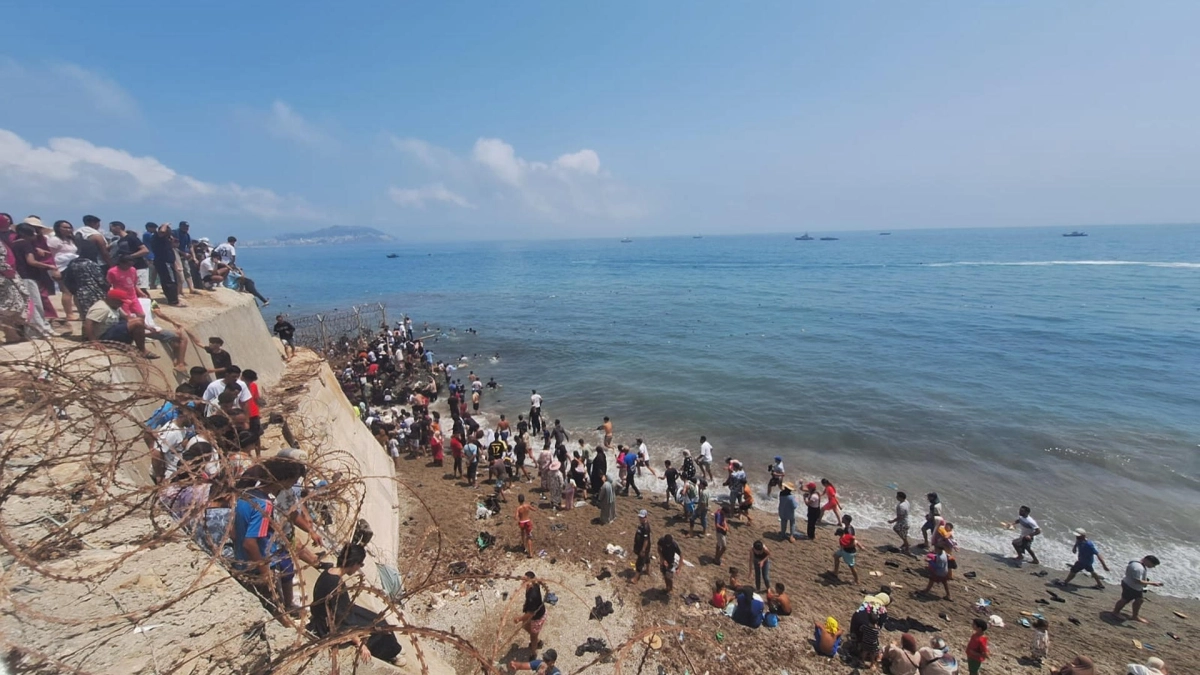
Most of the tens of thousands of migrants who swam into the Spanish enclave of Ceuta last week have now returned to Morocco, escorted to the border by Spanish soldiers and police. Read more…
05
Centenas de migrantes dormem em praia de Ceuta após travessia em massa
Hundreds of migrants set up a makeshift camp on a beach in Ceuta, a Spanish exclave in North Africa, this Monday (3). The city continues to face difficulties in dealing with thousands of people…
06
The European Commission has offered Morocco more support at the border to Ceuta and Melilla, and called for "united action" from the bloc on border security. Its interior ministers will discuss the issue on Tuesday.
07
The government in Madrid has rejected allegations that it ignored warnings from the CNI intelligence service about a mass arrival of tens of thousands of migrants in the Spanish exclave of Ceuta in North Africa. It said…

08
BOLOGNA, Italy, Aug 4 - When tens of thousands of would-be migrants crossed from Morocco into the Spanish enclave of Ceuta last week, Italy's right-wing prime minister Giorgia Meloni promptly said she would suspend a…
09
RABAT, Aug 3 - Spanish authorities should have anticipated the consequences of a court ruling that weakened a key deterrent against illegal migration and contributed to last week's mass crossings into the enclave of…
10
Comment le Maroc met sous pression les enclaves espagnoles de Ceuta et de Melilla
The sudden arrival of 50,000 people in Ceuta raises questions about the role of Rabat in this migration crisis, while the Shereef kingdom contests the belonging of the two cities to Spain.
11
移民流入のスペイン 海にフェンス
12
Decenas de familias marroquíes buscan a sus allegados tras la crisis en Ceuta: 'Ruego a Dios que vuelva sano y salvo'
There are already 72 deaths confirmed by the authorities, but the toll could increase. Almost all of those who crossed were returned to Morocco.

13
Marruecos admite por primera vez que 40.000 migrantes cruzaron a Ceuta y confirma 11 muertos
The figures contrast with those of Spain, which brings the number of migrants who entered its territories to more than 50,000 and the number of deaths to 72.
14
Video| Rescatan a dos bebés que flotaban en el mar durante la crisis migratoria en Ceuta
The minors were found while search and rescue efforts continued due to the immigration emergency on the Spanish border.

15
The tense nerves of the Twenty-Seven on Ceuta: between mutual accusations and superficial solidarity
I nervi tesi dei Ventisette su Ceuta: tra accuse reciproche e solidarietà di facciata
Yesterday the first showdown between the ambassadors. And today Piantedosi will relaunch the hub project in Rwanda, Uganda and Ghana
16
Il modello “duro” della Danimarca sui migranti, così Frederiksen divide le sinistre
The social democratic prime minister's statements on the migratory crises seem to have been stolen from right-wing leaders
17
Leggerezza addio, com’è triste l’Italia vista da Madrid
The controversies over migrants, the suspension of Schengen, suspicion as a measure of the other. In the days of Ceuta, the regret for an unrecognizable country
18
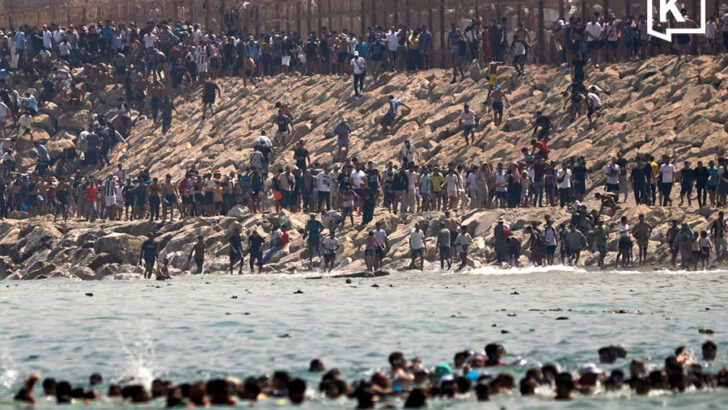
Tens of thousands of migrants irregularly entered the north African territory from Morocco in an unprecedented and deadly surge.
19
Crise migratória é resultado do colonialismo que perdura no norte da África
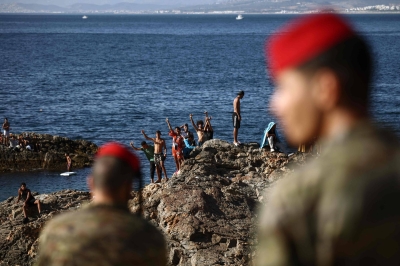
Countless young men coming out of the sea, armed soldiers, steel fences. Images from Ceuta that circulated last week show the migration crisis in North Africa that led to the deaths of at least 72 people.
20
Marruecos admite por primera vez que 40.000 migrantes cruzaron a Ceuta y confirma 11 muertos
The figures contrast with those of Spain, which brings the number of migrants who entered its territories to more than 50,000 and the number of deaths to 72.
21
MADRID (AP) — Thousands of migrants have streamed into the tiny Spanish territory of Ceuta in North Africa from Morocco, with at least 18 dying in the attempt, prompting Spain to deploy its military to restore the…
AI read
What the coverage agrees on, and where it splits
This view is generated from the clustered articles, so it is best read as a map of coverage rather than a replacement for the source reporting.
Broadly agreed
- All covering sources confirm more than 50,000 migrants crossed into Ceuta from Morocco in an unprecedented surge, with at least 72 deaths.
- Sources broadly agree the EU called an emergency interior ministers meeting and that von der Leyen described the situation as unacceptable.
- Multiple sources confirm Morocco played a role in facilitating or permitting the crossing, though its precise motivations are disputed.
Contested framing
- Le Monde and Folha de S.Paulo frame Morocco as deliberately using migration as geopolitical leverage against Spain; Spain's government, as reported by SCMP, denied it ignored intelligence warnings, rejecting the implication of culpability.
- Italian La Repubblica focuses on EU mutual accusations and superficial solidarity; Deutsche Welle emphasises collective EU institutional responsibility, presenting a more unified institutional response.
- El Tiempo highlights disinformation as a driver; Le Monde and Folha de S.Paulo emphasise structural colonial and geopolitical causes, creating a tension between episodic and structural explanations.
Still unclear
Whether Morocco deliberately orchestrated the crossing as diplomatic leverage, or whether it was primarily driven by disinformation and opportunistic individual decision-making, has not been conclusively established.
Notable omissions
People's Daily, TASS, and most African and Asian outlets provide no coverage of the Ceuta crisis, meaning the perspective of sub-Saharan African migrants — the majority of those crossing — is almost entirely absent from the coverage set.
Quality check
This story is told almost entirely from European institutional perspective; migrant agency and African context are missing.
- Morocco's role framed as either deliberate leverage or structural failure, but no independent verification of either claim
- Critical omission: Sub-Saharan African migrant perspectives almost entirely absent despite comprising majority of crossers
- People's Daily, TASS, and African outlets absent; colonialism/structural causes cannot be properly contextualized without Global South voices
- 'Why it matters' emphasizes EU divisions but 72 deaths figure lacks source attribution in provided summaries
Review confidence: 68%
Signal strength
4/5
Narrative divergence
11
Sources compared
1
Days in coverage
How each outlet frames this story
Divergence
4/5
Narrative Divergence
How differently the sources covering this story frame it — measured by tone, emphasis, and what each outlet chooses to highlight or omit.
1 — Sources frame the story almost identically
2 — Minor differences in tone or emphasis
3 — Noticeable differences; some outlets highlight what others omit
4 — Stark contrasts; conflicting narratives
5 — Sources tell fundamentally different stories
British
BBC News frames the crisis through institutional protocol violation analysis, reporting von der Leyen's call for stronger borders ahead of an emergency EU ministerial meeting.
German
Deutsche Welle frames the EU's response as an institutional responsibility requiring united action, offering Morocco more support and calling for 'shared European responsibility.'
French
Le Monde frames the crisis as a revealer of EU divisions on migration, with expert institutional analysis of Morocco's role in opening the border as leverage.
Brazilian
Folha de S.Paulo frames the crisis as rooted in colonialism persisting in North Africa, integrating structural inequality analysis with Spain's political vulnerability to the far right.
Italian
La Repubblica covers EU member state mutual accusations and superficial solidarity, reporting Italy plans to relaunch a hub project in Rwanda and Uganda as an alternative.
Singaporean
Straits Times humanises the crisis through the story of a Bologna businessman's death, highlighting the human cost amid the European migration debate.
Japanese
Yahoo Japan notes Spain has put a fence in the sea due to the influx of immigrants, presenting a brief factual update without editorial framing.
Colombian
El Tiempo reports on dozens of Moroccan families searching for loved ones after the crisis, with 72 confirmed deaths, and covers the rescue of two babies floating at sea.