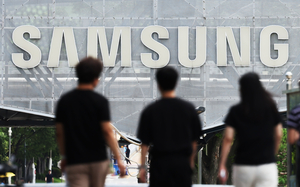
Samsung Electronics Co. is moving to begin operations at the first semiconductor fabrication plant in its Yongin chip cluster in 2029, one to two years earlier than planned, industry sources said Sunday.
How the world covered this
Read the editorial comparison
Prose synthesis of how each outlet framed the story, with side-by-side outlet quotes and divergence notes.
5 articles from 2 sources
01
02
Samsung Electronics, SK hynix and Micron Technology, the world's three largest memory chipmakers, are racing to expand production capacity as demand for artificial intelligence infrastructure continues to outpace…

03
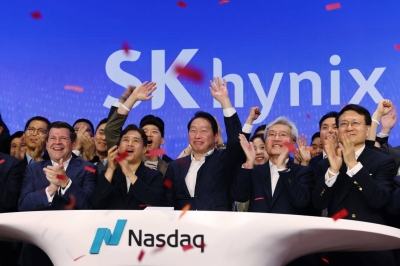
South Korean memory chipmaker SK Hynix just pulled off the largest public listing by a foreign company in U.S. market history.
04
South Korea’s military faced more than 18,000 cyberattack attempts last year, a five-year high, while struggling to retain specialists trained to defend against such threats, according to a report released by a…

05
Korea's space industry, which has been dominated by rockets and satellites up until now, is gearing up to welcome a relatively new type of partner — drugmakers. As microgravity in space allows proteins to grow into…

AI read
What the coverage agrees on, and where it splits
This view is generated from the clustered articles, so it is best read as a map of coverage rather than a replacement for the source reporting.
Broadly agreed
- All covering sources confirm the global memory chip industry is in a race to expand AI-related production capacity, with Samsung, SK Hynix, and Micron as the three dominant players.
- Korea Herald confirms Samsung is accelerating its Yongin plant timeline specifically in response to AI demand.
Still unclear
Whether Samsung's acceleration of the Yongin plant will allow it to close the technology gap with SK Hynix in high-bandwidth memory for AI applications is not confirmed.
Notable omissions
No sources address Chinese domestic memory chip industry development (e.g., CXMT/ChangXin) as a competitive variable in the Samsung/SK Hynix/Micron race.
Quality check
Chip race and Samsung acceleration are confirmed; technology gap closure and Chinese competition remain unaddressed.
- Samsung/SK Hynix/Micron AI chip race is confirmed across multiple sources
- Samsung Yongin plant acceleration to 2029 is confirmed
- Whether acceleration will close technology gap with SK Hynix is unconfirmed
- No analysis of Chinese domestic memory chip development (CXMT, ChangXin)—competitive landscape incomplete
Review confidence: 85%
Signal strength
1/5
Narrative divergence
2
Sources compared
1
Days in coverage
How each outlet frames this story
Divergence
1/5
Narrative Divergence
How differently the sources covering this story frame it — measured by tone, emphasis, and what each outlet chooses to highlight or omit.
1 — Sources frame the story almost identically
2 — Minor differences in tone or emphasis
3 — Noticeable differences; some outlets highlight what others omit
4 — Stark contrasts; conflicting narratives
5 — Sources tell fundamentally different stories
South Korean
Korea Herald covers Samsung bringing forward the Yongin chip plant opening and memory giants racing to expand AI chip capacity, framing these as alliance-positive tech-economic developments cementing South Korea's strategic role.
South Korean
Korea Herald reports South Korean military faced 18,000 cyberattacks in a year — a five-year high — while struggling to retain cybersecurity talent, illustrating tech-security vulnerability alongside economic achievement.
South Korean
Korea Herald separately reports Korea's space industry gearing up for pharmaceutical drug labs in orbit, framing it as a frontier for new economic diversification.
Japanese
Japan Times covers SK Hynix's record US public listing as an AI-cycle bet, treating the semiconductor expansion as a structural market transformation story rather than a Korean national achievement.