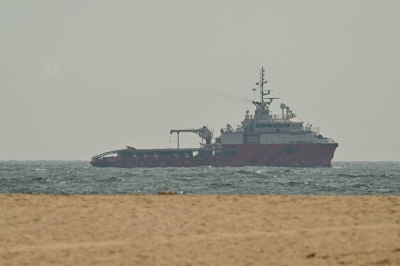
The strikes follow an attack on a Cyrpus-flagged vessel travelling through the critical waterway.
How the world covered this
Read the editorial comparison
Prose synthesis of how each outlet framed the story, with side-by-side outlet quotes and divergence notes.
33 articles from 13 sources
01

02
U.S. Central Command said a short time later that its forces began a third round of strikes against Iran.
03
The United States is imposing a heavy cost by continuing to degrade Iran's ability to attack civilian mariners and commercial ships freely transiting the strait, the American military said.

04
The Iranian navy has said it closed the Strait of Hormuz after firing on a vessel transiting an "unapproved route." In response, the US launched a third set of strikes on Iran this week. Follow DW for more.
05
Trump suggests a standing order to attack Iran if it assassinates him. But Vance would make the call
WASHINGTON (AP) -- US President Donald Trump is suggesting he has left standing orders for the US military to destroy Iran "at levels they've never seen before" if Tehran follows through on its…

06
The US military launched strikes on Iran after it struck a container ship on Sunday, while Tehran said it had again closed the Strait of Hormuz and some Gulf states came under attack. A series of attacks between the US…

07
Shortly before US President Donald Trump ended a ceasefire with Iran this week, Israeli officials presented his team with intelligence indicating Tehran was hatching new plots to kill him. It was not the first such…


11
July 11 - U.S. forces completed a third round of strikes this week against Iran, the Central Command said late on Saturday in a post on X.
12
Iran said it closed the strait after firing a warning shot that struck a vessel travelling on an unapproved route.
13
US President Donald Trump has said the ceasefire is over, despite the US and Iran agreeing to continue talks.
14
米軍 新たなイラン空爆を開始
15
イラン ホルムズ海峡の閉鎖を宣言
16
米大統領 暗殺試みればイラン破壊
17
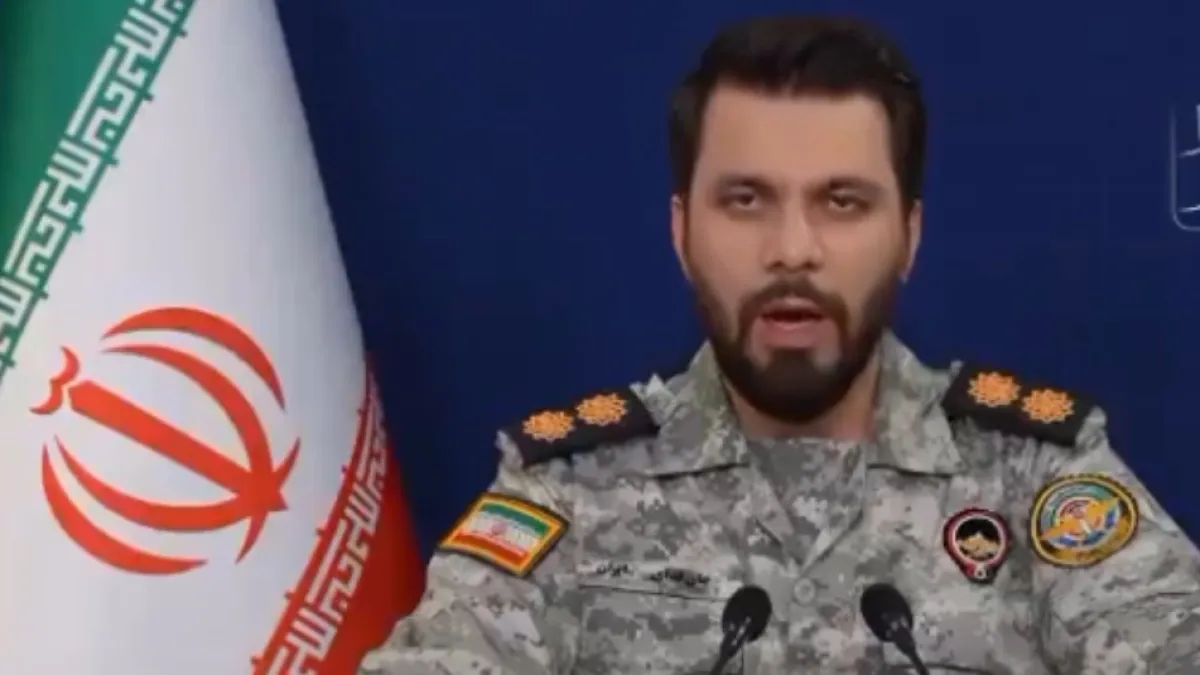
Irán amenaza con atacar a países aliados de EE. UU. en Oriente Medio y advierte que la respuesta será ‘devastadora’
The Revolutionary Guard raised the tone of the conflict with a message addressed to several countries in the region.
18
Tensión en Medio Oriente tras ataques de Estados Unidos e Irán; últimas noticias y detalles
US forces responded to the bombing of a ship in Hormuz, while Tehran ordered the closure of the sea lane.

19
Estados Unidos lanza nueva ofensiva militar contra Irán tras ataque a un buque comercial en el estrecho de Ormuz
The United States bombed targets in Iran after the attack on a commercial ship in the Strait of Hormuz.
20
Irán anuncia el cierre del estrecho de Ormuz ‘hasta nuevo aviso’ y lanza advertencia a Estados Unidos
Tehran assured that it will not allow the passage of vessels as long as tensions with Washington persist.

21
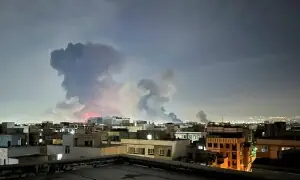
The US military said it launched another round of strikes on Iran — the third in a week — after the Islamic Revolutionary Guard Corps struck a container ship travelling through the Strait of Hormuz on Sunday. Iranian…
22
Iran reportedly responded to Sunday morning's US attacks by closing the Strait of Hormuz and targeting US bases in Qatar, Kuwait and Jordan.
23
Reports: Israel willing to join US strikes on Iran, waiting for Trump okay The Times of Israel
24
Israel ‘will not be spared’ from Iran’s retaliation if US keeps targeting infrastructure — official The Times of Israel
25
Trump: We’ll continue holding talks with Iran, but ceasefire is over The Times of Israel
26
米イラン協議 近く再開する可能性
27
Estados Unidos asfixia con sanciones la red financiera de Irán tras el fin del alto el fuego
USA

28
Vice-President JD Vance is among US officials expected to take part in negotiations resuming on Saturday in Oman.

29
US officials say Washington wants Tehran to publicly vow to end attacks on vessels in the strategic Strait of Hormuz. President Trump has threatened to "completely decimate" Iran should it attempt to assassinate him.
30
US President Donald Trump threatened Iran on Saturday after the funeral of supreme leader Ayatollah Ali Khamenei saw open calls for his killing, further underlining the tensions gripping the Middle East, as an interim…

31
Donald Trump declared the end of a ceasefire on February 28, though Washington has left the door open to continued negotiations.

33
Ayatollah Mojtaba Khamenei said it was “the demand of the nation” and “must certainly” take place.
AI read
What the coverage agrees on, and where it splits
This view is generated from the clustered articles, so it is best read as a map of coverage rather than a replacement for the source reporting.
Broadly agreed
- All sources confirm the US conducted at least a third round of strikes on Iranian military targets this cycle, triggered by Iran firing on a container ship in the Strait of Hormuz.
- All covering sources confirm Iran announced closure of the Strait of Hormuz 'until further notice' following the US strikes.
- Sources across regions confirm Iran launched missiles and drones at Gulf states including the UAE, which reported interceptions.
Contested framing
- BBC and Deutsche Welle frame events through institutional decision-making and ceasefire sustainability; TASS and People's Daily avoid substantive conflict analysis entirely, with TASS focusing on domestic drone intercepts.
- Times of Israel and SCMP report Israeli willingness to join US strikes; Al Jazeera Arabic focuses on Iraqi factions refusing to disarm and Omani mediation, implying regional resistance to US-Israeli escalation.
- The Hindu and Dawn frame the conflict through strategic autonomy and non-alignment; CNN and Yahoo Japan foreground Trump's personal threats and executive war powers without non-Western diplomatic framing.
Still unclear
Whether Mojtaba Khamenei's reported absence and undisclosed whereabouts reflect incapacitation, security protocols, or a deliberate political signal remains publicly unconfirmed.
Notable omissions
People's Daily entirely avoids coverage of the US-Iran conflict; Russian TASS omits any substantive analysis of Iranian strategic positioning or US strike effectiveness, focusing only on peripheral flight disruptions.
Quality check
Treat headline as provisional editorial framing; underlying military facts are confirmed but escalation trajectory and command authority remain highly uncertain.
- Topic title 'escalates' is overclaimed—consensus shows strikes and closure announced, but 'war' status is contested framing, not fact
- Critical gap: Mojtaba Khamenei's whereabouts are unconfirmed; his command authority and whether he can order escalation is unknown
- People's Daily entirely omits US-Iran conflict; TASS omits substantive Iranian strategic analysis—geographic source bias is severe
- Contested framing heavily diverges on whether this represents US-Israeli escalation vs. Iranian aggression; 5 divergence score justified but title presumes one narrative
Review confidence: 40%
Signal strength
5/5
Narrative divergence
13
Sources compared
1
Days in coverage
How each outlet frames this story
Divergence
5/5
Narrative Divergence
How differently the sources covering this story frame it — measured by tone, emphasis, and what each outlet chooses to highlight or omit.
1 — Sources frame the story almost identically
2 — Minor differences in tone or emphasis
3 — Noticeable differences; some outlets highlight what others omit
4 — Stark contrasts; conflicting narratives
5 — Sources tell fundamentally different stories
British
BBC foregrounds the decision-making chain and civilian vessel attack as institutional trigger, emphasising the Cyprus-flagged ship incident and scrutinising Trump's standing military-strike orders.
Indian
The Hindu foregrounds India's non-aligned positioning, providing detailed live coverage of CENTCOM strikes while carefully avoiding alignment with either Washington or Tehran.
German
Deutsche Welle uses de-escalatory framing, emphasising US demands for Iran to pledge to stop Hormuz attacks and treating the standoff as a sustainability problem for energy infrastructure.
Singaporean
CNA and Straits Times maintain terse supply-chain focus: US struck 140 Iranian targets, Gulf states were hit by Iranian missiles, and Hormuz closure is treated as a logistics crisis.
Emirati
The National covers UAE missile alerts and shelter orders as a Gulf collective-security crisis, emphasising UAE interception of Iranian projectiles and regional autonomy rather than US leadership.
Israeli
Times of Israel reports Israeli willingness to join US strikes pending Trump approval, Mojtaba Khamenei's absence as a leadership liability, and Iran's threat that Israel 'will not be spared'.
Japanese
Japan Times frames Hormuz closure through Asian energy-security vulnerability and corporate supply-chain disruption, treating warfare as an infrastructure-logistics problem.
South Korean
Korea Herald reports Trump's standing strike orders and Mojtaba Khamenei's absence through an alliance-stability and executive-accountability lens.
Pakistani
Dawn covers Pakistan's UNSC abstention and Iran's thanks to Islamabad, framing Pakistan's position as strategic neutrality consistent with its geographic and diplomatic situation.
Colombian
El Tiempo positions Iran's threats to US-allied Middle Eastern countries as US institutional decision-making accountability, also noting the risk of miscalculation.
Chinese
SCMP analyses how US-Israel assassination strategies shape the Iran war endgame and frames Hormuz closure through structural maritime vulnerability rather than military framing.
Australian
ABC Australia reports Iran's third US strike triggering Hormuz closure and attacks on US bases in Qatar and Kuwait, foregrounding Pacific security implications including China's missile tests.