Apple on Friday sued OpenAI, accusing the artificial intelligence company of orchestrating a campaign to steal the iPhone maker’s trade secrets as it tries to develop its own consumer hardware device. The lawsuit –…
How the world covered this
Read the editorial comparison
Prose synthesis of how each outlet framed the story, with side-by-side outlet quotes and divergence notes.
8 articles from 3 sources
01

02
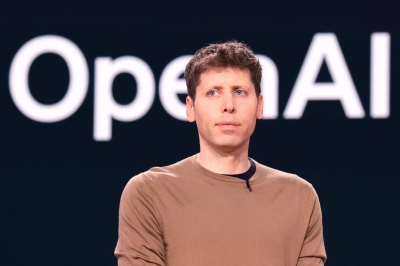
Apple has accused the company behind ChatGPT and two of its former employees of misappropriating its trade secrets to benefit OpenAI's foray into consumer hardware.
03
The iPhone maker said in a suit Friday that OpenAI encouraged Apple employees to share information, components, drawings and other materials related to upcoming products.
04
The brave new world of artificial intelligence (AI) is going to be a mixed and divisive blessing for governments – not least those of key Asian countries – as well as for financial markets. The AI revolution points to…

05
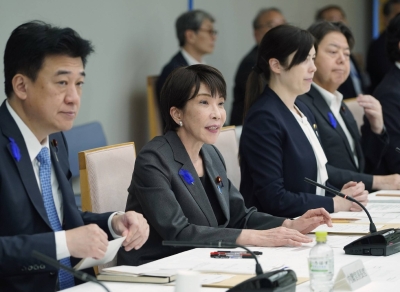
A new strategy adopted Friday calls for "organic links" between scientific technology and national security.
06
Followers of extremist groups regularly ask how AI can help them plan terrorist attacks. A new study suggests that about one-third of AI chatbots might help them, if asked the right way.
07
As US President Donald Trump flew home from a fractious Nato summit in Turkey, he was poised to resume the war with Iran, whose leaders he labelled “sick” and “scum”. Trump also complained about European leaders’…

08
A study group will compile an interim report by the end of fiscal 2026 and aim to release its final report around summer 2027.
AI read
What the coverage agrees on, and where it splits
This view is generated from the clustered articles, so it is best read as a map of coverage rather than a replacement for the source reporting.
Broadly agreed
- Multiple sources confirm Apple has filed a lawsuit against OpenAI alleging trade secret theft involving former Apple employees.
- Multiple sources confirm AI chip capacity expansion is a race among Samsung, SK Hynix, and Micron driven by surging demand.
Contested framing
- Deutsche Welle and SCMP frame AI primarily as a security and governance risk; Japan Times frames AI primarily as a public administration opportunity; Korea Herald frames AI hardware as a commercial and alliance-strategic asset.
Still unclear
Whether Apple's lawsuit will result in significant trade secret disclosure evidence or whether OpenAI will settle before trial is unconfirmed.
Notable omissions
No sources address regulatory responses — whether from the EU AI Act, US executive orders, or Asian regulatory frameworks — to the specific AI-extremism planning risk documented in the Deutsche Welle report.
Quality check
Apple lawsuit and chip race are confirmed; AI security risks and regulatory responses remain incompletely covered.
- Apple lawsuit against OpenAI for trade secret theft is confirmed
- AI chip capacity expansion race is confirmed
- Deutsche Welle/SCMP frame AI as security/governance risk; Japan Times frames as opportunity; Korea Herald frames as commercial asset—framing divergence is ideological
- Whether lawsuit will produce significant evidence or settle is unconfirmed
Review confidence: 72%
Signal strength
2/5
Narrative divergence
3
Sources compared
1
Days in coverage
How each outlet frames this story
Divergence
2/5
Narrative Divergence
How differently the sources covering this story frame it — measured by tone, emphasis, and what each outlet chooses to highlight or omit.
1 — Sources frame the story almost identically
2 — Minor differences in tone or emphasis
3 — Noticeable differences; some outlets highlight what others omit
4 — Stark contrasts; conflicting narratives
5 — Sources tell fundamentally different stories
Chinese
SCMP covers Apple suing OpenAI and argues AI will be a 'mixed and divisive blessing' for governments rather than a universal benefit, foregrounding structural inequality in AI's distributional effects.
German
Deutsche Welle covers Apple's OpenAI lawsuit and publishes a separate investigation into AI helping extremist groups plan terrorist attacks, noting about one-in-five extremist AI queries seek operational attack planning advice.
Japanese
Japan Times covers Japan's government weighing AI agents for understaffed local governments and the dual-use tech strategy linking scientific research to national security, treating AI as a public administration resource.
Chinese
SCMP separately analyses how AI is changing the nature of war and conflict, positioning AI-enabled military capability as a structural geopolitical variable.