Moscow's mayor says 450 drones were downed during the overnight barrage, in which two people died.
How the world covered this
Read the editorial comparison
Prose synthesis of how each outlet framed the story, with side-by-side outlet quotes and divergence notes.
16 articles from 12 sources
01

02
A Ucrânia lançou neste domingo (20) o que o prefeito de Moscou classificou como o maior ataque de drones já realizado contra a capital russa. A ofensiva acontece no último dia da eleição parlamentar que o presidente…
03
O partido governista Rússia Unida, do presidente Vladimir Putin , liderava as eleições parlamentares realizadas neste fim de semana com 57,5% dos votos, anunciou a Comissão Eleitoral Central neste domingo (20), após a…
04
An oil refinery was hit in one of the largest attacks so far on the Russian capital, as the country holds a parliamentary election. Meanwhile, at least four people were killed in Russian strikes in Ukraine's Kyiv region.
05
With some 58% of the precincts counted, United Russia had nearly 58% of the vote for the 225 deputies apportioned by party lists, according to the Central Election Commission

06
The chair of Russia’s Central Election Commission said the attacks appeared to have been carried out by “highly professional, well-coordinated groups using artificial intelligence tools”

07
Most anti-war candidates were barred from the ballot; those who did run from the liberal Yabloko party said they feared for their freedom after courts handed long jail terms to two senior party figures before the vote…

08
Con la maggioranza assoluta Russia Unita avrà mani libere alla Duma. La protesta delle opposizioni non riesce.
09
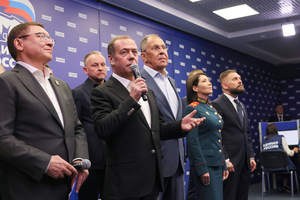
MOSCOW (Reuters) -- Russia's ruling United Russia party was on track to easily win a parliamentary election that President Vladimir Putin has cast as a test of support for the war in Ukraine, partial official…
10
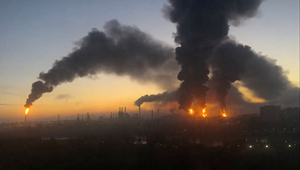
Ukrainian forces fired more than 1,000 drones at Russia overnight, including hundreds that were launched toward Moscow, officials said Sunday, as the Kremlin was wrapping up the third and last day of its parliamentary…
11
Vladimir Putin’s ruling United Russia party won a large majority in the country’s parliamentary elections, marked by cyberattacks and a barrage of Ukrainian drone strikes, according to results published by state media…

12
United Russia is on course to win 49.4 per cent of the vote, around the same it achieved in the previous election.
13
Major oil refinery in Russian capital set ablaze as voting draws to a close in stage-managed parliamentary elections

14
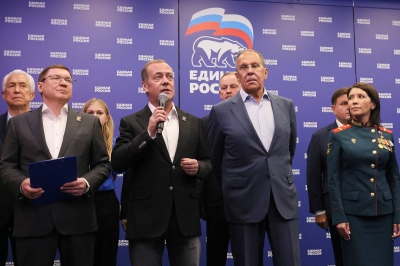
There is practically no genuine opposition on the ballot.
15
Alors que les résultats des législatives en Russie se précisent, avec une large avance pour le parti de Vladimir Poutine, le ministère de la défense a assuré que Moscou « poursuivrait et intensifierait » ses frappes sur…
16
Una ofensiva con más de 1.600 drones sobre Moscú marcaron las legislativas que ratificaron el dominio del partido de Vladimir Putin.

AI read
What the coverage agrees on, and where it splits
This view is generated from the clustered articles, so it is best read as a map of coverage rather than a replacement for the source reporting.
Broadly agreed
- All covering sources confirm United Russia won a large majority in the parliamentary election.
- All sources confirm Ukraine launched its largest drone attack on Moscow coinciding with the election's final day, with the Moscow mayor reporting 450 drones downed.
Contested framing
- TASS presents election results as a normal democratic outcome with granular vote counts; CNN, The Hindu, and La Repubblica frame the vote as a controlled, uncompetitive wartime exercise with no genuine opposition.
- TASS does not frame the drone attacks as threatening the election's legitimacy; Zelensky as quoted in Le Monde explicitly claims the attacks had 'very important impact' on the vote.
- Straits Times reports United Russia's vote share is similar to the previous election, implying stability; Italian dissident Ilya Yashin quoted in La Repubblica calls it a 'farce election that prolongs the war.'
Still unclear
The actual civilian and infrastructure damage from the Moscow drone strike beyond the oil refinery fire and two reported deaths remains unverified across sources.
Notable omissions
No available summary addresses how the Russian public responded to the simultaneous drone attack during voting, beyond official statements from the mayor and election commission.
Quality check
Confirmed: election result and attack scale. Contested: whether election was legitimate and attack's political impact.
- Election legitimacy framing diverges sharply by outlet; consensus on result (United Russia majority) is solid, but characterization as 'controlled' vs. 'normal' depends on source.
- Civilian damage from Moscow drone strike beyond two reported deaths and oil refinery fire is unverified—avoid quantifying total impact.
- Russian public reaction to simultaneous voting and attacks is absent; claims about electoral impact are attributed to Zelensky, not independently verified.
- Vote-share stability claim (Straits Times) needs context: comparing to which prior election is not specified.
Review confidence: 75%
Signal strength
5/5
Narrative divergence
12
Sources compared
1
Days in coverage
How each outlet frames this story
Divergence
5/5
Narrative Divergence
How differently the sources covering this story frame it — measured by tone, emphasis, and what each outlet chooses to highlight or omit.
1 — Sources frame the story almost identically
2 — Minor differences in tone or emphasis
3 — Noticeable differences; some outlets highlight what others omit
4 — Stark contrasts; conflicting narratives
5 — Sources tell fundamentally different stories
British
BBC leads with the scale of the drone barrage — 450 downed — and two civilian deaths, framing it as a direct challenge to the electoral spectacle.
Brazilian
Folha de S.Paulo calls it Ukraine's largest drone attack on Moscow and notes it killed three people on the last day of parliamentary voting, contextualising it as deliberate political disruption.
Italian
La Repubblica notes United Russia won 57% with an absolute majority, and that the opposition's protests were ineffective; frames elections as a farce prolonging the war.
Indian
The Hindu frames the election as a 'test of support for the Ukraine war', noting most anti-war candidates were barred and Yabloko participants feared for their safety.
Colombian
El Tiempo links Ukraine's 1,600+ drone offensive to United Russia's electoral victory, framing the strike as a calculated coincidence highlighting Putin's consolidated power.
South Korean
Korea Herald confirms over 1,000 drones fired including the 'largest ever' Moscow attack, presenting it as a factual security development.
Japanese
Japan Times notes Russia's ruling party is set for a big win in elections with practically no genuine opposition on the ballot.
Singaporean
Straits Times reports Russia vowed revenge for election-day attacks and that United Russia is on course for 49.4% — similar to its previous result.
French
Le Monde's live blog carries Zelensky's claim that the Moscow-region attacks 'had a very important impact' during the elections.