Seoul led losses in most Asian stocks, dragged down by market heavyweight SK hynix's 10 per cent plunge.
How the world covered this
Read the editorial comparison
Prose synthesis of how each outlet framed the story, with side-by-side outlet quotes and divergence notes.
10 articles from 6 sources
01

02
The South Korean chip giant plunged more than 10 per cent on Monday (Jul 13).

04
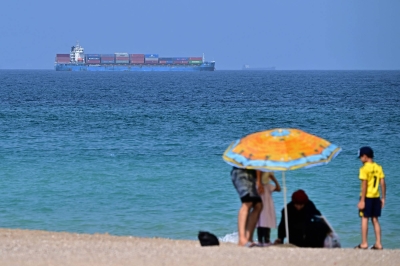
Last week's hostilities between Iran and the U.S. have caused ship traffic through the Strait of Hormuz to plummet from levels reached after a June truce between both countries.
05
Two days ahead of its opening, "Hope" is already the only story at the local box office. As of Monday morning, Na Hong-jin's Cannes-premiered alien epic accounted for 62.1 percent of all advance tickets…

06
Hyundai Motor’s union kicked off a three-day partial strike Monday after wage and bonus negotiations with management stalled, stirring concerns about production disruptions and supply delays at South Korea’s largest…

07
Torna l’ansia da inflazione, occhi su diesel e gas. Lagarde va a Washington
The president of the ECB will see her counterpart Warsh and Treasury Secretary Bessent. China's role in crude oil purchases
08
Tensioni a Hormuz, Urso: “Se i carburanti risalgono, aiuti mirati a imprese e famiglie”
The interview with the Minister of Business and Made in Italy: "No to random interventions such as cutting excise duties, it is better to give priority to the lowest incomes"
09
The United States and Iran each asserted Monday they controlled the Strait of Hormuz after a weekend of attacks stretching across the wider Middle East, further threatening any diplomacy to end the war. The attacks,…

10
Weather cycle threatens harvests worldwide, adding to inflation already fuelled by the Iran war Economists are warning that a “super” El Niño weather cycle this year could cause a severe shock to global food prices…
AI read
What the coverage agrees on, and where it splits
This view is generated from the clustered articles, so it is best read as a map of coverage rather than a replacement for the source reporting.
Broadly agreed
- All covering sources confirm oil prices spiked following the latest US-Iran exchanges and Iranian closure of the Strait of Hormuz.
- Sources confirm Asian stock markets fell, with South Korean semiconductor stocks among the hardest hit.
Contested framing
- The Guardian frames the economic disruption within a climate-compounding narrative (El Niño food shocks plus Iran war inflation); CNA and Straits Times frame it purely as supply-chain logistics disruption without climate linkage.
- Italian La Repubblica focuses on government subsidy mechanisms as the institutional response; Asian outlets focus on market volatility as the primary consequence.
Still unclear
Whether OPEC+ will intervene to increase production to offset the Hormuz disruption is not addressed in available summaries.
Notable omissions
The impact on developing economies — particularly in South Asia and Africa — which are most vulnerable to energy and food price spikes is not systematically covered across the outlet set.
Quality check
Oil price spike and some tech stock losses confirmed; broader market impact extent and developing world consequences unassessed.
- SK hynix specific loss (10%+) confirmed but broader 'Asian markets fall' extent not quantified across regional indices
- El Niño climate-compounding narrative (Guardian) not corroborated by other outlets — causal chain speculative
- OPEC+ intervention response is appropriately flagged unknown but this is critical for understanding market trajectory
- Developing economy impact omission is significant: South Asia and Africa exposure acknowledged absent
Review confidence: 80%
Signal strength
2/5
Narrative divergence
6
Sources compared
1
Days in coverage
How each outlet frames this story
Divergence
2/5
Narrative Divergence
How differently the sources covering this story frame it — measured by tone, emphasis, and what each outlet chooses to highlight or omit.
1 — Sources frame the story almost identically
2 — Minor differences in tone or emphasis
3 — Noticeable differences; some outlets highlight what others omit
4 — Stark contrasts; conflicting narratives
5 — Sources tell fundamentally different stories
Singaporean
CNA and Straits Times report oil prices spiking on fresh US-Iran attacks, with Seoul leading Asian stock losses as SK hynix dropped 10% and the Gulf conflict weighed on equities.
South Korean
Korea Herald covers SK hynix's 10% NASDAQ debut plunge specifically, framing it within broader market nervousness about the Gulf conflict's supply-chain implications.
Italian
La Repubblica covers Italy's business minister Urso promising 'targeted aid' for businesses and families if fuel prices rise due to Hormuz tensions, explicitly rejecting random interventions like excise duty cuts.
Chinese
SCMP frames the oil price spike within its structural vulnerability and supply-chain coherence analytical lens, noting China's role in crude oil purchases as ECB chief Lagarde travels to Washington.
British
The Guardian warns that a 'super El Niño' weather cycle threatens harvests worldwide, adding to inflation already fuelled by the Iran war, with food price shocks potentially lasting into 2028.
Japanese
Japan Times covers shippers facing a deepening dilemma as Hormuz ship traffic plummets, framing the war as an infrastructure and logistics problem affecting Japanese corporate resilience.