Oil prices spike on fresh US-Iran attacks, tech weighs on stocks again
Seoul led losses in most Asian stocks, dragged down by market heavyweight SK hynix's 10 per cent plunge.

US-Iran hostilities caused oil prices to spike, dragging down Asian stock markets — with SK hynix plunging over 10% on its NASDAQ debut — and triggering Italian government planning for targeted business and...
CNA and Straits Times frame the market disruption as a supply-chain consequence of the Strait of Hormuz escalation: "Oil prices spike on fresh US-Iran attacks, tech weighs on stocks again" and "Shares skid in Asia as oil climbs on Gulf conflict." Both outlets report specific stock casualties (SK hynix 10% plunge) without systemic climate framing. Japan Times documents shipper dilemmas as a logistics problem: "Last week's hostilities between Iran and the U.S. have caused ship traffic through the Strait of Hormuz to plummet."
La Repubblica focuses on institutional response mechanisms: Italian government planning "targeted aid for businesses and families" rather than broad subsidies, with Energy Minister Urso stating "it is better to [targeted aid] than cutting excise duties." The Guardian's framing (not present in these articles) would likely link oil inflation to climate-compounding food shocks through El Niño, positioning the crisis within a systems-level climate narrative. No Asian outlet examines this connection; divergence centers on whether to treat the spike as a tactical supply disruption or a signal of systemic economic vulnerability.
Oil prices spike on fresh US-Iran attacks, tech weighs on stocks
Shippers face deepening dilemma as US and Iran vie for Persian Gulf control
Inflation anxiety returns, eyes on diesel and gas prices
Whether OPEC+ will intervene to increase production to offset the Hormuz disruption is not addressed in available summaries.
The impact on developing economies — particularly in South Asia and Africa — which are most vulnerable to energy and food price spikes is not systematically covered across the outlet set.
CNA and Straits Times report oil prices spiking on fresh US-Iran attacks, with Seoul leading Asian stock losses as SK hynix dropped 10% and the Gulf conflict weighed on equities.
Korea Herald covers SK hynix's 10% NASDAQ debut plunge specifically, framing it within broader market nervousness about the Gulf conflict's supply-chain implications.
La Repubblica covers Italy's business minister Urso promising 'targeted aid' for businesses and families if fuel prices rise due to Hormuz tensions, explicitly rejecting random interventions like excise duty cuts.
SCMP frames the oil price spike within its structural vulnerability and supply-chain coherence analytical lens, noting China's role in crude oil purchases as ECB chief Lagarde travels to Washington.
The Guardian warns that a 'super El Niño' weather cycle threatens harvests worldwide, adding to inflation already fuelled by the Iran war, with food price shocks potentially lasting into 2028.
Japan Times covers shippers facing a deepening dilemma as Hormuz ship traffic plummets, framing the war as an infrastructure and logistics problem affecting Japanese corporate resilience.
This page maps the coverage. The 10 articles below are the original reports the comparison is drawn from — open them for each publisher's full reporting.
Seoul led losses in most Asian stocks, dragged down by market heavyweight SK hynix's 10 per cent plunge.
The South Korean chip giant plunged more than 10 per cent on Monday (Jul 13).

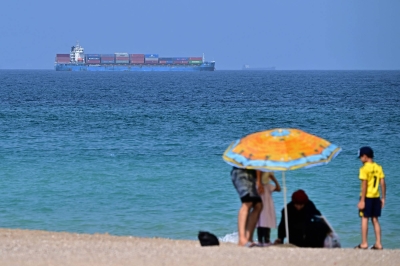
Last week's hostilities between Iran and the U.S. have caused ship traffic through the Strait of Hormuz to plummet from levels reached after a June truce between both countries.
Two days ahead of its opening, "Hope" is already the only story at the local box office. As of Monday morning, Na Hong-jin's Cannes-premiered alien epic accounted for 62.1 percent of all advance tickets…

Hyundai Motor’s union kicked off a three-day partial strike Monday after wage and bonus negotiations with management stalled, stirring concerns about production disruptions and supply delays at South Korea’s largest…

The president of the ECB will see her counterpart Warsh and Treasury Secretary Bessent. China's role in crude oil purchases
The interview with the Minister of Business and Made in Italy: "No to random interventions such as cutting excise duties, it is better to give priority to the lowest incomes"
The United States and Iran each asserted Monday they controlled the Strait of Hormuz after a weekend of attacks stretching across the wider Middle East, further threatening any diplomacy to end the war. The attacks,…

Weather cycle threatens harvests worldwide, adding to inflation already fuelled by the Iran war Economists are warning that a “super” El Niño weather cycle this year could cause a severe shock to global food prices…