Consumers are increasingly feeling the strain of the US-Israel war in Iran.
How the world covered this
Read the editorial comparison
Prose synthesis of how each outlet framed the story, with side-by-side outlet quotes and divergence notes.
8 articles from 7 sources
01

02
U.S. President Donald Trump brushed aside concerns over rising consumer prices on Wednesday, saying he 'loved' the latest inflation figures and expressing confidence that inflation...

03
Economists say Germany is edging toward recession as an energy shock caused by the Iran war takes a chunk out of growth. Meanwhile, police have carried out raids on a suspected international drug ring.
04
US President Donald Trump on Wednesday brushed off concerns about consumer inflation surging to a fresh three-year high in May, on the back of soaring energy prices caused by his war in Iran. “The numbers were great … I…

05
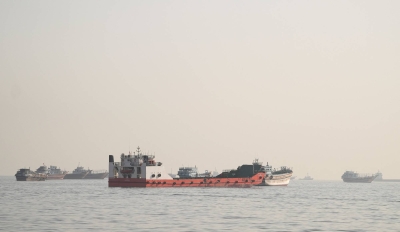
Brent crude surged over 2% to trade above $95 a barrel, while West Texas Intermediate advanced toward $93, before paring gains after the U.S. ended a brief campaign of strikes.
06
China’s factory gate prices rose by the most since 2022, surpassing expectations, as higher oil costs stemming from the war in Iran help manufacturers escape years of deflation. The producer price index rose by 3.9 per…

07
NAIROBI/KAMPALA, June 11 - Finance ministers in Kenya, Uganda and Tanzania will present their 2026/27 budgets to parliament on Thursday, with investors focused on how they will shield their economies from cost shocks…
08
The effects of prolonged conflict in the Middle East are rippling through South Korea's labor market, with employment falling for the first time in 17 months as manufacturers and young workers bear the brunt.…

AI read
What the coverage agrees on, and where it splits
This view is generated from the clustered articles, so it is best read as a map of coverage rather than a replacement for the source reporting.
Broadly agreed
- All covering sources confirm US inflation rose to a three-year high of approximately 4.2% in May 2026.
- Sources broadly agree oil prices surged above $95 per barrel following fresh US strikes on Iran.
Contested framing
- BBC and CNN frame Trump's 'I love inflation' comment as politically tone-deaf; Daily Sabah frames it as an institutional accountability failure; Straits Times frames the US as a structural beneficiary of the crisis through its oil export position.
- Deutsche Welle emphasises Germany's recession risk; SCMP emphasises China's factory price surge — two very different national economic consequences from the same conflict.
Still unclear
The duration of Hormuz disruption and whether sustained oil price elevation will trigger a global recession remain unconfirmed.
Notable omissions
The economic impact on Iran's civilian population — including those already affected by water cut-offs from US strikes — is largely absent from economic framing, appearing only in humanitarian coverage.
Quality check
Inflation and oil price increases confirmed, but whether they trigger sustained economic crisis or global recession remains speculative.
- Duration of Hormuz disruption unconfirmed; oil price elevation sustainability unclear
- Global recession risk hypothetical, not established; inflation-to-recession causal chain contested
- Economic impact on Iran's civilian population (water cuts, sanctions) largely absent from economic analysis
- Different outlets emphasize different national impacts (Germany recession vs. China factory prices) without synthesis
Review confidence: 70%
Signal strength
3/5
Narrative divergence
7
Sources compared
1
Days in coverage
How each outlet frames this story
Divergence
3/5
Narrative Divergence
How differently the sources covering this story frame it — measured by tone, emphasis, and what each outlet chooses to highlight or omit.
1 — Sources frame the story almost identically
2 — Minor differences in tone or emphasis
3 — Noticeable differences; some outlets highlight what others omit
4 — Stark contrasts; conflicting narratives
5 — Sources tell fundamentally different stories
British
BBC reports Trump saying he 'loves the inflation' as US prices rise at their fastest rate in three years, attributing the surge directly to the war.
German
Deutsche Welle reports that Germany is edging toward recession as the Iran war's energy shock takes a chunk out of growth, citing economists' warnings.
Chinese
SCMP notes that China's factory gate prices rose by the most since 2022, with higher oil costs from the war as the driver, contrasting with muted consumer inflation.
Japanese
Japan Times reports Brent crude surging over 2% to above $95 a barrel on fresh US strikes, treating the conflict as an infrastructure and logistics problem.
Turkish
Daily Sabah reports Trump saying he 'loves' inflation as prices hit a 3-year high, framing his comments as institutional accountability failure.
South Korean
Korea Herald directly links South Korea's first employment drop in 17 months to the prolonged Middle East conflict's economic ripple effects.
Singaporean
Straits Times frames the US as having benefited structurally from Hormuz closure due to its oil export position, offering a counterintuitive economic angle.