The CJP protest began with exam paper leaks. It became India's biggest student movement in years - why?
How the world covered this
Read the editorial comparison
Prose synthesis of how each outlet framed the story, with side-by-side outlet quotes and divergence notes.
6 articles from 5 sources
01

02
The decision was announced hours after activist Sonam Wangchuk ended a 26-day hunger strike overnight, raising hopes that the two sides could be moving toward a breakthrough in the crisis.

03
Sonam Wangchuk has ended his hunger strike after 26 days, saying the decision follows a "long negotiation" on various conditions and "in view of possible violence in the country."
04
Over the past three days, tens of thousands have gathered in New Delhi demanding the resignation of India's education minister, and at the center of it all is Abhijeet Dipke.
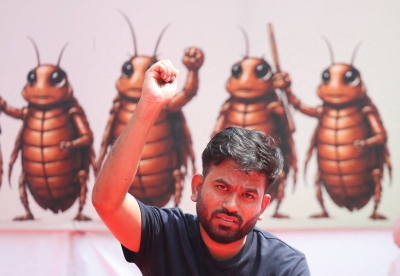
05
Modi promete punição por vazamento de provas na Índia, mas oposição pede renúncia de ministro
The Prime Minister of India, Narendra Modi, stated this Thursday (23) that "speedy trial" courts will be created to prosecute those responsible for the leak of national evidence, in his first...
06
Sonam Wangchuk, a supporter of youth-led protesters demanding education reforms, says he wants to avert "possible violence".

AI read
What the coverage agrees on, and where it splits
This view is generated from the clustered articles, so it is best read as a map of coverage rather than a replacement for the source reporting.
Broadly agreed
- All covering sources confirm the CJP movement has grown into India's largest student protest in years, drawing tens of thousands to New Delhi.
- Multiple sources confirm Sonam Wangchuk ended his 26-day hunger strike following negotiations.
Contested framing
- BBC frames the movement as something Modi 'didn't see coming' — implying government unpreparedness; The Hindu frames the government-youth talks as a positive development without the 'surprise' framing.
- Deutsche Welle questions whether the movement can go nationwide; Japan Times treats it as already a landmark national moment.
Still unclear
Whether the government talks will result in substantive education reform or merely defuse the immediate protest without addressing systemic exam corruption remains unconfirmed.
Notable omissions
No source addresses the specific policy demands of the CJP movement beyond the education minister's resignation, or what the government has concretely offered in negotiations.
Quality check
Protest size and Wangchuk's hunger-strike resolution are confirmed; government commitments and specific reform demands remain unspecified.
- Policy demands underspecified: 'What the government has concretely offered' is completely absent—reader cannot assess whether talks represent substantive movement
- Government surprise framing unverified: BBC claims Modi 'didn't see coming'; The Hindu treats talks positively; no source explains how Modi government characterizes own preparedness
- Hunger strike resolution framing: Wangchuk ended strike 'following negotiations' but terms/conditions are unspecified—could represent victory or tactical retreat
- Nationwide potential speculative: Deutsche Welle questions if movement can go nationwide; Japan Times treats as already landmark—disagreement based on prediction, not fact
Review confidence: 71%
Signal strength
3/5
Narrative divergence
5
Sources compared
1
Days in coverage
How each outlet frames this story
Divergence
3/5
Narrative Divergence
How differently the sources covering this story frame it — measured by tone, emphasis, and what each outlet chooses to highlight or omit.
1 — Sources frame the story almost identically
2 — Minor differences in tone or emphasis
3 — Noticeable differences; some outlets highlight what others omit
4 — Stark contrasts; conflicting narratives
5 — Sources tell fundamentally different stories
British
BBC frames the CJP protest as a youth movement 'India's Modi didn't see coming,' emphasizing the government's surprise and the movement's emergence from exam paper leaks into a broader corruption protest.
German
Deutsche Welle asks whether the 'Cockroach' protest movement — framed as beginning with social media satire — can go nationwide, analyzing its Gen Z anti-corruption character.
Japanese
Japan Times profiles Abhijeet Dipke as the face of India's first Gen Z protest movement, contextualizing it as a landmark moment in Indian civic engagement.
Brazilian
Folha de S.Paulo reports Modi promising 'speedy trial' courts for exam fraud but the opposition calling for the education minister's resignation, framing it through institutional accountability.