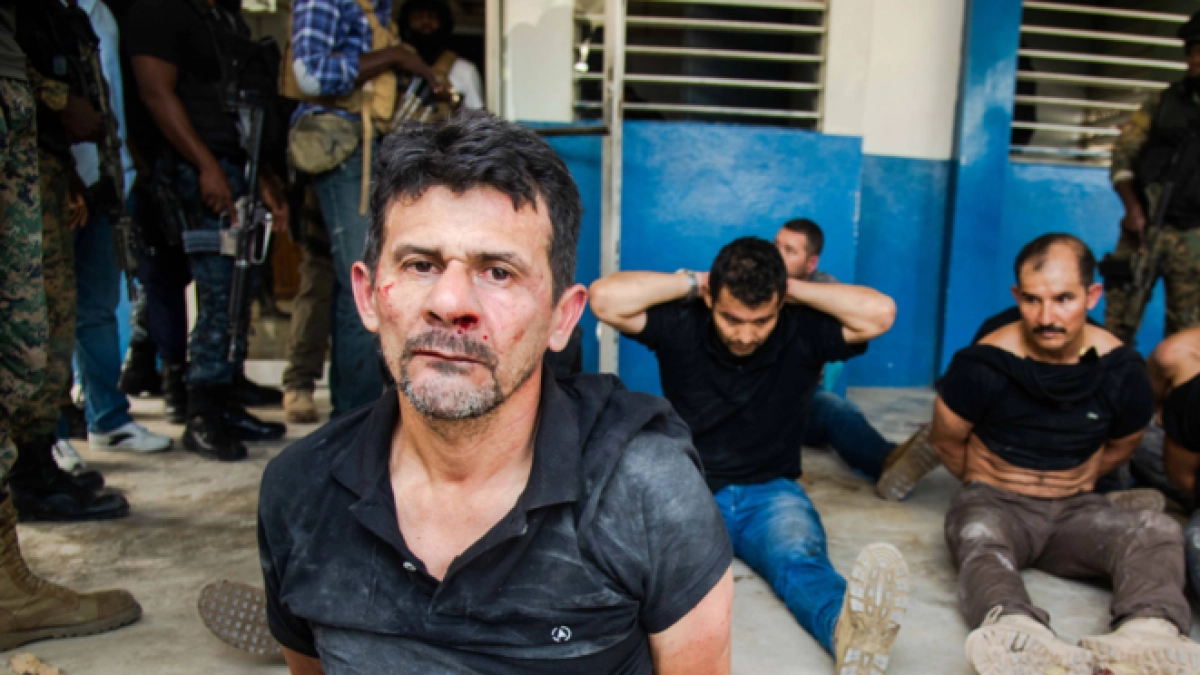
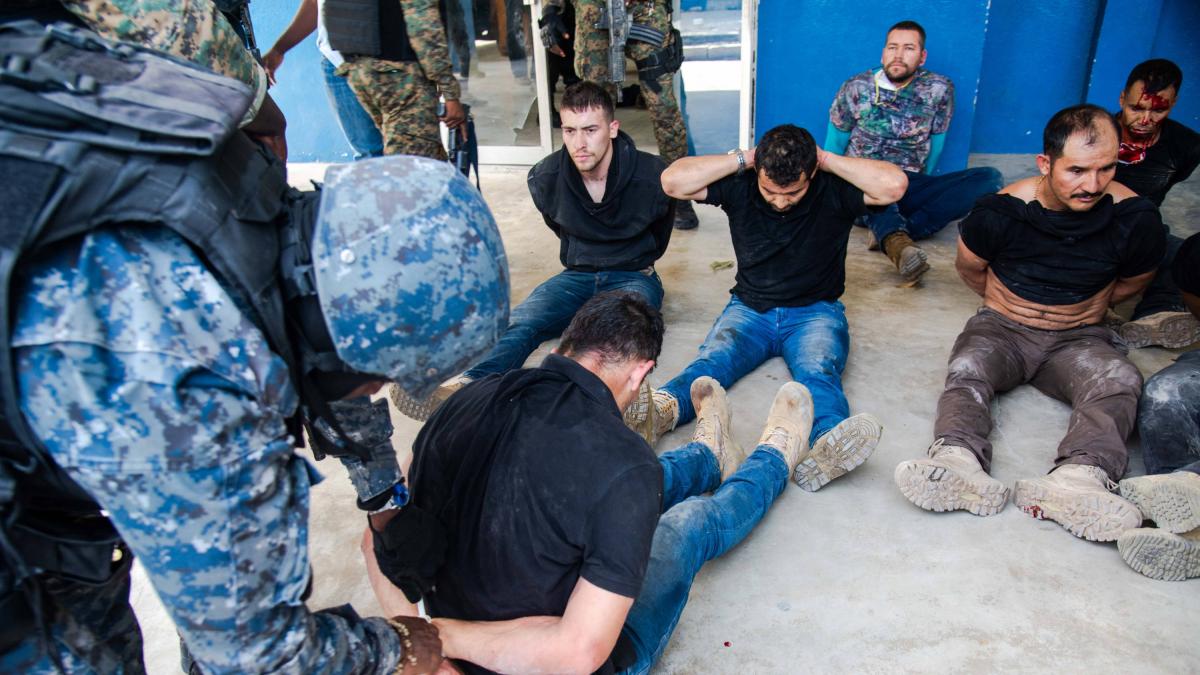
Eighteen suspects in the 2021 assassination of Haitian president Jovenel Moise have been transported to Florida to stand trial, US officials said Sunday. Moise, 53, was gunned down on July 7, 2021, at his private…
How the world covered this
Read the editorial comparison
Prose synthesis of how each outlet framed the story, with side-by-side outlet quotes and divergence notes.
5 articles from 4 sources
01

02
PORT-AU-PRINCE, Sept 20 - A military plane whisked 18 suspects in the 2021 killing of Haitian President Jovenel Moise out of Haiti and flew them to the United States on Sunday, according to Jason Reding Quiñones, the US…
03
أفاد الادعاء العام للمنطقة الجنوبية من فلوريدا بنقل 18 مشتبها بهم في قتل الرئيس الهاييتي جوفينيل مواز عام 2021 من هاييتي إلى الولايات المتحدة على متن طائرة عسكرية يوم الأحد للمثول أمام القضاء.
04
El Ministerio de Justicia y Seguridad Pública haitiano reforzó la cooperación judicial con Washington ante el estancamiento del proceso legal.
05
El fiscal federal para el Distrito Sur de Florida, Jason A. Reding Quiñones, anunció que enfrentarán la justicia en su jurisdicción.
AI read
What the coverage agrees on, and where it splits
This view is generated from the clustered articles, so it is best read as a map of coverage rather than a replacement for the source reporting.
Broadly agreed
- All covering sources confirm 18 suspects in the Moïse assassination were flown from Haiti to the US on a military aircraft to face trial in Florida.
- Sources confirm the transfer followed years of judicial stagnation in Haiti.
Contested framing
- El Tiempo and Al Jazeera Arabic foreground the Colombian military personnel dimension; SCMP and Straits Times treat it as a procedural judicial milestone without national-identity emphasis on the suspects.
Still unclear
The identities and specific alleged roles of all 18 transferred suspects, and whether the alleged mastermind has been included in the transfer, remain unconfirmed.
Notable omissions
No available summary addresses the Haitian government's position on surrendering suspects to US jurisdiction or the implications for Haitian sovereignty.
Quality check
Confirmed: 18 suspects transferred, Colombian personnel involved, Florida trial planned. Unconfirmed: identities, mastermind status.
- 18 suspects transferred confirmed; their identities and specific roles are not detailed in available summaries.
- Colombian military personnel involvement is reported by El Tiempo; scale and nature of Colombian involvement unspecified.
- Whether alleged mastermind is among transferred suspects is explicitly unconfirmed.
- Haitian government position on US jurisdiction surrender is entirely absent—sovereignty implications unaddressed.
Review confidence: 80%
Signal strength
2/5
Narrative divergence
4
Sources compared
1
Days in coverage
How each outlet frames this story
Divergence
2/5
Narrative Divergence
How differently the sources covering this story frame it — measured by tone, emphasis, and what each outlet chooses to highlight or omit.
1 — Sources frame the story almost identically
2 — Minor differences in tone or emphasis
3 — Noticeable differences; some outlets highlight what others omit
4 — Stark contrasts; conflicting narratives
5 — Sources tell fundamentally different stories
Chinese
SCMP reports 18 suspects were transported from Haiti to Florida to face trial, noting the federal prosecutor for the Southern District of Florida announced the proceedings.
Singaporean
Straits Times frames the transfer as a cooperation milestone between Haiti's Justice Ministry and Washington after the case stalled, emphasising judicial institutional progress.
Qatari
Al Jazeera Arabic frames the case returning to prominence as 18 suspects moved to Florida for trial, noting Colombian military personnel are among them.
Colombian
El Tiempo focuses specifically on the Colombian military personnel implicated, naming the federal prosecutor and framing it as Colombia's exposure to international criminal accountability.