The largest FIFA World Cup in history opens amid geopolitical turmoil, US immigration controversies, protest movements, and record commercial scale — testing whether sport can transcend political crisis.
16 sources47 articles14 perspectives
16Sources in this topicDifferent outlets covering the same story arc.
47Articles collectedThe full set backing this topic page right now.
3/5Narrative divergenceHover for scale explanation.
Narrative Divergence
How differently the sources covering this story frame it — measured by tone, emphasis, and what each outlet chooses to highlight or omit.
1 — Sources frame the story almost identically
2 — Minor differences in tone or emphasis
3 — Noticeable differences; some outlets highlight what others omit
Coupe du monde 2026 : avant le coup d’envoi, Gianni Infantino slalome entre les polémiques
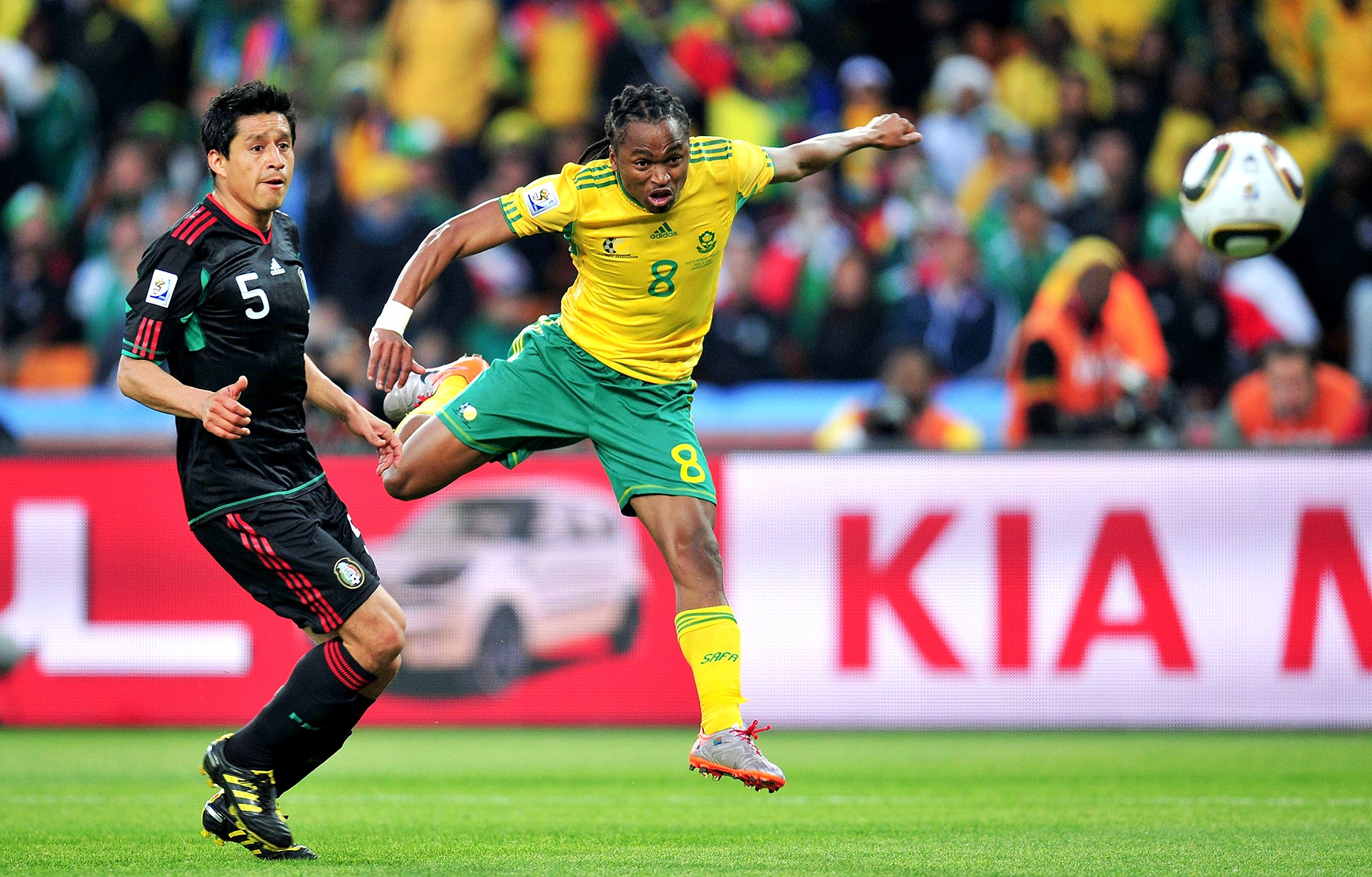
On the eve of the opening match of the World Cup, pitting Mexico against South Africa on Thursday in Mexico City, the much-maligned president of the International Football Federation brushed aside the angry subjects during his conference...
Grouped against tournament cohost Mexico, as well as Czechia and South Korea, South Africa is eyeing a positive result in its opening Fifa World Cup match, its first since 2010.
Carrusel de columnistas de EL UNIVERSAL abordan las expectativas del Mundial Con los de Casa; Luis Cárdenas, León Krauze, y Maldonado, entre los invitados
Socceroos striker Mo Toure is a no-show at the beginning of a scheduled training session, bringing his fitness into doubt just days out from their World Cup opener against Türkiye.
The International Federation of Association Football (FIFA) announces the capacity of the World Cup stadiums in 2026, anticipating an unprecedented public edition.
The president of FIFA and that of the United States make up a two-headed, mythological and geopolitical monster held together by ego and embarrassing photos
As the 2026 Fifa World Cup prepares to kick off on Thursday, the world’s elite players are vying for more than just glory – they seek a shimmering prize whose bullion value has eclipsed all previous benchmarks. The…
Trump administration’s hardline immigration restrictions and travel bans draw significant scrutiny ahead of the upcoming international sporting event; amid a ‘climate of fear’, advocacy groups launch campaigns to…
Ativistas no México organizam protestos simultâneos no dia da abertura da Copa
A president with falling popularity, a major international event and organized social movements. The crisis is felt in Mexico, one of the three host countries for the 2026 World Cup and the stage for the opening of the…
Copa do Mundo pode se revelar gol contra para setor hoteleiro dos EUA
A brief break in the heat wave in New York provided the ideal setting for the press conference on a sunny Monday morning (8), in Central Park, Manhattan. Read more (06/10/2026 - 9:19 pm)
Mercados de comida cerca del Estadio CDMX para comer rico durante el Mundial
From the traditional Huipulco Food Market to options in Villacoapa or Coyoacán, these are some food markets near the Mexico City Stadium to enjoy before or after the games of the…
This view is generated from the clustered articles, so it is best read as a map of coverage rather than a replacement for the source reporting.
Broadly agreed
All covering sources confirm the 2026 World Cup opens on June 11 with Mexico vs South Africa in Mexico City.
Sources broadly agree the tournament is surrounded by controversy over visa denials, immigration restrictions, and ticket prices.
Contested framing
Al Jazeera Arabic frames the tournament primarily as entertainment spectacle; The Hindu and Irish Times foreground political and social inequality controversies as the dominant story.
Infantino is defended in Daily Sabah's coverage of his own press conference statements; La Repubblica and Irish Times treat him as a symbol of commercialized and politically compromised governance of the sport.
Still unclear
Whether the ongoing US-Iran conflict will operationally affect the tournament's staging, security arrangements, or attendance numbers in US host cities is not yet confirmed.
Notable omissions
TASS carries no coverage of the World Cup's political controversies; People's Daily similarly avoids any critical framing of the tournament's governance failures or protest movements.
Quality check
Core facts (date, teams, controversy existence) reliable; governance assessment and political framing require outlet-conscious reading.
Governance framing diverges: Infantino is defended in some outlets, treated as symbol of corruption in others. No independent audit data provided.
Political controversy coverage splits by outlet—entertainment vs. inequality focus reflects editorial choice, not measured emphasis.
Impact of ongoing US-Iran conflict on tournament security/attendance explicitly unconfirmed.
Economic/cultural significance of potential first Knicks title-equivalent story for NYC omitted from all coverage.
Review confidence: 85%
Signal strength
3/5Narrative divergence
16Sources compared
2Days in coverage
↗ fracturing
How each outlet frames this story
Divergence3/5
Narrative Divergence
How differently the sources covering this story frame it — measured by tone, emphasis, and what each outlet chooses to highlight or omit.
1 — Sources frame the story almost identically
2 — Minor differences in tone or emphasis
3 — Noticeable differences; some outlets highlight what others omit
4 — Stark contrasts; conflicting narratives
5 — Sources tell fundamentally different stories
French
Le Monde portrays Infantino slaloming between controversies — visa denials, ticket prices, Iran war backdrop — on the eve of the opening match.
Italian
La Repubblica frames the tournament as the 'Infantrump World Cup,' depicting Infantino and Trump as a geopolitical two-headed monster fusing FIFA and US power.
Qatari
Al Jazeera Arabic saturates coverage with entertainment content — stadium capacities, musical programming, footballer profiles — subordinating political controversy to spectacle.
Irish
Irish Times covers teachers' strikes in Mexico City revealing the chasm between workers' wages and premium ticket prices, and questions whether FIFA has overplayed its commercial hand.
Mexican
El Universal covers Mexico City government publishing criteria for commercial screens on public roads, gala dinners at Chapultepec, and World Cup infrastructure — civic and institutional framing.
Brazilian
Folha de S.Paulo reports World Cup could be an own goal for US hotel sector and covers simultaneous protests by activists in Mexico on opening day, linking sport to social crisis.
South African
Daily Maverick's coverage centers on Bafana Bafana's opening match against Mexico as a nostalgia-fuelled occasion, while noting tournament controversies.
Kenyan
Daily Nation focuses on logistical realities for African fans — waking at 4am to watch matches — and the record number of African referees participating.
Singaporean
CNA and Straits Times cover Changi Airport football fever activation and South Korean vessel transit of Hormuz as a parallel to World Cup-era disruptions.
Japanese
Japan Times and Yahoo Japan focus on World Cup vocabulary guides and language as soft power, treating the tournament as a cultural rather than political event.
Emirati
The National celebrates Arab team ambitions and UAE-based players aiming to make their mark, framing the tournament through regional pride.
Australian
ABC Australia covers Socceroos injury concerns and publishes kick-off time guides — hyperlocal fan-service framing without policy interrogation.
Israeli
Times of Israel highlights the Somali referee denied US entry arriving to a hero's welcome in Mogadishu — a visa controversy emblematic of US immigration policy.
Indian
The Hindu frames the World Cup through the lens of the ongoing US-Iran war, arguing the US is giving FIFA's 'inclusive' tournament a bad name with travel bans and immigration crackdowns.
Copied!
Framing shifts since last cycle
BrazilianShifted from humanistic celebration of participation to social crisis framing, connecting sports to economic and labor vulnerability.
EmiratiShifted from commercial/political analysis to regional pride celebration, depoliticizing and domesticating the tournament narrative.
IrishShifted from hyperlocal group coverage to structural labor inequality critique, interrogating FIFA's commercial model through worker perspective.
ItalianShifted from security/ticket concerns to partisan geopolitical critique, personifying FIFA and Trump as a unified power bloc.
MexicanShifted from hyperlocal entertainment/cultural emphasis to civic infrastructure and institutional planning framing.
QatariShifted from institutional/commercial critique to entertainment-saturated spectacle coverage, subordinating political analysis to stadium profiles and musicians.
South AfricanShifted from geopolitical context integration to nostalgia-fueled local match narrative, backgrounding broader tournament controversies.
Related coverage
More topic clusters connected by category, source overlap, or narrative signal.