Vulnerable people more at risk as research finds only half of local authority plans require cooling strategies England risks constructing a new generation of “death trap” buildings that can fatally overheat unless the…
How the world covered this
Read the editorial comparison
Prose synthesis of how each outlet framed the story, with side-by-side outlet quotes and divergence notes.
12 articles from 5 sources
01
02
Annual State of the UK Climate analysis finds last four years in UK are in top five hottest on record The UK’s climatic extremes are becoming increasingly normal, a report has found, with last year the hottest on record…
03
In the newsletter: From avoiding flights to checking on vulnerable neighbours, there are steps we can all take to fight the effects of extreme heat • Don’t get Down to Earth delivered to your inbox? Sign up here From…
04
Warnings about dangerous, unhealthy air also extended from Minnesota to New York as wildfires rage in Toronto Extreme heat warnings are in place for large swaths of the United States this week, as an unusual weather…
05
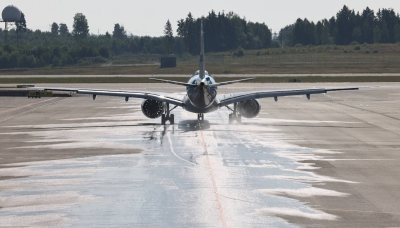
Europe is having to adapt to rising temperatures that are stoking wildfires, causing thousands of excess deaths and putting infrastructure under growing pressure.
06
Nel paese che vive a 46 gradi. “Strade vuote, asili chiusi, le tubature roventi scoppiano”
Orani, in the heart of Sardinia, is the hottest center in Italy. The mayor: “I bring air conditioners to the elderly by car”
07
Italia spaccata in due. Un morto per i nubifragi. Oggi il picco di calore
Alert in the North for strong thunderstorms and sixteen red-flag cities The expert: "Temperatures down by five degrees from Sunday"
08
The next great climate divide will be between countries that have the resources to adapt and those that don’t This summer, much of the media’s attention has focused on record temperatures across Europe and the United…
09
熱波原因か 欧州で死者1万人超に
10
EN DIRECT, incendies : les deux feux de la forêt de Fontainebleau sont « fixés » mais pas « éteints »
The two fires have covered a little more than 2,000 hectares since Sunday, the prefect of Seine-et-Marne announced Tuesday evening, specifying that the evacuated people will be able to return to their homes, but not before Wednesday.
11
Birds are unable to sweat but they keep cool by seeking shade and bathing As we humans sweltered in the record-breaking late June heatwave, we might not have spared much thought on how birds were coping. Unlike us,…
12
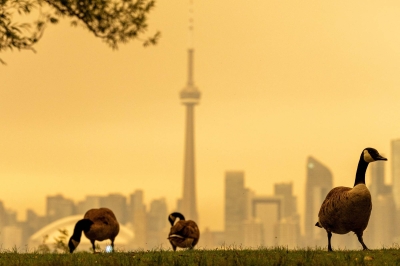
The National Weather Service said smoke from the wildfires could linger into the end of the week.
AI read
What the coverage agrees on, and where it splits
This view is generated from the clustered articles, so it is best read as a map of coverage rather than a replacement for the source reporting.
Broadly agreed
- Multiple sources confirm simultaneous extreme heat events are occurring across Europe and North America in July 2026, with documented deaths and infrastructure damage.
- Sources confirm the UK's last four years are among its five hottest on record, and that European heatwaves have killed over 10,000 people in recent prior events.
Contested framing
- The Guardian explicitly critiques UK media for failing to mention climate change when reporting on the June heatwave; other outlets covering heat events do not independently examine their own climate attribution practices.
- Deutsche Welle frames adaptation technology as an adequate institutional response; The Guardian frames the same adaptation challenge as a systemic failure of planning that will leave vulnerable people behind.
Still unclear
The total mortality attributable to the July 2026 heatwave across Europe and North America has not yet been tallied in available summaries.
Notable omissions
People's Daily, TASS, and most African and Asian outlets are silent on the European and North American heat crisis; the specific climate attribution science for the July 2026 event is absent from all summaries.
Quality check
Heat events are confirmed with documented deaths; avoid treating prior heatwave mortality figures (10,000+) as directly comparable to ongoing crisis.
- Critical unknown: total mortality attributable to July 2026 heatwave across Europe/North America not yet tallied
- Geographic silence: People's Daily, TASS, African and Asian outlets entirely absent despite global climate significance
- Climate attribution omission: specific attribution science for July 2026 event absent from all summaries
- Framing divergence: Deutsche Welle frames adaptation technology as adequate; The Guardian frames same challenge as systemic planning failure
Review confidence: 80%
Signal strength
2/5
Narrative divergence
5
Sources compared
1
Days in coverage
How each outlet frames this story
Divergence
2/5
Narrative Divergence
How differently the sources covering this story frame it — measured by tone, emphasis, and what each outlet chooses to highlight or omit.
1 — Sources frame the story almost identically
2 — Minor differences in tone or emphasis
3 — Noticeable differences; some outlets highlight what others omit
4 — Stark contrasts; conflicting narratives
5 — Sources tell fundamentally different stories
British
The Guardian combines systemic inequality analysis with institutional competence interrogation — documenting that only half of UK local authority plans require cooling strategies and that new buildings risk becoming 'death traps', and that most UK media failed to mention climate change when reporting on June's heatwave.
Italian
La Repubblica documents hyperlocal heat consequences in Sardinia — 46°C temperatures, empty streets, closed kindergartens, burst pipes — with the mayor personally delivering air conditioners to elderly residents.
Japanese
Yahoo Japan reports over 10,000 European deaths from heatwaves, framing the crisis as a comparative data point for Japanese climate vulnerability rather than a European-specific problem.
French
Le Monde covers the Fontainebleau forest fires — more than 2,000 hectares burned — as a direct consequence of extreme heat conditions, integrating ecological and institutional response analysis.
British
The Guardian also covers how birds are coping in the heatwave and provides practical guidance on protecting vulnerable people, integrating wildlife and social vulnerability angles.
Japanese
Japan Times reports Canadian wildfire smoke choking Toronto and threatening US cities as wildfires rage, connecting North American extreme weather to the broader global heatwave pattern.