How the world covered it

European Extreme Heat Crisis

A simultaneous heat dome baking the US and extreme temperatures across Europe — with Italy's Sardinia reaching 46°C, over 10,000 European deaths in previous heatwaves, and the UK reporting four of its five...

Editorial comparison

The Guardian critiques media failure to attribute heat to climate change and frames adaptation as inadequate; Deutsche Welle emphasises adaptation technology as institutional response.

The Guardian explicitly reports 'England risks building new death traps as experts warn of overheating crisis' and notes that 'only half of local authority plans require cooling strategies,' framing inadequate planning as a systemic governance failure. The Guardian headline 'Unprecedented changes in UK climate are normalising extremes' emphasizes the accelerating nature of climate disruption. Separately, The Guardian critiques that UK media 'failed to mention climate change when reporting on the June heatwave,' identifying a media accountability gap.

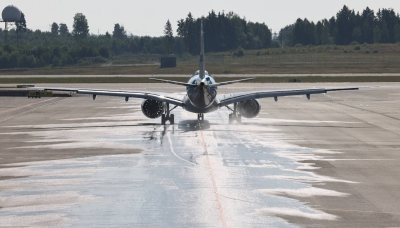
Deutsche Welle reports 'Drones, AI and white paint: Europe races to protect infrastructure from heat,' emphasizing technological adaptation and institutional response capacity. This framing treats heat as a problem with available technical solutions rather than as evidence of systemic planning failure. La Repubblica reports temperature specifics ('Sardinia reaching 46°C,' 'temperatures down by five degrees from Sunday') and human impact ('empty streets, closed kindergartens'), personalizing the crisis without entering climate attribution or adaptation adequacy debate.

The Guardian frames heat events as exposing climate change reality that media and policy have failed to acknowledge; Deutsche Welle frames them as technical challenges amenable to innovation; La Repubblica frames them as weather extremes with human consequences. The Guardian's two-part critique—of media failure and planning inadequacy—suggests systemic institutional failure; Deutsche Welle's emphasis on technology suggests manageable adaptation.

How each outlet opened the story

England risks building new death traps from overheating

Japan Times Japan

Drones AI white paint Europe protects infrastructure heat

Sardinia living at 46 degrees empty streets kindergartens closed

Coverage map

What coverage agrees on, contests, or leaves unclear.

Broadly agreed
  • Multiple sources confirm simultaneous extreme heat events are occurring across Europe and North America in July 2026, with documented deaths and infrastructure damage.
  • Sources confirm the UK's last four years are among its five hottest on record, and that European heatwaves have killed over 10,000 people in recent prior events.
Contested framing
  • The Guardian explicitly critiques UK media for failing to mention climate change when reporting on the June heatwave; other outlets covering heat events do not independently examine their own climate attribution practices.
  • Deutsche Welle frames adaptation technology as an adequate institutional response; The Guardian frames the same adaptation challenge as a systemic failure of planning that will leave vulnerable people behind.
Still unclear

The total mortality attributable to the July 2026 heatwave across Europe and North America has not yet been tallied in available summaries.

Notable omissions

People's Daily, TASS, and most African and Asian outlets are silent on the European and North American heat crisis; the specific climate attribution science for the July 2026 event is absent from all summaries.

Regional framing

How different outlets describe the same story.

British

The Guardian combines systemic inequality analysis with institutional competence interrogation — documenting that only half of UK local authority plans require cooling strategies and that new buildings risk becoming 'death traps', and that most UK media failed to mention climate change when reporting on June's heatwave.

Italian

La Repubblica documents hyperlocal heat consequences in Sardinia — 46°C temperatures, empty streets, closed kindergartens, burst pipes — with the mayor personally delivering air conditioners to elderly residents.

Japanese

Yahoo Japan reports over 10,000 European deaths from heatwaves, framing the crisis as a comparative data point for Japanese climate vulnerability rather than a European-specific problem.

French

Le Monde covers the Fontainebleau forest fires — more than 2,000 hectares burned — as a direct consequence of extreme heat conditions, integrating ecological and institutional response analysis.

British

The Guardian also covers how birds are coping in the heatwave and provides practical guidance on protecting vulnerable people, integrating wildlife and social vulnerability angles.

Japanese

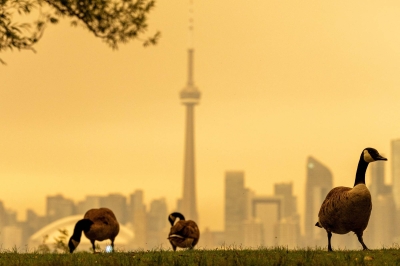
Japan Times reports Canadian wildfire smoke choking Toronto and threatening US cities as wildfires rage, connecting North American extreme weather to the broader global heatwave pattern.

Source trail

Original reporting behind this perspective.

This page maps the coverage. The 12 articles below are the original reports the comparison is drawn from — open them for each publisher's full reporting.

Show 12 source articles

How birds are coping in the heatwave

Birds are unable to sweat but they keep cool by seeking shade and bathing As we humans sweltered in the record-breaking late June heatwave, we might not have spared much thought on how birds were coping. Unlike us,…

Perspective link copied