US President Donald Trump says he is yet to decide whether or not he will "finish off" Iran.
How the world covered this
Read the editorial comparison
Prose synthesis of how each outlet framed the story, with side-by-side outlet quotes and divergence notes.
33 articles from 15 sources
01

02
EN DIRECT, guerre au Moyen-Orient : de nouvelles frappes américaines signalées contre Bouchehr, dans le sud-ouest de l’Iran
“Three points in the city of Bushehr were targeted by the American terrorist army,” the governor of the province of the same name declared on Wednesday, quoted by the Fars agency. The Iranian army also announced the…
03
The United States has launched fresh strikes on Iranian missile and coastal defense sites after reinstating a naval blockade. Iran responded by warning it could disrupt more regional energy exports.
04
EN DIRECT, guerre au Moyen-Orient : de nouvelles frappes américaines signalées contre Bouchehr, dans le sud-ouest de l’Iran
“Three points in the city of Bushehr were targeted by the American terrorist army,” the governor of the province of the same name declared on Wednesday, quoted by the Fars agency. The Iranian army also announced the…
05
Iran's Amy says struck U.S. targets in Kuwait and Bahrain with drones
06
Greater Tunb is a small island in the Persian Gulf near the entrance to the Strait of Hormuz and is regarded as a strategically important location in the strait

07
U.S. Central Command said the strikes further degraded Iran's ability to attack commercial shipping in the Strait of Hormuz

08
Irã admite negociar após bloqueio e nova ameaça de Trump
On the first day of the American naval blockade of Iran and after new threats from Donald Trump, the theocracy maintained its aggressive rhetoric towards its rivals, but, for the first time since the resumption of hostilities in…
09
من يتحكم في مضيق هرمز؟.. عبارة غامضة تحول الهدنة إلى بوابة حرب
A mysterious clause in the memorandum of understanding between Washington and Tehran revived the dispute over the Strait of Hormuz, with each party interpreting it in a way that serves its interests, which undermined the truce and renewed escalation between the two parties, amid warnings of the crisis turning into a long-term conflict.
10
Nuovi raid in Iran e nel Golfo, con i negoziati in stallo rischio di nuova escalation
The Pasdaran are still keeping Hormuz closed and the Americans are bombing for the fifth consecutive day, provoking enemy retaliation
11
Tra Iran e Usa un accordo ambiguo che ha prodotto la ripresa del conflitto
Abstruse formulations and mutual distrust push both countries to arms, thinking they have time on their side
12
Il fisico Usa: “Pickaxe sarà colpito, ma l’Iran non cederà: vuole la bomba”
David Albright, former inspector in Iraq for the Atomic Agency: “It was said that under this mountain there was a facility intended to house a large-scale centrifuge assembly line”
13
The US launched two waves of attacks on Iran’s coastal defences and missile sites on Wednesday after reimposing a naval blockade of its ports, while Iran struck back by targeting US military sites in neighbouring…


16
WASHINGTON, July 15 - The U.S. military said late on Wednesday it completed its latest wave of strikes on Iran that it carried out at President Donald Trump's direction, with targets including Bandar Abbas, Iran's…
17
米 港湾封鎖の突破図った商船攻撃
18
米軍 イランを5日連続で攻撃
19
Trump weighing options for expanding military operations in Iran CNN
20
US resumes naval blockade after seven hours of strikes on Iran CNN
21
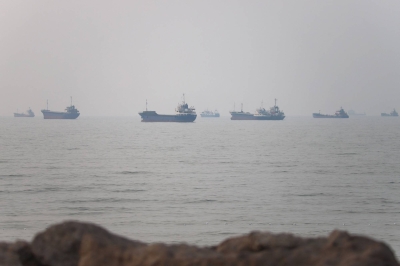
The U.S. military was helping vessels through the strait as part of an operation involving scores of secretive ship-to-ship oil transfers to keep Gulf energy exports flowing.
22
Nueva escalada en la guerra de Oriente Medio: Estados Unidos bombardea durante siete horas e Irán condiciona la reapertura del estrecho de Ormuz
The two nations continue to clash on Iranian soil while the naval blockade continues in the country's ports.

23
Iran’s Islamic Revolutionary Guard Corps has threatened to close “all other export corridors that benefit the US and its allies”, Iranian media reported, after Iran shut the Strait of Hormuz and the US reimposed a…

24
Iran: US can't interfere in Hormuz, 'flames will engulf entire region' if nearby countries work with US army The Times of Israel
25
米軍 イランの港湾封鎖を再開
26
イラン UAEタンカー攻撃1人死亡
27
米大統領 イラン海上封鎖再開表明
28
米軍がイランを追加攻撃 応酬激化
29
米イラン 海峡巡り主張に食い違い
30
米大統領 海峡「通航料」20%要求
31
Kuwait says Iranian attacks hit navy vessel, injuring four troops The Times of Israel
32
‘POTUS is absolutely right’: Iran’s FM mocks Trump over tolls for Hormuz passage The Times of Israel
33
EN DIRECT, guerre au Moyen-Orient : un pétrolier touché par un missile au large d’Oman lundi, rapporte l’agence de sécurité maritime britannique
“An oil tanker reported being hit by a missile while leaving the Strait [of Hormuz] via the southern route,” the UKMTO said. The American command for the Middle East also announced that…
AI read
What the coverage agrees on, and where it splits
This view is generated from the clustered articles, so it is best read as a map of coverage rather than a replacement for the source reporting.
Broadly agreed
- Multiple sources confirm the US conducted airstrikes on Iranian territory including missile sites, coastal defences, and Greater Tunb Island for multiple consecutive days.
- Sources broadly agree the Strait of Hormuz remains contested and that a naval blockade of Iranian ports is in effect.
- Iran released a detained American woman, Dena Karari, which Trump publicly confirmed.
Contested framing
- BBC and CNN frame the conflict as driven by Trump's ambiguous and shifting directives; TASS and Daily Sabah frame it as a US-Israeli provocation against Iran that has backfired.
- Deutsche Welle and the Irish Times emphasise that both sides ultimately want de-escalation; La Repubblica and Al Jazeera Arabic frame the ambiguous MOU language as pushing both sides toward continued conflict.
- The National emphasises Gulf collective interest in restoring freedom of navigation; Iran's statements, as reflected in Al Jazeera Arabic and Times of Israel, frame Hormuz control as a sovereign Iranian prerogative.
Still unclear
The precise terms of the disputed clause in the US-Iran memorandum of understanding — particularly which party controls Strait of Hormuz transit rights — have not been publicly confirmed by either government.
Notable omissions
People's Daily and TASS are silent on the conflict's civilian and humanitarian dimensions inside Iran; Western outlets largely omit the economic impact on Gulf states dependent on Hormuz transit for their own exports.
Quality check
Consensus on military strikes is strong, but strategic interpretation and humanitarian dimensions remain heavily contested and incomplete.
- Critical unknown: precise MOU clause on Strait of Hormuz control unverified by either government
- Contested framing: whether conflict driven by Trump directives vs. US-Israeli provocation lacks consensus
- Major regional omission: humanitarian and civilian impact inside Iran under-reported
- Economic impact on Gulf states dependent on Hormuz transit largely absent from Western coverage
Review confidence: 75%
Signal strength
5/5
Narrative divergence
15
Sources compared
2
Days in coverage
↗ fracturing
How each outlet frames this story
Divergence
5/5
Narrative Divergence
How differently the sources covering this story frame it — measured by tone, emphasis, and what each outlet chooses to highlight or omit.
1 — Sources frame the story almost identically
2 — Minor differences in tone or emphasis
3 — Noticeable differences; some outlets highlight what others omit
4 — Stark contrasts; conflicting narratives
5 — Sources tell fundamentally different stories
British
BBC leads with Trump's ambiguous threat to 'finish off' Iran and frames the conflict through institutional accountability — what decision-makers are deciding and civilian consequences — while noting Iran released a detained American woman.
American
CNN emphasises Trump's tactical options and the US military resumption of naval blockade after seven hours of strikes, framing events as a sequential military campaign with evolving presidential directives.
French
Le Monde covers new US strikes on Bushehr in a live blog and frames the conflict through expert institutional analysis, stressing ambiguity in the memorandum of understanding underpinning any ceasefire.
Indian
The Hindu provides detailed military geography — explaining the strategic significance of Greater Tunb Island in the Strait of Hormuz — while maintaining a non-aligned framing that avoids endorsing either side.
German
Deutsche Welle emphasises endurance and institutional sustainability, framing US strikes on missile and coastal defence sites as an escalation whose long-term energy infrastructure consequences for Germany are the primary concern.
Italian
La Repubblica frames the conflict as driven by mutual distrust and ambiguous agreement language, quoting a US physicist who argues Iran will not capitulate because it seeks a nuclear capability.
Brazilian
Folha de S.Paulo reports Iran acknowledged negotiations after the blockade, pairing humanistic consequence framing with structural analysis of Iran's conditional posture.
Qatari
Al Jazeera Arabic covers the dispute over Strait of Hormuz control and examines the ambiguous clause in the memorandum of understanding, framing it as a gateway to further war rather than a path to de-escalation.
Singaporean
CNA analyses the first combat use of US sea drones, framing the conflict primarily as a logistics and operational signalling problem rather than a military confrontation.
Emirati
The National emphasises that freedom of navigation must return to the Strait of Hormuz, framing the crisis through Gulf collective security and regional economic autonomy rather than US-Iran bilateral dynamics.
Israeli
Times of Israel covers Iranian strikes hitting a Kuwaiti navy vessel and Iran's FM mocking Trump over Hormuz tolls, with coverage emphasising Iranian belligerence and regional destabilisation.
Japanese
Yahoo Japan highlights the repeated shifts in Trump's statements on Iran, framing the conflict as an unpredictable US policy problem, and notes the attack on a merchant ship attempting to break the US port blockade.
Colombian
El Tiempo frames the conflict as a new Middle East escalation with seven-hour US bombing runs and Iran conditioning reopening of the Strait of Hormuz, emphasising the bilateral economic and diplomatic tension.
Framing shifts since last cycle
American
Shifted from accountability focus on Trump's inconsistent statements to operational sequencing of military campaign; de-emphasizes executive decision-making scrutiny in favor of tactical narrative.
Brazilian
Reframed from pressure-consequence analysis to post-blockade negotiation acknowledgment; subtle shift from Iran's defensive posture to structural conditionality analysis.
Colombian
Broadened from bilateral diplomatic consequences to regional escalation framing; emphasis moved from US institutional decision-making to Middle East systemic tensions.
German
Shifted from de-escalatory institutional focus to escalation-consequence framing; now emphasizes Germany's energy vulnerability rather than conflict endurance analysis.
Indian
Narrowed from granular operational targeting details to strategic geography explanation; maintains non-alignment but shifts from tactical to positional analysis.
Israeli
Reframed from Iranian defiance-as-regional-threat to Iranian belligerence-as-destabilization; subtle shift in characterization of Iran from defensive actor to aggressor.
Japanese
Reframed from energy-security logistics crisis to unpredictable US policy problem; Trump's statements now primary narrative anchor rather than secondary framing.
Qatari
Removed information-warfare analysis of Ahmadinejad's alleged Mossad links; narrowed focus to Hormuz clause as war-gateway rather than broader strategic context.