Vulnerable people more at risk as research finds only half of local authority plans require cooling strategies England risks constructing a new generation of “death trap” buildings that can fatally overheat unless the…
How the world covered this
Read the editorial comparison
Prose synthesis of how each outlet framed the story, with side-by-side outlet quotes and divergence notes.
17 articles from 9 sources
01
02
Warnings about dangerous, unhealthy air also extended from Minnesota to New York as wildfires rage in Toronto Extreme heat warnings are in place for large swaths of the United States this week, as an unusual weather…
03
Annual State of the UK Climate analysis finds last four years in UK are in top five hottest on record The UK’s climatic extremes are becoming increasingly normal, a report has found, with last year the hottest on record…
04
In the newsletter: From avoiding flights to checking on vulnerable neighbours, there are steps we can all take to fight the effects of extreme heat • Don’t get Down to Earth delivered to your inbox? Sign up here From…
05
Birds are unable to sweat but they keep cool by seeking shade and bathing As we humans sweltered in the record-breaking late June heatwave, we might not have spared much thought on how birds were coping. Unlike us,…
06
The next great climate divide will be between countries that have the resources to adapt and those that don’t This summer, much of the media’s attention has focused on record temperatures across Europe and the United…
07
EN DIRECT, incendies : les deux feux de la forêt de Fontainebleau sont « fixés » mais pas « éteints »
The two fires have covered a little more than 2,000 hectares since Sunday, the prefect of Seine-et-Marne announced Tuesday evening, specifying that the evacuated people will be able to return to their homes, but not before Wednesday.
08
Unexploded munitions were hampering efforts by firefighters to tackle a blaze in a national park in northern Germany, local officials said on Wednesday. Old munitions buried in the soil from an abandoned military…

09
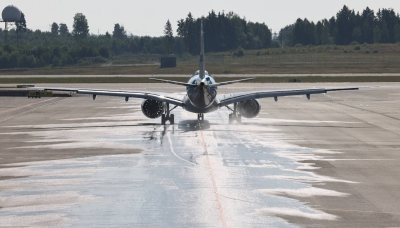
Europe is having to adapt to rising temperatures that are stoking wildfires, causing thousands of excess deaths and putting infrastructure under growing pressure.
10
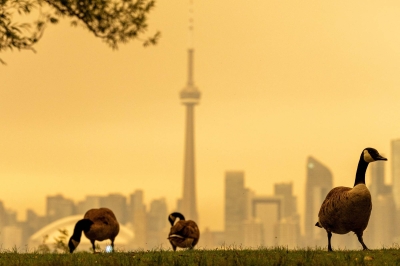
The National Weather Service said smoke from the wildfires could linger into the end of the week.
11
New Jersey, which neighbours New York, is due to host the World Cup final on July 19.
12
Heavy downpours turned rivers into raging, life-threatening torrents and washed out more than 100 roads.
13
GILGIT-BALTISTAN has emerged as Pakistan’s climate ground zero. For decades, the country’s climate emergency was narrated from its floodplains: Sindh’s submerged villages, Punjab’s swollen tributaries, the 2010 and 2022…
14
Nel paese che vive a 46 gradi. “Strade vuote, asili chiusi, le tubature roventi scoppiano”
Orani, in the heart of Sardinia, is the hottest center in Italy. The mayor: “I bring air conditioners to the elderly by car”
15
Italia spaccata in due. Un morto per i nubifragi. Oggi il picco di calore
Alert in the North for strong thunderstorms and sixteen red-flag cities The expert: "Temperatures down by five degrees from Sunday"
16
More frequent weather extremes are leading to water shortages during droughts and flooding during heavy rain. But groundwater storage can help secure water for dry seasons while mitigating extreme rain.
17
В лесах Ямала отменили режим ЧС из-за стабилизации пожарной обстановки
The “Special Fire Regime” continues to operate in the region, implying additional restrictions and enhanced security measures
AI read
What the coverage agrees on, and where it splits
This view is generated from the clustered articles, so it is best read as a map of coverage rather than a replacement for the source reporting.
Broadly agreed
- Multiple sources across Europe and North America confirm simultaneous extreme heat, wildfire, and flood events occurring in July 2026.
- The Guardian and multiple sources confirm the UK's last four years rank in the top five hottest on record, with climate extremes normalizing.
Contested framing
- The Guardian explicitly links the climate extremes to the climate crisis with institutional policy accountability framing; most UK media coverage of the June heatwave, per a separate Guardian analysis, failed to mention climate change at all — a documented framing gap within the same national media ecosystem.
Still unclear
Total mortality attributable to the current European and North American heat events in the current cycle is not consolidated or confirmed across available summaries.
Notable omissions
People's Daily and TASS do not cover the climate extremes, consistent with their patterns of avoiding coverage that could implicate state fossil fuel or industrial policy.
Quality check
This topic has enough source coverage for a useful cross-source comparison.
Review confidence: 100%
Signal strength
2/5
Narrative divergence
9
Sources compared
1
Days in coverage
How each outlet frames this story
Divergence
2/5
Narrative Divergence
How differently the sources covering this story frame it — measured by tone, emphasis, and what each outlet chooses to highlight or omit.
1 — Sources frame the story almost identically
2 — Minor differences in tone or emphasis
3 — Noticeable differences; some outlets highlight what others omit
4 — Stark contrasts; conflicting narratives
5 — Sources tell fundamentally different stories
British
The Guardian leads with UK climate extremes report showing the last four years are in the top five hottest on record, building overheating crisis risks for vulnerable populations, and access to air conditioning as the critical adaptation divide — maintaining systemic inequality and institutional accountability framing.
German
Deutsche Welle covers a German wildfire in a national park complicated by unexploded WWII munitions keeping firefighters 1km away, and how to store groundwater for dry seasons — combining environmental and infrastructure vulnerability framing.
Italian
La Repubblica covers Sardinia's 46-degree temperatures with mayor bringing air conditioners to elderly by car and Italy split by storms in the north and extreme heat in the south — personal humanistic framing of climate's civic impact.
French
Le Monde tracks the Fontainebleau forest fires covering 2,000+ hectares, describing the unreality of watching the forest burn on Bastille Day.
Pakistani
Dawn frames Gilgit-Baltistan as 'Pakistan's climate ground zero,' the first time Pakistan's climate emergency has been narrated from its own territory rather than as an externally-driven development — a significant framing shift.
Japanese
Japan Times covers Europe racing to protect infrastructure from heat using drones, AI, and white paint, and Canadian wildfire smoke threatening US cities — treating climate through infrastructure resilience and corporate consequence framing.
Singaporean
Straits Times covers Canadian wildfire smoke threatening cities including New Jersey (World Cup final host), connecting climate and major event logistics in a distinctive operational framing.