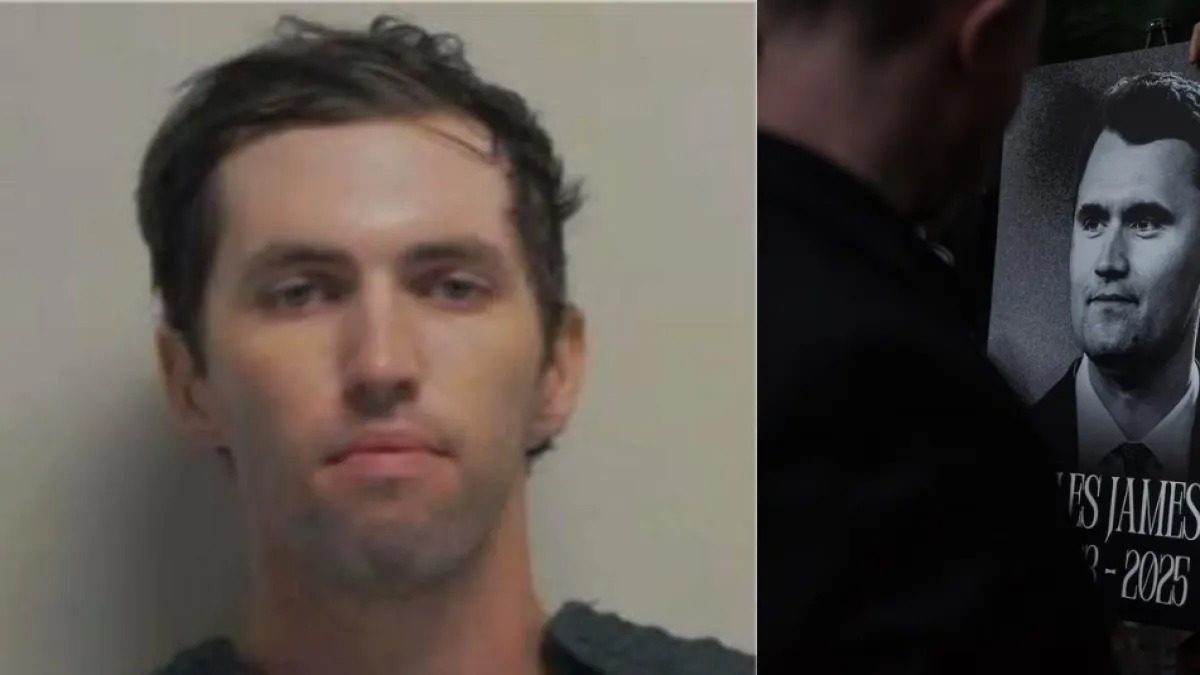
July 9 (Reuters) - The former roommate of Tyler Robinson, who is accused of assassinating conservative activist Charlie Kirk, told prosecutors that Robinson expressed regret a day after the killing and planned to hand…
How the world covered this
Read the editorial comparison
Prose synthesis of how each outlet framed the story, with side-by-side outlet quotes and divergence notes.
7 articles from 7 sources
01

02
Prosecutors in the Charlie Kirk murder case released details from an interview with the suspect's roommate, where he allegedly admitted to the murder and that he regretted it.
03
The former roommate of Tyler Robinson, who is accused of assassinating conservative activist Charlie Kirk, told prosecutors that Robinson expressed regret a day after the killing and planned to hand himself over to…

04
Suspect in Charlie Kirk’s killing ‘said he wishes he hadn’t done it,’ roommate told Utah prosecutors CNN
05
The family of conservative activist Charlie Kirk has pleaded with a judge to allow more public access to evidence presented against the man accused of the assassination.
06
Acusado del asesinato del influencer Charlie Kirk se arrepintió, revela testimonio; enfrenta pena de muerte
The accused would have cried and said he regretted the homicide, according to testimony presented in Utah

07
Nuevas pruebas contra Tyler Robinson salen a la luz en la audiencia del caso Charlie Kirk: Fiscalía presenta videos y la autopsia
The activist was murdered at an event in the United States. He was a prominent figure on the right and a friend of President Trump.
AI read
What the coverage agrees on, and where it splits
This view is generated from the clustered articles, so it is best read as a map of coverage rather than a replacement for the source reporting.
Broadly agreed
- All covering sources confirm the suspect's former roommate told prosecutors the suspect expressed regret and said he 'wished he hadn't done it.'
- Sources agree the suspect faces the death penalty.
Contested framing
- Australian ABC focuses on Kirk family's request for evidence transparency; American and European outlets focus on the regret testimony — different editorial priorities within the same case.
Still unclear
The specific motive for the killing and the legal weight of the roommate's testimony in Utah's evidentiary framework remain publicly unresolved.
Notable omissions
No source examines the broader political context of violence against conservative figures or the security implications for public political events.
Quality check
The testimony is documented; treat as evidence of a single conversation with unquantified legal weight—watch for how courts assess hearsay.
- Roommate testimony about regret is confirmed across sources
- Death penalty claim is confirmed
- Editorial priority differs (transparency vs. psychological evidence) but both supported by available facts
- Unknown: specific motive and legal weight of roommate hearsay evidence in Utah law remain unaddressed
Review confidence: 80%
Signal strength
2/5
Narrative divergence
7
Sources compared
1
Days in coverage
How each outlet frames this story
Divergence
2/5
Narrative Divergence
How differently the sources covering this story frame it — measured by tone, emphasis, and what each outlet chooses to highlight or omit.
1 — Sources frame the story almost identically
2 — Minor differences in tone or emphasis
3 — Noticeable differences; some outlets highlight what others omit
4 — Stark contrasts; conflicting narratives
5 — Sources tell fundamentally different stories
South African
Daily Maverick republishes a Reuters dispatch on the roommate testimony as a straight news relay without editorial framing.
German
Deutsche Welle reports the roommate testimony factually, noting the suspect 'regretted' the act, treating it as a US domestic crime story.
Chinese
SCMP reports the roommate testimony and the suspect's denial alongside the death penalty possibility.
American
CNN focuses on the 'regret' statement from the roommate as the key news hook, framing it as a significant prosecutorial development.
Australian
ABC Australia covers the Kirk family's request for more public access to trial evidence, adding a transparency and justice procedural angle.
Mexican
El Universal frames the case around the accusation and the death penalty the suspect faces, emphasizing legal jeopardy.
Colombian
El Tiempo covers the early hearing with videos, autopsy evidence, and the prosecutor's case-building as new evidence against the accused.