The move comes after weeks of anti-government protests that have caused a shortage of basic goods in Bolivia.
How the world covered this
Read the editorial comparison
Prose synthesis of how each outlet framed the story, with side-by-side outlet quotes and divergence notes.
6 articles from 6 sources
01

02
President Rodrigo Paz says he has declared the state of emergency "to free the country's roads." Blockades have become a major tactic in weeks of intensifying protests to demand that the president resign.
03
Bolivia’s crisis intensified on Saturday as President Rodrigo Paz declared a state of emergency, enabling wider military deployment to clear blockades and restore order after protests brought the economy to a halt over…

04
Tensions soared in Bolivia Saturday after President Rodrigo Paz declared a state of emergency, allowing security forces to begin clearing protesters' roadblocks that have paralyzed the economy over the past 50 days…
05
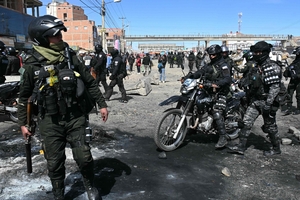
Bolivia registra 44 bloqueos de carreteras en las primeras horas del estado de excepción decretado por el presidente Rodrigo Paz
The Government deployed soldiers and machinery to clear the roads after decreeing the exceptional regime, which must be approved by Congress.
06
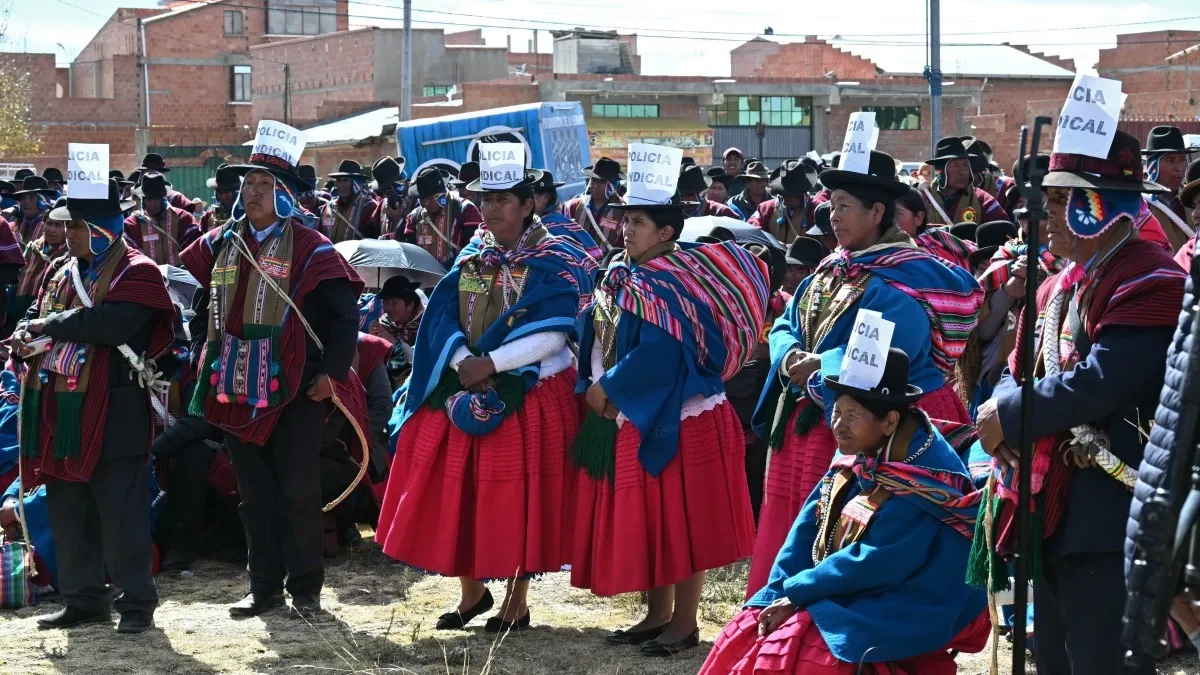
Governo da Bolívia assina acordo com central sindical após 50 dias de protestos pelo país
The Bolivian president, Rodrigo Paz, reached an agreement this Friday (19) with the Confederation of Bolivian Workers (COB), an important step towards resolving a conflict that paralyzed the country for 50…
AI read
What the coverage agrees on, and where it splits
This view is generated from the clustered articles, so it is best read as a map of coverage rather than a replacement for the source reporting.
Broadly agreed
- All covering sources confirm Bolivia's president declared a state of emergency on June 20, enabling security forces to clear road blockades.
- Multiple sources confirm the government previously signed an agreement with the main trade union centre, which failed to end all blockades.
Contested framing
- Straits Times and the president's own framing portray the blockades as an organised destabilisation effort; Deutsche Welle and Folha de S.Paulo treat them as a social protest that evolved into a governance crisis.
Still unclear
Whether the military deployment will succeed in clearing blockades without violent confrontation, and whether the trade union agreement will hold, remain unresolved in available summaries.
Notable omissions
The demands of the protesting movements beyond the trade union umbrella — including Indigenous groups and regional organisations — are absent from most international coverage.
Quality check
State of emergency and blockades are confirmed, but the protests' underlying causes and composition are incompletely covered.
- Contested interpretation: Straits Times frames blockades as 'organised destabilisation'; Deutsche Welle/Folha treat as social protest evolved into crisis. Both frames present but not reconciled.
- Previous union agreement failure: sources confirm agreement was signed but failed to end all blockades—raises question whether military deployment will succeed (appropriately flagged as unknown).
- Major omission: Indigenous groups and regional organisations' demands beyond trade union are absent from most international coverage—limits reader understanding of protest's full composition.
- Unknown: whether military deployment will succeed without violence remains unresolved, making impact assessment premature.
Review confidence: 76%
Signal strength
2/5
Narrative divergence
6
Sources compared
1
Days in coverage
How each outlet frames this story
Divergence
2/5
Narrative Divergence
How differently the sources covering this story frame it — measured by tone, emphasis, and what each outlet chooses to highlight or omit.
1 — Sources frame the story almost identically
2 — Minor differences in tone or emphasis
3 — Noticeable differences; some outlets highlight what others omit
4 — Stark contrasts; conflicting narratives
5 — Sources tell fundamentally different stories
British
BBC frames the state of emergency as a response to weeks of anti-government protests causing a shortage of basic goods.
German
Deutsche Welle reports President Paz declared the emergency 'to free the country's roads', noting blockades have become a major political challenge.
Chinese
SCMP frames the emergency as enabling wider military deployment, focusing on the state's institutional capacity to restore order.
South Korean
Korea Herald confirms the emergency declaration and security force deployment, treating it as a factual governance development.
Colombian
El Tiempo documents 44 active road blockades in the emergency's first hours, providing granular data on the protest's geographical reach.
Brazilian
Folha de S.Paulo contextualises the emergency within a 50-day protest cycle, noting the government had signed an agreement with the main trade union centre just before the declaration.