Bolivian president declares state of emergency
The move comes after weeks of anti-government protests that have caused a shortage of basic goods in Bolivia.

Bolivia's president declaring a state of emergency to clear protest-caused road blockades — deploying the military — signals a political and economic crisis that has disrupted supply chains and basic goods...
Straits Times and the president's own framing presented in SCMP coverage portray the road blockades as an organised destabilisation effort requiring military deployment to restore order and national function. Deutsche Welle and Folha de S.Paulo instead treat the blockades as a social protest movement rooted in economic grievance that escalated over weeks, creating a governance crisis requiring negotiation rather than military clearing.
Folha de S.Paulo reports that the Bolivian government signed an agreement with the Confederation of Bolivian Workers after 50 days of protests, framing the blockades as labour-backed industrial action with legitimate economic demands. The emergency declaration and troop deployment, presented by Straits Times as restoration of order, is framed by Folha as escalation following failed negotiation.
Bolivian president declares state of emergency
Bolivia's Paz declares state of emergency over blockades
Bolivia's president declares state of emergency paving way
Bolivian government signs agreement with trade union center
Whether the military deployment will succeed in clearing blockades without violent confrontation, and whether the trade union agreement will hold, remain unresolved in available summaries.
The demands of the protesting movements beyond the trade union umbrella — including Indigenous groups and regional organisations — are absent from most international coverage.
BBC frames the state of emergency as a response to weeks of anti-government protests causing a shortage of basic goods.
Deutsche Welle reports President Paz declared the emergency 'to free the country's roads', noting blockades have become a major political challenge.
SCMP frames the emergency as enabling wider military deployment, focusing on the state's institutional capacity to restore order.
Korea Herald confirms the emergency declaration and security force deployment, treating it as a factual governance development.
El Tiempo documents 44 active road blockades in the emergency's first hours, providing granular data on the protest's geographical reach.
Folha de S.Paulo contextualises the emergency within a 50-day protest cycle, noting the government had signed an agreement with the main trade union centre just before the declaration.
This page maps the coverage. The 6 articles below are the original reports the comparison is drawn from — open them for each publisher's full reporting.
The move comes after weeks of anti-government protests that have caused a shortage of basic goods in Bolivia.
President Rodrigo Paz says he has declared the state of emergency "to free the country's roads." Blockades have become a major tactic in weeks of intensifying protests to demand that the president resign.
Bolivia’s crisis intensified on Saturday as President Rodrigo Paz declared a state of emergency, enabling wider military deployment to clear blockades and restore order after protests brought the economy to a halt over…

Tensions soared in Bolivia Saturday after President Rodrigo Paz declared a state of emergency, allowing security forces to begin clearing protesters' roadblocks that have paralyzed the economy over the past 50 days…
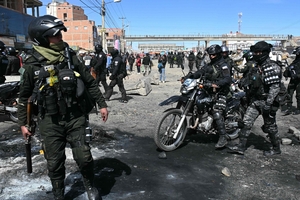
The Government deployed soldiers and machinery to clear the roads after decreeing the exceptional regime, which must be approved by Congress.
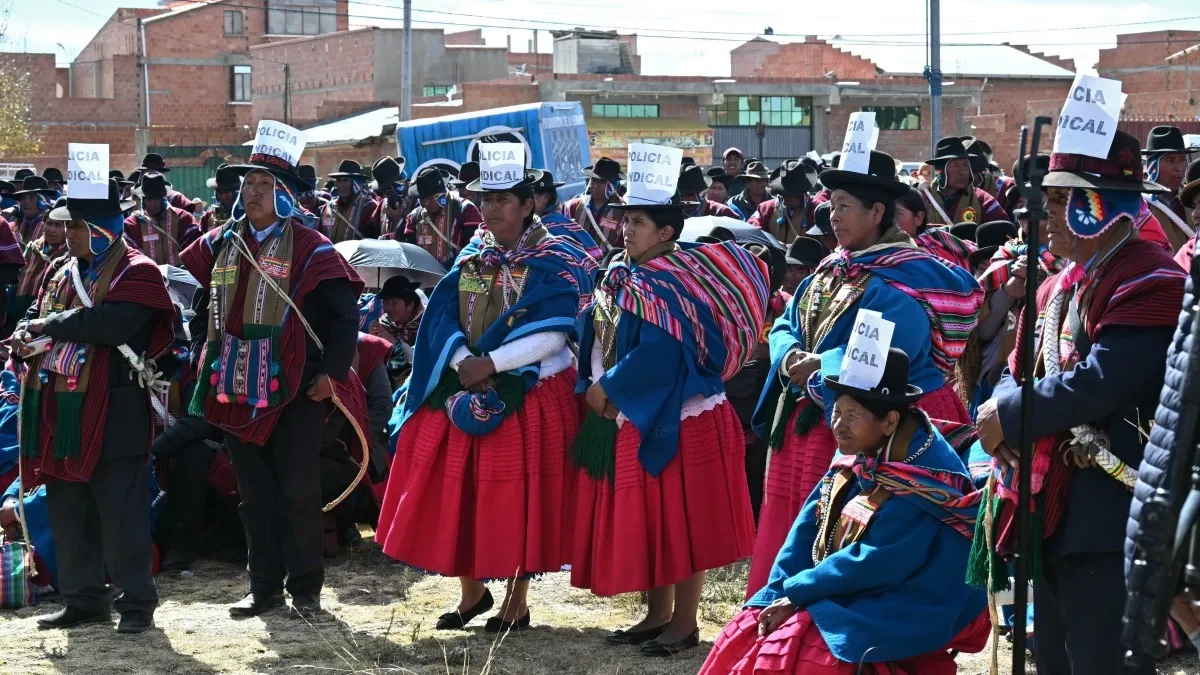
The Bolivian president, Rodrigo Paz, reached an agreement this Friday (19) with the Confederation of Bolivian Workers (COB), an important step towards resolving a conflict that paralyzed the country for 50…