US-Iran talks to begin in Switzerland as Tehran says it closed Strait of Hormuz
The US disputed Iran's claim the waterway is shut, a move Tehran says was a response to Israeli attacks in Lebanon.

Iran's renewed closure of the Strait of Hormuz — a chokepoint for roughly 20% of global oil trade — directly threatens energy markets and tests whether the newly signed US-Iran memorandum of understanding can...
BBC News and CNN lead by emphasising the disputed nature of Iran's Hormuz closure, with the US actively denying the claim and citing on-the-ground shipping data contradicting Tehran's statement. TASS and Al Jazeera Arabic present Iran's declaration of closure without questioning its veracity or providing contradictory evidence.
Times of Israel frames the emerging US-Iran memorandum as structurally weaker than the Obama-era JCPOA and insufficient to dismantle Iran's nuclear programme. Deutsche Welle and El Tiempo instead characterise it as a meaningful de-escalation that reduces market pressure and tensions.
Folha de S.Paulo and Japan Times both identify Trump's economic fears about oil prices as a weakening factor in US negotiating leverage. People's Daily and Gazeta.uz present the diplomatic process as a straightforward diplomatic achievement without acknowledging the asymmetries in bargaining power that constrain American negotiators.
US disputed Iran's claim the waterway is shut
US and Iranian negotiators head to Switzerland for talks
US Vice President JD Vance arrived in Switzerland for negotiations
U.S. Vice-President Vance arrives in Switzerland for nuclear talks
Vance in Switzerland for US-Iran talks as Strait closed
Whether Iran will reopen Hormuz to shipping pending the outcome of Swiss talks, and whether the MOU's nuclear provisions include enforceable verification mechanisms, remain publicly unconfirmed.
Iranian domestic opposition to the deal and the human cost of prior US-Israeli strikes on Iranian infrastructure are consistently absent from Western and Gulf outlet coverage, while Israeli outlets omit analysis of how continued Lebanon strikes undermine US diplomatic positioning.
BBC foregrounds the institutional dispute over whether Hormuz is actually closed, maintaining factual distinction between US denial and Iranian claim, while documenting Israeli strikes in Lebanon as the trigger.
Deutsche Welle frames the talks through an endurance lens, emphasising institutional sustainability and warning of economic shock to Germany given energy dependence.
The Hindu emphasises Pakistan's mediating role and India's non-aligned observation of the 60-day sprint toward agreement, underscoring South Asian strategic autonomy positioning.
Folha de S.Paulo leads with Vance's arrival and Trump's toll threat on Hormuz, framing US economic self-interest as the dominant factor shaping negotiations.
Al Jazeera Arabic covers Vance's arrival in Switzerland and Lebanon's role as trigger, subordinating diplomatic depth to event narration amid heavy sports content allocation.
Straits Times and CNA both foreground the Hormuz closure and Vance's arrival through a supply-chain and energy security lens, noting Lebanon ceasefire fragility as a complicating factor.
Dawn highlights PM Shehbaz Sharif and army chief Asim Munir travelling to Switzerland, positioning Pakistan as indispensable mediator and stressing its institutional investment in the deal's success.
The National focuses on Gulf energy security and regional collective positioning, treating the Iran-US negotiation as a stability mechanism for UAE commercial interests.
SCMP analyses the talks through structural institutional vulnerability over military capability, foregrounding supply-chain coherence risks to Asian economies.
El Tiempo questions whether Trump 'won' the Iran confrontation, noting the agreement avoids regional escalation but leaves the nuclear programme's root intact and sensitive issues unresolved.
La Repubblica reports Vance and Ghalibaf meeting, focusing specifically on the nuclear power provisions of the memorandum and Italy's hesitation to send ships to Hormuz to avoid rupture with Washington.
Yahoo Japan covers Hormuz closure, US denial, and the Swiss talks timeline, reflecting acute Japanese energy-import vulnerability without editorial commentary.
Japan Times analyses how Trump's stated economic fears undercut US negotiating leverage, treating the diplomacy as a logistics and corporate resilience problem for Japanese firms.
Gazeta.uz presents Uzbekistan's welcome of the memorandum as a development achievement without any critical institutional framing of the deal's ambiguities.
This page maps the coverage. The 40 articles below are the original reports the comparison is drawn from — open them for each publisher's full reporting.
The US disputed Iran's claim the waterway is shut, a move Tehran says was a response to Israeli attacks in Lebanon.
US Vice President JD Vance is en route to Switzerland for talks with Iran's delegation in the mountain resort in Bürgenstock. Follow DW.
United States Vice President JD Vance arrived this Sunday (21) in Switzerland for negotiations with Iran regarding the agreement that could put an end to the war in the Middle East. Read more (06/21/2026 - 02:39)
The framework was signed last week, and now top U.S. and Iran negotiators are in a 60-day sprint to reach agreement on the technical details

Pakistan’s Prime Minister Shehbaz Sharif and Army chief Field Marshal Asim Munir also left for Switzerland

Pakistan, which mediated the U.S.-Iran ceasefire, said “technical talks” between the two sides were set to restart in Geneva on Sunday (June 21, 2026)

The Swiss Foreign Ministry said that no further details would be disclosed about participants and the content of the talks, citing confidentiality.

A new round of negotiations over the Middle East war was set to kick off on Sunday as Iranian negotiators and US Vice-President J.D. Vance arrived in the Swiss host city, even as Tehran said it was closing the Strait of…

Iran on Saturday said that it closed the Strait of Hormuz because of Israel’s attacks in Lebanon and warned that while negotiators were going to Switzerland for talks with the US on their interim agreement, not much…

The Lebanon truce appeared fragile as Israeli forces and Hezbollah attacked each other.
Domestic war unpopularity and looming midterm elections weaken the US position.


US Vice President J.D. Vance arrived in Switzerland to participate in the negotiations aimed at reaching an agreement on the Iranian nuclear program, while Lebanon leads the first sessions.
The announcements indicated a rough start to technical-level U.S.-Iran talks that key mediator Pakistan said will begin Sunday (June 21, 2026), with Qatari mediators also participating

What are the main provisions of the U.S.-Iran memorandum of understanding signed on June 15? What commitments have the two countries made under the deal regarding nuclear activities and sanctions?

Prime Minister Shehbaz Sharif and Chief of Defence Forces Field Marshal Asim Munir departed early on Sunday morning for Switzerland to attend technical-level talks between Iran and the United States set for today. The…
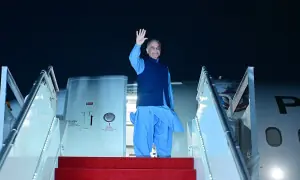
The team led by Abás Araqchí landed in Zurich prior to the start of the planned talks with JD Vance

The round of technical talks will focus on the control of uranium reserves and the implementation of the memorandum of understanding.
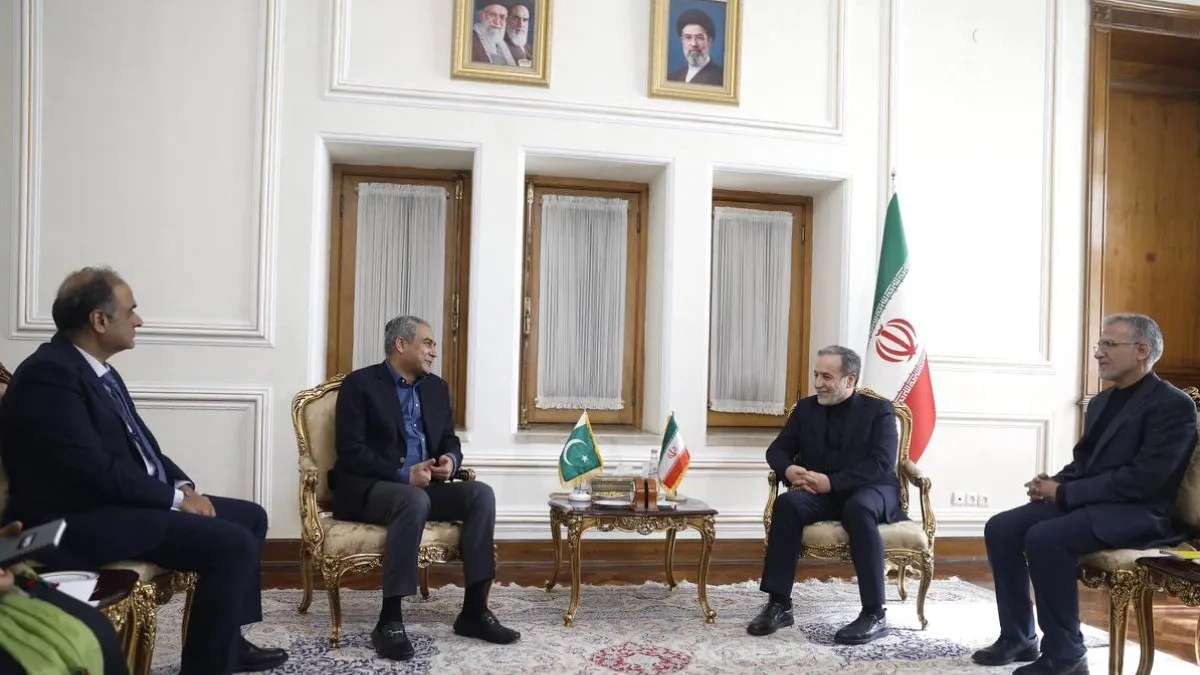
Vance's announcement comes after Tehran's new closure of the Strait of Hormuz, which revived uncertainty over the peace deal.

"I didn't want to see economic catastrophe," Trump said at a news conference in Evian, France on Thursday. "If you kept this going, that could've happened."
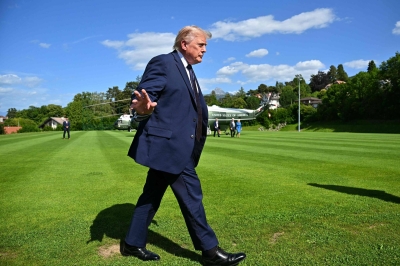
Iran's central military command said "the Strait of Hormuz will be closed to vessel traffic" following Israeli strikes in Lebanon.
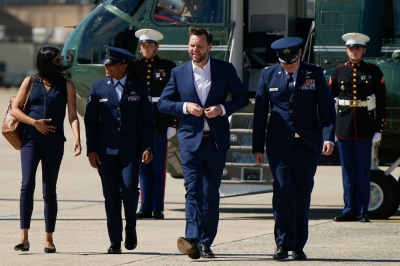
The American vice president and the Tehran delegation will talk about the memorandum and, in particular, about nuclear power
The IDF says it reacted in response to Hezbollah attacks, Tehran blocks the Strait. Raid also on Gaza, over 10 victims
The country's 'vibracession' should not be managed only with measures to calm the mood in the short term, these analysts say.

THE fate of Lebanon could determine whether the recently signed MoU between the US and Iran survives. True to form, Israel is doing all possible to ensure the nascent peace deal is destroyed before the proverbial ink…
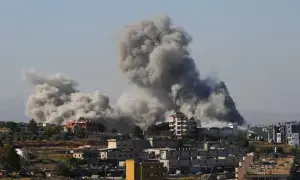
Iran's Revolutionary Guard and the country's military command stated, this Saturday (20), that they had once again closed the Strait of Hormuz to vessel traffic. According to Iranian authorities, ship traffic…
The President of the United States, Donald Trump, suggested this Saturday (20) that the American government could charge a toll for crossing the Strait of Hormuz if there is no agreement with Iran in the ongoing peace negotiations.…
Uzbekistan welcomed the signing of a memorandum of understanding between the United States and Iran, calling it a “significant diplomatic breakthrough” toward restoring regional security.…
The agreement followed concerns that continued clashes would undermine the deal to end the war between the US and Iran.

