BBC sees destroyed villages in Israeli-occupied southern Lebanon
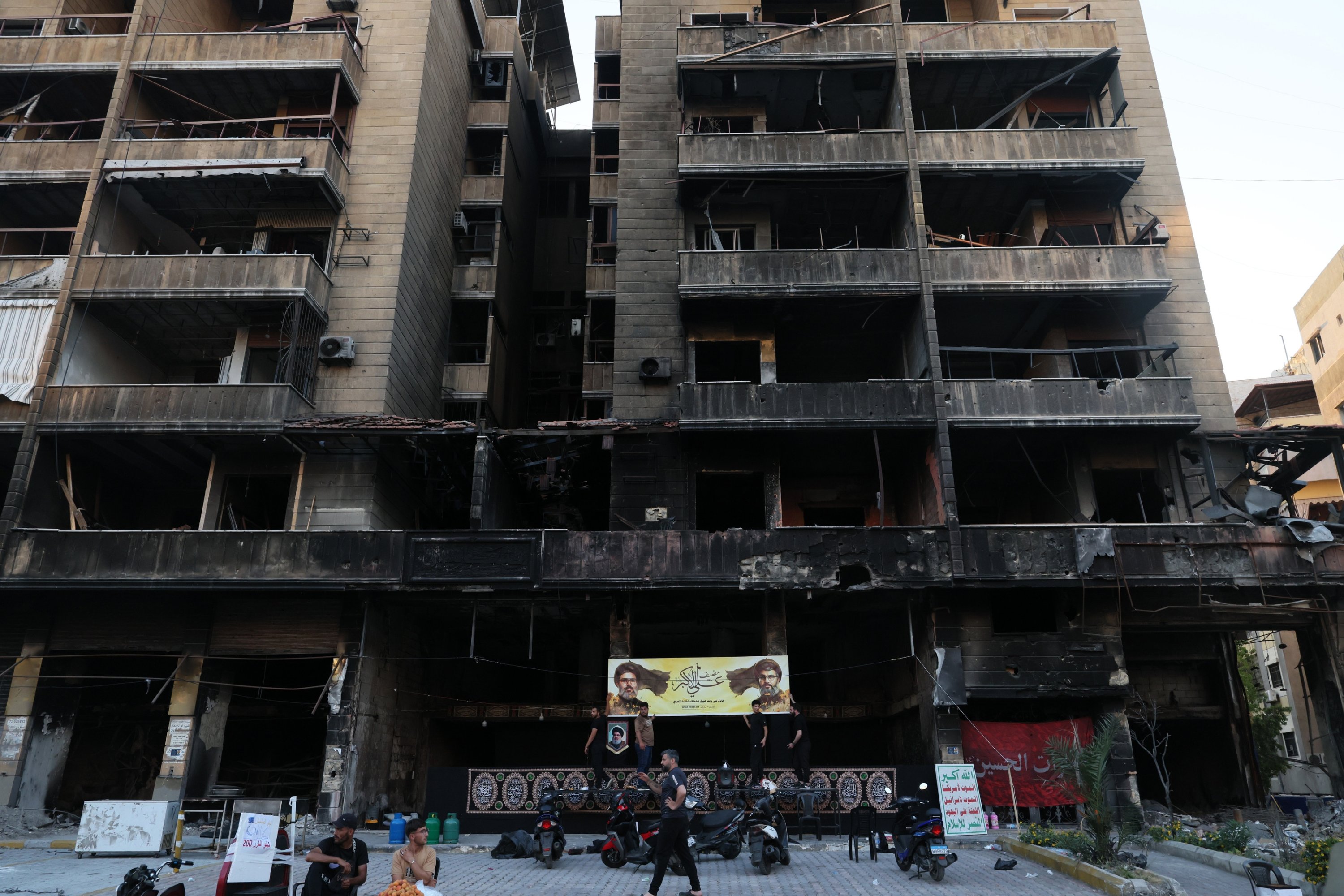
Travelling with a humanitarian convoy, BBC's Hugo Bachega has been given rare access to a part of Lebanon under Israeli occupation.

Continued Israeli strikes in Lebanon following a June 19 ceasefire agreement are killing dozens, straining the US-Iran MOU, and threatening to reignite a full-scale regional war.
Times of Israel leads with Israeli military confirmation of south Lebanon strikes, emphasising that Hezbollah fired some 50 projectiles at troops overnight, framing Israeli operations as reactive responses to provocation. BBC News and Al Jazeera Arabic instead foreground the ceasefire context and civilian casualties, with BBC reporting destroyed villages and an environmentalist killed in Israeli strikes, presenting the strikes as violations of a fragile truce.
BBC and Le Monde treat ongoing Israeli military action as endangering a fragile diplomatic architecture designed to prevent regional escalation. Times of Israel presents Israeli strikes as justified responses to armed group activity, without prioritising the diplomatic preservation framework in its framing.
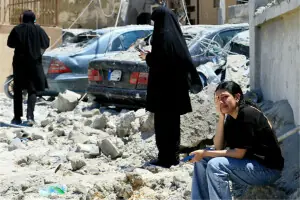
Destroyed villages in Israeli-occupied southern Lebanon
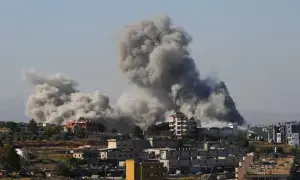
IDF confirms south Lebanon strikes, Hezbollah fired projectiles
Israeli force penetrates Syrian Daraa countryside
At least 20 killed as Israel continues attacks Lebanon
Whether the Israeli government's reported order to hold fire on June 20 was actually implemented at the operational level remains unverified across available summaries.
The political and civilian situation inside Lebanon — displacement figures, infrastructure damage, and the Lebanese government's capacity to enforce a ceasefire — is largely absent from Israeli and US-centric coverage.
BBC documents Israeli military operations in southern Lebanon with rare humanitarian convoy access, foregrounding civilian destruction and the death of conservationist Mona Khalil as a concrete civilian cost.
Times of Israel confirms IDF strikes and Hezbollah rocket fire, framing Israeli operations as reactive to Hezbollah provocation and noting at least 50 projectiles fired at Israeli troops overnight.
Al Jazeera Arabic reports an Israeli force penetrating Daraa in Syria and raiding homes, positioning Israeli military activity as regionally expansive beyond Lebanon.
Dawn reports at least 20 killed in Lebanon with a Lebanese soldier among the dead and Israel refusing to withdraw troops from southern Lebanon, framing it as Israeli non-compliance with ceasefire terms.
Le Monde frames the Lebanon ceasefire as precarious and directly endangered by Israeli escalation, positioning the US and Iran as external stabilisers trying to hold it together.
Straits Times notes Israeli forces were 'ordered by leaders to hold fire' on June 20 despite ground-level strikes, suggesting a command-and-control disconnect.
ABC Australia reports that Australia's Shadow Foreign Affairs Minister defended Israel's right to continue military operations in Lebanon despite the MOU, departing from the ceasefire framing dominant elsewhere.
Daily Sabah highlights US intelligence warnings that Netanyahu's Lebanon actions could undermine the Iran deal, framing the Israeli PM as a spoiler to American diplomatic goals.
Yahoo Japan records Israeli authorities ordering a halt to fighting, presenting it as an institutional command without analysing whether it was followed.
This page maps the coverage. The 20 articles below are the original reports the comparison is drawn from — open them for each publisher's full reporting.
Travelling with a humanitarian convoy, BBC's Hugo Bachega has been given rare access to a part of Lebanon under Israeli occupation.
Mona Khalil, who had refused to leave the beach she had spent years protecting, died from her injuries after the Israeli strike.

IDF confirms south Lebanon strikes, says Hezbollah fired some 50 projectiles at troops overnight The Times of Israel
IDF strikes reported in south Lebanon despite renewed ceasefire; at least 5 said killed The Times of Israel
Hezbollah says it will ‘defend’ Lebanon, accuses Israel of breaching ceasefire The Times of Israel
An Israeli occupation force penetrated the Yarmouk Basin area in the western countryside of Daraa, and raided a number of citizens’ homes.
• Truce under strain as Tel Aviv kills family of four, Lebanese soldier • Israel refuses to withdraw its troops from southern territory • Hezbollah warns unprovoked aggression will not pass without a response BEIRUT:…
THE fate of Lebanon could determine whether the recently signed MoU between the US and Iran survives. True to form, Israel is doing all possible to ensure the nascent peace deal is destroyed before the proverbial ink…
A ceasefire has been in effect since Friday afternoon, as the escalation of hostilities jeopardized the memorandum of understanding between Washington and Tehran, but the Jewish state does not intend to withdraw from the south of...
The agreement followed concerns that continued clashes would undermine the deal to end the war between the US and Iran.

Israel and Hezbollah have agreed to a new cease-fire after a sharp escalation in cross-border fighting threatened to derail diplomatic efforts to end the conflict and raised fears...
U.S. intelligence officials have warned President Donald Trump's administration that actions by Israeli Prime Minister Benjamin Netanyahu could complicate ongoing efforts to s...

US intel reportedly says Netanyahu’s actions in Lebanon expected to undermine Iran deal The Times of Israel
Source to CNN: US relayed to Iran Israel won't escalate Lebanon strikes, but 'it's up to Hezbollah to stop' The Times of Israel
France’s FM says Israel must halt attacks on Lebanon The Times of Israel
Israeli strikes on June 19 and June 20 killed around 100 people in Lebanon.
The Shadow Foreign Affairs Minister has defended Israel’s right to continue its military operation in Lebanon, despite an MOU between the US and Iran which commits to an end to the war.
Israeli Prime Minister Benjamin Netanyahu asked his ministers to refrain from directing personal criticism at US President Donald Trump, in an apparent attempt to contain the bickering between the two parties that has recently emerged publicly.