The US disputed Iran's claim the waterway is shut, a move Tehran says was a response to Israeli attacks in Lebanon.
How the world covered this
Read the editorial comparison
Prose synthesis of how each outlet framed the story, with side-by-side outlet quotes and divergence notes.
40 articles from 15 sources
01

02
US Vice President JD Vance is en route to Switzerland for talks with Iran's delegation in the mountain resort in Bürgenstock. Follow DW.
03
Vice-presidente dos Estados Unidos JD Vance chega à Suíça para tratativas com o Irã
United States Vice President JD Vance arrived this Sunday (21) in Switzerland for negotiations with Iran regarding the agreement that could put an end to the war in the Middle East. Read more (06/21/2026 - 02:39)
04
The framework was signed last week, and now top U.S. and Iran negotiators are in a 60-day sprint to reach agreement on the technical details

05
Pakistan’s Prime Minister Shehbaz Sharif and Army chief Field Marshal Asim Munir also left for Switzerland

06
Pakistan, which mediated the U.S.-Iran ceasefire, said “technical talks” between the two sides were set to restart in Geneva on Sunday (June 21, 2026)

07
The Swiss Foreign Ministry said that no further details would be disclosed about participants and the content of the talks, citing confidentiality.

08
A new round of negotiations over the Middle East war was set to kick off on Sunday as Iranian negotiators and US Vice-President J.D. Vance arrived in the Swiss host city, even as Tehran said it was closing the Strait of…

09
Iran on Saturday said that it closed the Strait of Hormuz because of Israel’s attacks in Lebanon and warned that while negotiators were going to Switzerland for talks with the US on their interim agreement, not much…

10
The Lebanon truce appeared fragile as Israeli forces and Hezbollah attacked each other.
11
Domestic war unpopularity and looming midterm elections weaken the US position.


14
فانس يصل سويسرا ولبنان يتصدر أولى جولات الحوار الأمريكي الإيراني
US Vice President J.D. Vance arrived in Switzerland to participate in the negotiations aimed at reaching an agreement on the Iranian nuclear program, while Lebanon leads the first sessions.
15
The announcements indicated a rough start to technical-level U.S.-Iran talks that key mediator Pakistan said will begin Sunday (June 21, 2026), with Qatari mediators also participating

16
What are the main provisions of the U.S.-Iran memorandum of understanding signed on June 15? What commitments have the two countries made under the deal regarding nuclear activities and sanctions?

17
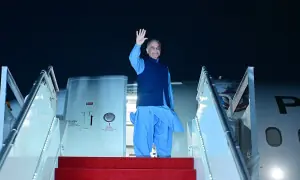
Prime Minister Shehbaz Sharif and Chief of Defence Forces Field Marshal Asim Munir departed early on Sunday morning for Switzerland to attend technical-level talks between Iran and the United States set for today. The…
18
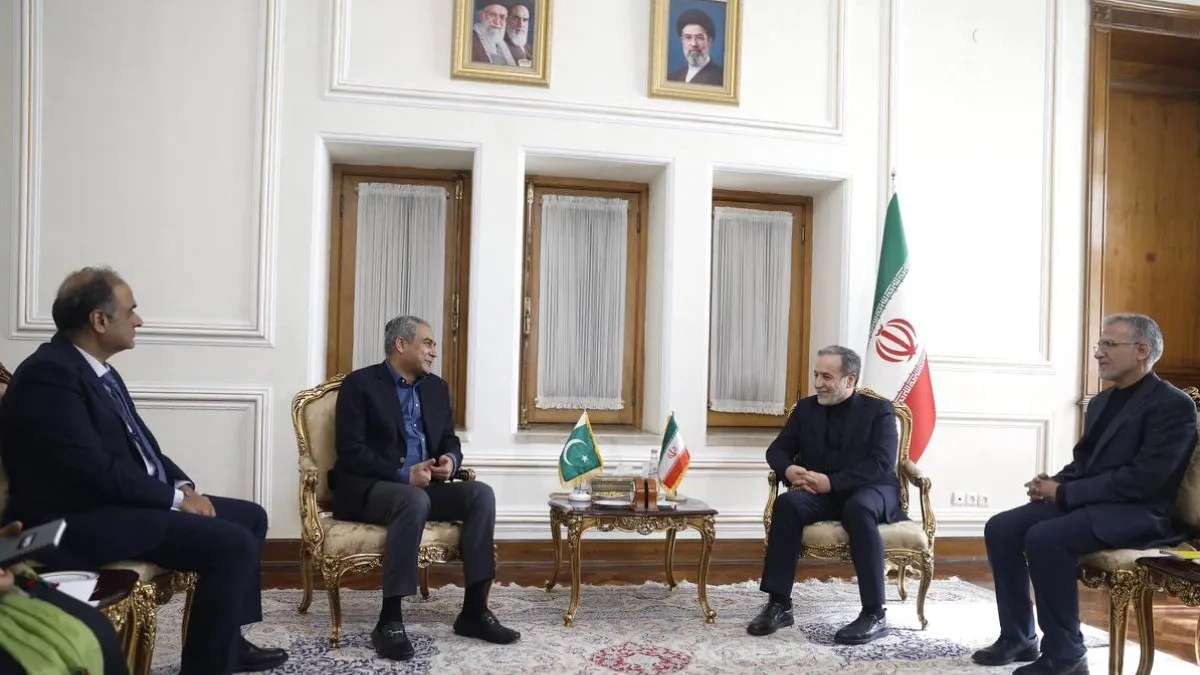
Delegación iraní llega a Suiza para diálogo con EU; negociaciones arrancan este domingo
The team led by Abás Araqchí landed in Zurich prior to the start of the planned talks with JD Vance

19
EE. UU. e Irán arrancan negociaciones sobre el programa nuclear este domingo en Suiza mientras Trump amenaza con cobrar peajes en el estrecho de Ormuz
The round of technical talks will focus on the control of uranium reserves and the implementation of the memorandum of understanding.
20
Vicepresidente de Estados Unidos, JD Vance, dice que viajará en los próximos días a Suiza para la segunda fase de la negociación con Irán
Vance's announcement comes after Tehran's new closure of the Strait of Hormuz, which revived uncertainty over the peace deal.

21
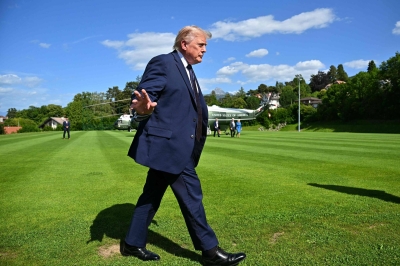
"I didn't want to see economic catastrophe," Trump said at a news conference in Evian, France on Thursday. "If you kept this going, that could've happened."
22
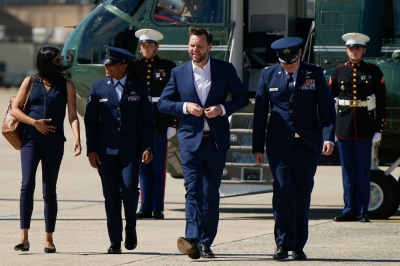
Iran's central military command said "the Strait of Hormuz will be closed to vessel traffic" following Israeli strikes in Lebanon.
23
Guerra in Iran, le news di oggi. Vance è in Svizzera, incontrerà Ghalibaf
The American vice president and the Tehran delegation will talk about the memorandum and, in particular, about nuclear power
24
Bombe israeliane sul Libano: altri 32 morti nel sud. L’Iran: “Chiuso Hormuz”
The IDF says it reacted in response to Hezbollah attacks, Tehran blocks the Strait. Raid also on Gaza, over 10 victims
25
El dilema de Brasil: buenos indicadores económicos, percepción social pesimista
The country's 'vibracession' should not be managed only with measures to calm the mood in the short term, these analysts say.
26
THE fate of Lebanon could determine whether the recently signed MoU between the US and Iran survives. True to form, Israel is doing all possible to ensure the nascent peace deal is destroyed before the proverbial ink…
27
Irã anuncia novo fechamento do estreito de Hormuz após ataques de Israel ao Líbano
Iran's Revolutionary Guard and the country's military command stated, this Saturday (20), that they had once again closed the Strait of Hormuz to vessel traffic. According to Iranian authorities, ship traffic…
28
Trump sugere que EUA podem cobrar pedágio no estreito de Hormuz
The President of the United States, Donald Trump, suggested this Saturday (20) that the American government could charge a toll for crossing the Strait of Hormuz if there is no agreement with Iran in the ongoing peace negotiations.…
29
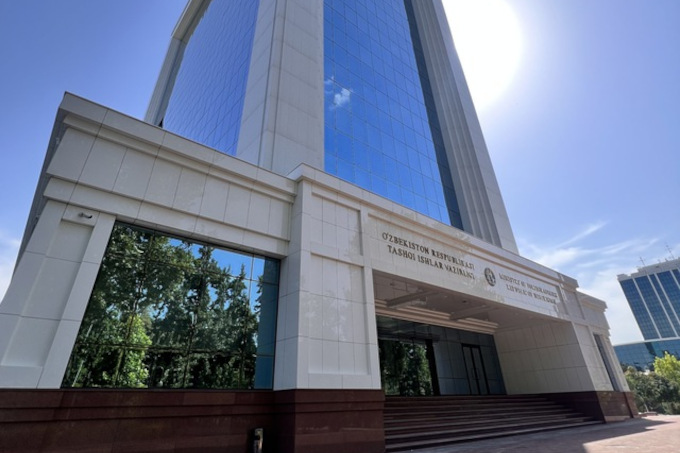
Uzbekistan welcomed the signing of a memorandum of understanding between the United States and Iran, calling it a “significant diplomatic breakthrough” toward restoring regional security.…
30
イラン ホルムズを封鎖したと声明
31
米がイランの海峡再封鎖否定 報道
32
米イラン 21日からスイスで協議へ
33
米イラン合意も 残る再燃の火種
34
米イラン19日協議開催せず スイス
35
イラン最高指導者 米との覚書承認
36
米イラン共に「勝利」主張 実際は
37
合意巡り 米がイスラエルをけん制
38
米 イラン港湾への海上封鎖を解除
39
The agreement followed concerns that continued clashes would undermine the deal to end the war between the US and Iran.


AI read
What the coverage agrees on, and where it splits
This view is generated from the clustered articles, so it is best read as a map of coverage rather than a replacement for the source reporting.
Broadly agreed
- All covering sources confirm that JD Vance arrived in Switzerland on June 21 and that Iranian negotiators were present for technical talks.
- All sources agree Iran declared the Strait of Hormuz closed on June 20, citing Israeli strikes in Lebanon as justification.
- Multiple sources confirm the MOU was signed June 15 and that a 60-day negotiating window is now underway.
Contested framing
- BBC News and CNN frame the Hormuz closure as a disputed claim the US actively denied, emphasising the gap between Iranian assertion and on-the-ground shipping data; TASS and Qatari Al Jazeera present Iran's declaration without challenging its veracity.
- Times of Israel frames the emerging deal as structurally weaker than the Obama-era JCPOA and insufficient to dismantle Iran's nuclear programme; El Tiempo and Deutsche Welle frame it as a meaningful de-escalation that reduces market pressure.
- Folha de S.Paulo and Japan Times both note Trump's economic fears as weakening US leverage; People's Daily and Gazeta.uz present the diplomatic process as a straightforward achievement without acknowledging negotiating-power asymmetries.
Still unclear
Whether Iran will reopen Hormuz to shipping pending the outcome of Swiss talks, and whether the MOU's nuclear provisions include enforceable verification mechanisms, remain publicly unconfirmed.
Notable omissions
Iranian domestic opposition to the deal and the human cost of prior US-Israeli strikes on Iranian infrastructure are consistently absent from Western and Gulf outlet coverage, while Israeli outlets omit analysis of how continued Lebanon strikes undermine US diplomatic positioning.
Quality check
This topic mixes confirmed diplomatic attendance with highly contested claims about Hormuz closure and MOU sufficiency; treat Hormuz status as disputed.
- Hormuz closure claim is contested: BBC/CNN cite US denial and lack of shipping data verification; TASS/Al Jazeera present Iranian assertion without challenge. Readers should understand this is a disputed claim, not confirmed fact.
- MOU structural adequacy is deeply contested (JCPOA comparison, nuclear verification mechanisms) with no expert consensus evident in sources.
- Critical unknowns: actual Hormuz reopening status and verification mechanisms remain publicly unconfirmed—topic treats these as settled when they are not.
- Omission of Iranian domestic opposition and prior strike casualties may limit reader understanding of full political context.
Review confidence: 72%
Signal strength
4/5
Narrative divergence
15
Sources compared
2
Days in coverage
→ stable
How each outlet frames this story
Divergence
4/5
Narrative Divergence
How differently the sources covering this story frame it — measured by tone, emphasis, and what each outlet chooses to highlight or omit.
1 — Sources frame the story almost identically
2 — Minor differences in tone or emphasis
3 — Noticeable differences; some outlets highlight what others omit
4 — Stark contrasts; conflicting narratives
5 — Sources tell fundamentally different stories
British
BBC foregrounds the institutional dispute over whether Hormuz is actually closed, maintaining factual distinction between US denial and Iranian claim, while documenting Israeli strikes in Lebanon as the trigger.
German
Deutsche Welle frames the talks through an endurance lens, emphasising institutional sustainability and warning of economic shock to Germany given energy dependence.
Indian
The Hindu emphasises Pakistan's mediating role and India's non-aligned observation of the 60-day sprint toward agreement, underscoring South Asian strategic autonomy positioning.
Brazilian
Folha de S.Paulo leads with Vance's arrival and Trump's toll threat on Hormuz, framing US economic self-interest as the dominant factor shaping negotiations.
Qatari
Al Jazeera Arabic covers Vance's arrival in Switzerland and Lebanon's role as trigger, subordinating diplomatic depth to event narration amid heavy sports content allocation.
Singaporean
Straits Times and CNA both foreground the Hormuz closure and Vance's arrival through a supply-chain and energy security lens, noting Lebanon ceasefire fragility as a complicating factor.
Pakistani
Dawn highlights PM Shehbaz Sharif and army chief Asim Munir travelling to Switzerland, positioning Pakistan as indispensable mediator and stressing its institutional investment in the deal's success.
Emirati
The National focuses on Gulf energy security and regional collective positioning, treating the Iran-US negotiation as a stability mechanism for UAE commercial interests.
Chinese
SCMP analyses the talks through structural institutional vulnerability over military capability, foregrounding supply-chain coherence risks to Asian economies.
Colombian
El Tiempo questions whether Trump 'won' the Iran confrontation, noting the agreement avoids regional escalation but leaves the nuclear programme's root intact and sensitive issues unresolved.
Italian
La Repubblica reports Vance and Ghalibaf meeting, focusing specifically on the nuclear power provisions of the memorandum and Italy's hesitation to send ships to Hormuz to avoid rupture with Washington.
Japanese
Yahoo Japan covers Hormuz closure, US denial, and the Swiss talks timeline, reflecting acute Japanese energy-import vulnerability without editorial commentary.
Japanese
Japan Times analyses how Trump's stated economic fears undercut US negotiating leverage, treating the diplomacy as a logistics and corporate resilience problem for Japanese firms.
Uzbek
Gazeta.uz presents Uzbekistan's welcome of the memorandum as a development achievement without any critical institutional framing of the deal's ambiguities.