How the world covered it

South Korean Markets and Election Crisis

The Korean won's collapse to a 17-year low of 1,560 per dollar—driven by heavy foreign selling that pushed the Kospi down 5%—combined with a ballot paper shortage causing voting disruptions and election...

Editorial comparison

Korea Herald uniquely attributes market decline to both global and domestic factors simultaneously without clearly weighting causality; no other outlets present competing framings.

Korea Herald attributes the won's collapse to 1,560 per dollar and the Kospi's 5% drop to concurrent global factors (Iran war, strong US jobs data triggering rate hike fears) and domestic political uncertainty, presenting multi-causality without hierarchizing which driver is primary. This framing choice—treating global and domestic factors as co-equal—distinguishes Korea Herald's analysis from outlets that typically privilege one causal domain.

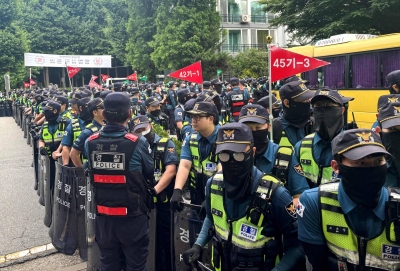
The ballot shortage crisis and election commission resignations receive coverage from Korea Herald and Japan Times without divergent framing interpretations. Korea Herald connects the market crisis and electoral dysfunction within a single narrative of institutional credibility collapse, while Japan Times treats the voting disruptions as a discrete governance failure. The absence of competing international commentary means no outlet contests Korea Herald's causality weighting.

How each outlet opened the story
Korea Herald South Korea

Korean won breaches 1,560 per dollar first time since 2009

Japan Times Japan

South Korean riot police clear protesters after ballot shortage

Coverage map

What coverage agrees on, contests, or leaves unclear.

Broadly agreed
  • All Korea Herald articles confirm the Korean won breached 1,560 per dollar during overnight trading on June 6, a 17-year low.
  • Korea Herald confirms protests over ballot shortages continued into June 6 and the NEC chair offered to resign.
Contested framing
  • Korea Herald attributes market decline to both global factors (Iran war, US jobs data) and domestic political uncertainty simultaneously, without clearly weighting which is more significant—this multi-causality framing is not tested by other outlets which are largely absent.
Still unclear

Whether the NEC chair's resignation offer will be accepted, and whether an independent investigation into the ballot shortage will be launched, is not confirmed in available summaries.

Notable omissions

International outlets are largely silent on the South Korean institutional double-crisis, treating it as a purely domestic story despite the won's move to a 17-year low having regional currency contagion implications.

Regional framing

How different outlets describe the same story.

South Korean

Korea Herald covers both the currency collapse and the election disruptions as parallel institutional credibility failures, with the NEC chair offering to resign over the ballot fiasco and foreign selling accelerating market decline simultaneously—consistent with its governance accountability lens.

Source trail

Original reporting behind this perspective.

This page maps the coverage. The 8 articles below are the original reports the comparison is drawn from — open them for each publisher's full reporting.

Show 8 source articles
Perspective link copied