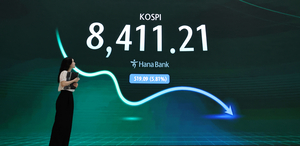
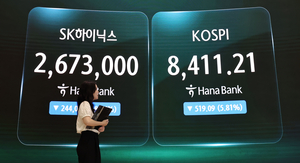
South Korean stocks tumbled Friday, erasing the previous session's chip-fueled rally, as the Kospi slid nearly 6 percent and triggered another circuit breaker amid mounting concerns over extreme market volatility…
How the world covered this
Read the editorial comparison
Prose synthesis of how each outlet framed the story, with side-by-side outlet quotes and divergence notes.
6 articles from 2 sources
01
02
President Lee Jae-myung on Saturday pushed back against concerns that South Korea’s southwestern Honam region may lack enough water to support possible semiconductor investments by Samsung Electronics and SK hynix,…

03
Trading on South Korea's Kospi index was halted for the third time this week to prevent panic selling.

04
Foreign investors dumped a record 47 trillion won ($30.6 billion) of South Korean stocks in May, yet their market ownership climbed to an all-time high as the Kospi rally lifted the value of their remaining holdings.…
05
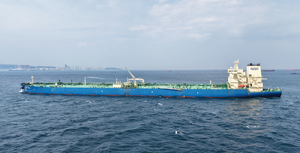
Two additional South Korean vessels have cleared the Strait of Hormuz after being stranded there for months amid the conflict in the Middle East, the oceans ministry said Saturday. "Two vessels operated by South…
06
South Korea and Iran agreed Friday to maintain close communication on the safety of ships and seafarers in the Strait of Hormuz and the protection of South Korean nationals in Iran, Seoul's Foreign Ministry said.…

AI read
What the coverage agrees on, and where it splits
This view is generated from the clustered articles, so it is best read as a map of coverage rather than a replacement for the source reporting.
Broadly agreed
- Both covering sources confirm the Kospi fell approximately 6% and trading was halted on June 26.
- Korea Herald confirms foreign investors had dumped a record 47 trillion won in Korean stocks in May.
Contested framing
- BBC frames this as part of a broader Asian tech stock slide; Korea Herald frames it as a specifically Korean structural vulnerability connected to chip sector concentration and Hormuz energy risk — different diagnoses of the same market event.
Still unclear
Whether the circuit breaker triggers reflect temporary panic selling or structural foreign investor exit from Korean equities has not been established in any available summary.
Notable omissions
No source covers Chinese or US investor perspectives on Korean market volatility, or whether the sell-off reflects broader concerns about Korean political stability following the Yoon impeachment.
Quality check
Market movements confirmed, but underlying causes and investor intentions remain speculative.
- Whether circuit breaker triggers reflect temporary panic or structural investor exit unestablished
- Chinese and US investor perspectives on volatility entirely absent
- Connection between market volatility and Korean political stability (post-Yoon impeachment) not explored
- Water supply concerns for Honam semiconductor fab mentioned but not independently verified
Review confidence: 70%
Signal strength
2/5
Narrative divergence
2
Sources compared
1
Days in coverage
How each outlet frames this story
Divergence
2/5
Narrative Divergence
How differently the sources covering this story frame it — measured by tone, emphasis, and what each outlet chooses to highlight or omit.
1 — Sources frame the story almost identically
2 — Minor differences in tone or emphasis
3 — Noticeable differences; some outlets highlight what others omit
4 — Stark contrasts; conflicting narratives
5 — Sources tell fundamentally different stories
South Korean
Korea Herald provides multi-dimensional coverage: the Kospi sliding 6% with foreign investors having dumped a record 47 trillion won in May; Lee Jae-myung defending Honam chip investment water supply; two Korean vessels clearing the Strait of Hormuz after months stranded; and South Korea-Iran coordination on Hormuz transit — framing economic and geopolitical vulnerability as interconnected.
British
BBC reports 'Asia stock markets slide as tech shares slump' with South Korea's Kospi trading halted for the third time in a week, framing it as a regional Asian financial contagion event.