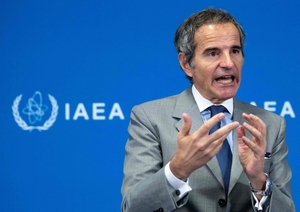
South Korea and the International Atomic Energy Agency have begun expert-level discussions on a special safeguards arrangement for Seoul’s nuclear-powered submarine project, IAEA chief Rafael Grossi said Monday. Seoul’s…
How the world covered this
Read the editorial comparison
Prose synthesis of how each outlet framed the story, with side-by-side outlet quotes and divergence notes.
2 articles from 2 sources
01
02
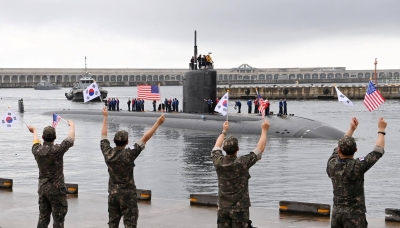
Seoul insists its plan to build the ships is aimed at countering North Korea. But the decision carries implications far beyond this, with China watching particularly closely.
AI read
What the coverage agrees on, and where it splits
This view is generated from the clustered articles, so it is best read as a map of coverage rather than a replacement for the source reporting.
Broadly agreed
- Both sources confirm South Korea and the IAEA have begun expert discussions on a special safeguards arrangement for nuclear-powered submarines.
Contested framing
- Korea Herald frames the programme as a legitimate defensive capability within international norms; Japan Times frames it as a development with destabilising regional implications beyond its stated purpose.
Still unclear
The specific safeguards model South Korea is proposing and whether it will follow the AUKUS precedent are not confirmed in available summaries.
Notable omissions
China's reaction to South Korea's nuclear submarine ambitions — a potentially significant regional response — is absent from all available coverage.
Quality check
Read as confirmed IAEA talks without settled outcomes. China's response—a critical variable—is completely absent.
- Specific safeguards model and AUKUS precedent follow-through are explicitly unconfirmed
- China's reaction is entirely absent despite being a likely significant regional response—major omission for assessment
- Korea Herald's defensive framing vs. Japan Times' destabilization framing reflects analytical disagreement, not factual dispute
- Timeline for submarine development and operational deployment not specified
Review confidence: 75%
Signal strength
2/5
Narrative divergence
2
Sources compared
1
Days in coverage
How each outlet frames this story
Divergence
2/5
Narrative Divergence
How differently the sources covering this story frame it — measured by tone, emphasis, and what each outlet chooses to highlight or omit.
1 — Sources frame the story almost identically
2 — Minor differences in tone or emphasis
3 — Noticeable differences; some outlets highlight what others omit
4 — Stark contrasts; conflicting narratives
5 — Sources tell fundamentally different stories
South Korean
Korea Herald reports the IAEA-Seoul expert talks on submarine safeguards arrangements, framing it as a legitimate arms development process within the international nonproliferation framework.
Japanese
Japan Times frames South Korea's nuclear submarine programme as carrying Indo-Pacific security implications beyond North Korea deterrence, implying concerns about regional naval competition.