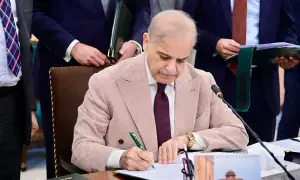
• Budget keeps lender’s targets intact on revenue, deficit, primary surplus • Divisible pool frozen for three years at Rs13.35tr; govt eyes Rs1.9tr fiscal space • Revenue target up 17.6pc after record Rs1.15tr…
How the world covered this
Read the editorial comparison
Prose synthesis of how each outlet framed the story, with side-by-side outlet quotes and divergence notes.
9 articles from 1 source
01
02
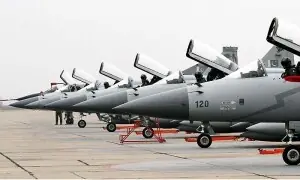
• Increase comes amid tensions with India, Afghan border concerns • Allocation crosses 2pc of GDP after 17.6pc hike • Military spending makes up nearly 16pc of federal outlay • Rs967.55bn earmarked for salaries,…
03
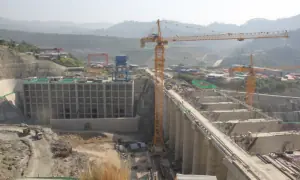
• Govt announces Rs1tr for PSDP, Rs2.2tr for provincial programmes, and Rs450bn for SOEs • Three key motorways, Main-Line 1 track, K-IV water scheme among mega-projects being financed • Major allocations for AJK, GB…
04
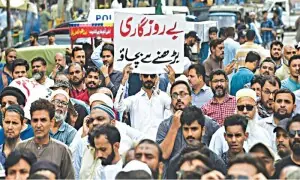
ISLAMABAD: The federal government has allocated Rs5,290.49 million to train 120,000 youth in IT and digital skills under the Prime Minister’s Youth Skills Development Programme. Finance Minister Muhammad Aurangzeb,…
05
• Income tax rates reduced for salaried individuals earning between Rs2.2m and Rs7m annually; 35pc slab threshold raised to Rs7m • Super tax abolished for incomes up to Rs500m; advance taxes on property transactions and…
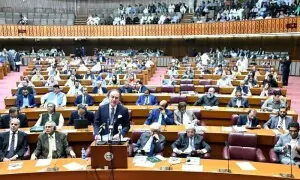
06
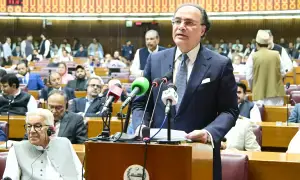
ISLAMABAD: Finance Minister Muhammad Aurangzeb on Friday laid a copy of the Finance Bill 2026 containing the Annual Budget Statement before the Senate amid a noisy protest by opposition members who chanted…
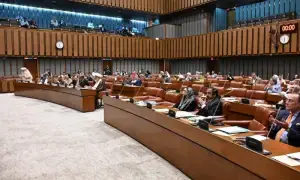
07
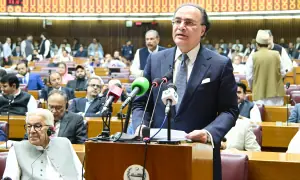
Salient Features • GDP growth target set at 4pc ; average inflation projected at 8.2pc • Income tax cut for those earning above Rs183,000 per month • Withholding tax on foreign debit/credit card transactions slashed…
08
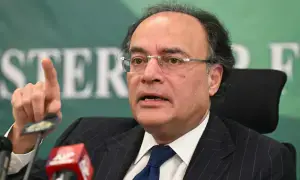
Finance Minister Muhammad Aurangzeb on Friday said that the government was committed to reducing the disproportionate tax burden on certain classes by widening the tax net. Speaking on the Geo News programme ‘Aaj…
09
THE FY27 budget is the first clear signal that the government is ready to transition from stabilisation to growth — without breaching the IMF’s macroeconomic targets. After three years of painful austerity and demand…
AI read
What the coverage agrees on, and where it splits
This view is generated from the clustered articles, so it is best read as a map of coverage rather than a replacement for the source reporting.
Broadly agreed
- Dawn's coverage confirms GDP growth targeted at 4%, average inflation projected at 8.2%, and divisible pool frozen for three years at Rs13.35 trillion.
- All Dawn articles confirm defence allocation of Rs3 trillion represents a 17.6% hike crossing 2% of GDP for the first time, explicitly linked to India and Afghan border tensions.
Contested framing
- Dawn's opinion pieces frame the budget as constrained by IMF diktat limiting genuine sovereignty; the Finance Minister's own statements frame it as a government-led commitment to reducing tax burden through widening the tax net.
Still unclear
Whether the CPEC 2.0 designation as the sole new development project reflects Chinese pressure, Pakistani strategic choice, or IMF restriction on new spending has not been clarified in the available summaries.
Notable omissions
No non-Pakistani source in the available feed covers the Pakistan budget, reflecting a consistent pattern in which Pakistani fiscal policy receives almost no international media attention despite the country's strategic importance.
Quality check
Budget figures are documented; the underlying political economy (IMF control vs. sovereign choice) remains contested within Pakistani media.
- Single-source cluster: only Pakistani outlet (Dawn) covers story; no international verification or analysis
- Causal claims contested: 'IMF diktat' framing in opinion pieces vs. government's 'fiscal commitment' narrative both present without resolution
- CPEC 2.0 sole project: causation unclear (Chinese pressure, IMF restriction, or strategic choice); sources don't clarify
- Structural sovereignty question unresolved: whether IMF genuinely constrains Pakistani fiscal autonomy or simply reflects agreed discipline
Review confidence: 70%
Signal strength
2/5
Narrative divergence
1
Sources compared
1
Days in coverage
How each outlet frames this story
Divergence
2/5
Narrative Divergence
How differently the sources covering this story frame it — measured by tone, emphasis, and what each outlet chooses to highlight or omit.
1 — Sources frame the story almost identically
2 — Minor differences in tone or emphasis
3 — Noticeable differences; some outlets highlight what others omit
4 — Stark contrasts; conflicting narratives
5 — Sources tell fundamentally different stories
Pakistani
Dawn provides comprehensive multi-article budget coverage: balancing IMF targets with relief, a 17.6% defence hike crossing 2% of GDP, CPEC 2.0 as the only new project in the development kitty, petrol price cuts, IT skills training allocation, AJK sit-in protests, a Gwadar oil spill, opposition uproar in the Senate, and the Finance Minister's tax burden reduction commitment — collectively framing the budget as a constrained sovereignty exercise under IMF diktat.