The government plans to incorporate as much spending for one year as possible into the initial budget rather than rely on additional funding via supplementary packages.
How the world covered this
Read the editorial comparison
Prose synthesis of how each outlet framed the story, with side-by-side outlet quotes and divergence notes.
7 articles from 2 sources
01

02
The aim of the Financial Services Agency's measure is to encourage public-private funding and supporting small regional companies, including startups.

03
As of Friday, institutional investors had submitted 139 proposals to 51 Japanese companies, up from 137 the previous year, according to Mitsubishi UFJ Trust and Banking.

04
The company has also started expanding its team of rent negotiators to help improve the terms of lease agreements for properties in Daiwa's real estate portfolio.

05
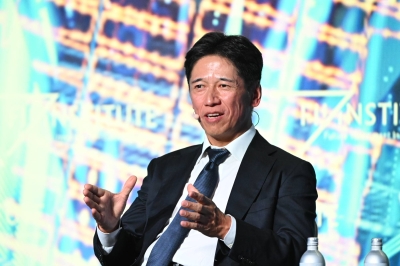
Hidehiro Imatsu has helped elevate a new generation of leaders into key positions to make the firm more attractive to younger professionals.
06
The company, whose disappointing forecast triggered a selloff of Japanese tech stocks last month, is fielding orders from almost all U.S. hyperscalers for fiber-optic cables.


AI read
What the coverage agrees on, and where it splits
This view is generated from the clustered articles, so it is best read as a map of coverage rather than a replacement for the source reporting.
Broadly agreed
- Japan Times confirms the government is implementing the largest budget reform since 1945, consolidating supplementary spending into initial budgets.
- Sources confirm the FSA is easing bank capital adequacy requirements to encourage regional investment and public-private funding.
Contested framing
- No framing divergence is significant in available summaries; both Japanese and Singaporean coverage treat these as institutional process stories.
Still unclear
The specific fiscal year timeline for implementing the budget reform and the scale of capital requirement reduction for banks are not confirmed in available summaries.
Notable omissions
The potential risks of the budget reform — including reduced fiscal flexibility for emergency responses — are absent from available summaries, which focus entirely on the reform's intended benefits.
Quality check
Read as reform intention announcements. Risks and specific implementation timeline are not addressed in coverage.
- Specific fiscal year implementation timeline not confirmed; avoid implying immediate effect
- Bank capital requirement reduction scale is explicitly unspecified—treat as directional policy only
- Risk analysis (reduced fiscal flexibility, emergency response capacity) is entirely absent from coverage
- Activist shareholder proposal framing lacks context on likelihood of implementation or shareholder power
Review confidence: 75%
Signal strength
1/5
Narrative divergence
2
Sources compared
1
Days in coverage
How each outlet frames this story
Divergence
1/5
Narrative Divergence
How differently the sources covering this story frame it — measured by tone, emphasis, and what each outlet chooses to highlight or omit.
1 — Sources frame the story almost identically
2 — Minor differences in tone or emphasis
3 — Noticeable differences; some outlets highlight what others omit
4 — Stark contrasts; conflicting narratives
5 — Sources tell fundamentally different stories
Japanese
Japan Times provides comprehensive coverage of the budget reform as a historic structural change, the FSA's bank capital requirement easing to support regional banks, record activist investor proposals at Japanese companies, Goldman Sachs Japan's leadership strategy, and Fujikura's data centre cable price increases — all framing Japan's economic restructuring through a corporate governance and institutional reform lens.
Singaporean
CNA reports BOJ considering pausing bond taper next fiscal year and JGB yield movements ahead of a 30-year bond auction, treating Japan's monetary policy through a supply-chain financial consequence lens.