










Topic deep dive
Economy New regional

Japan Bond Market and Economic Signals

Japan's benchmark bond yield hitting a 30-year high signals waning investor faith in both inflation management and fiscal governance, while rising summer budgets and shifting consumer behaviour mark a broader exit from the decades-long deflationary mindset—a structural economic transition with global implications given Japan's role in international capital markets.

2 sources 15 articles 2 perspectives
2 Sources in this topic Different outlets covering the same story arc.
15 Articles collected The full set backing this topic page right now.
2/5 Narrative divergence Hover for scale explanation.
Narrative Divergence
How differently the sources covering this story frame it — measured by tone, emphasis, and what each outlet chooses to highlight or omit.
1 — Sources frame the story almost identically
2 — Minor differences in tone or emphasis
3 — Noticeable differences; some outlets highlight what others omit
4 — Stark contrasts; conflicting narratives
5 — Sources tell fundamentally different stories
How the world covered this
Read the editorial comparison
Prose synthesis of how each outlet framed the story, with side-by-side outlet quotes and divergence notes.
01
Japan benchmark bond yield extends rise after hitting 30-year high
02
Japan bond market signals waning faith in inflation, government's fiscal management
03
Japan’s summer vacation budgets rise for first time in three years
An online survey conducted in June found that higher prices and a weak yen were the main reasons among respondents for increasing their budgets.
04
Shoppers splurge on specs in Japan as deflation-era mindset fades away
As inflation reshapes behavior, Japanese eyeglass company Jins is working to prove higher prices are justified by delivering better materials, sharper designs and improved quality.
05
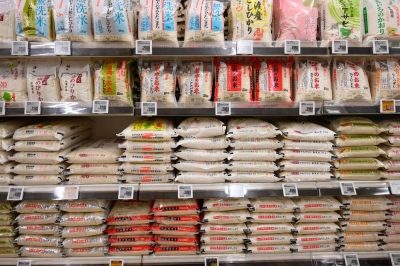
Diet enacts bill to stabilize rice supply and demand
Various businesses will now have to report inventory, shipments and sales volumes in order to help improve the accuracy of forecasts.
06
Rapidus to match TSMC on 2-nanometer chip pricing, Japan firm’s president says
The Taiwanese maker's chips are expected to be sold at around ¥3 million to ¥3.5 million per silicon wafer.
07
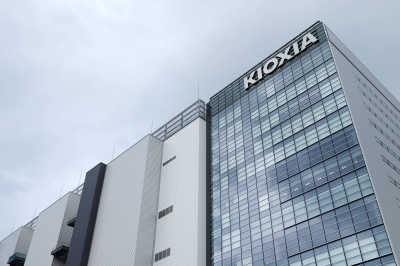
Bain Capital exits Kioxia after chip deal yields big returns
A global spending spree on AI catapulted Kioxia's shares more than 4,800% from their debut, transforming the chipmaker into one of Japan's most valuable companies.
08
Beijing to let Chinese AI companies buy Nvidia H200 chips
The companies need to say how many chips they need — and why — to get approval.
09
Goldman becomes Taiwan’s top foreign broker on AI quant push
The Wall Street bank has risen from 10th place in early 2025 to become Taiwan's largest foreign brokerage by trading volume in the first half.
10
Meta to build first data center in Canada in expansion of global fleet
The Sturgeon County, Alberta-based data center will be Meta's largest outside the U.S.
11
The Bezos-backed $25,000 EV that should worry Detroit and probably Musk
Slate recently unveiled its flagship: A barebones, two-seater, battery-powered pickup starting at just under $25,000.
12
Pentagon urges Latin American countries to raise defense budgets
The U.S. Department of Defense wants increased security spending to fight organized crime.
13
Ukrainian Marta Kostyuk slams IOC move to lift Russia’s suspension from Olympics
"I just want to go ⁠out there and hopefully beat every single Russian I play in the Olympics, and that's it," Kostyuk said.
14
Japan’s Terra Drone to mass-produce defense drones domestically
The Tokyo-based company aims to speed up work to establish supply chains that do not rely on imports by promoting the development and production of drone components at home.
15
China’s demand for Soviet-style apartments shows limits to revival
Buyers in major cities are putting their money into flats that were largely built in the 1970s and 1980s, overlooking their flaws because of their attractive locations.
AI read
What the coverage agrees on, and where it splits

This view is generated from the clustered articles, so it is best read as a map of coverage rather than a replacement for the source reporting.

Broadly agreed
  • Both Japan Times and CNA confirm Japan's benchmark bond yield has extended its rise to a 30-year high.
  • Japan Times confirms summer vacation budgets rose for the first time in three years, with weak yen and higher prices cited as primary drivers.
Contested framing
  • Japan Times frames rising consumer budgets as a positive sign of normalisation; CNA frames the bond yield rise as a credibility concern about fiscal management—the same underlying data interpreted through different analytical lenses.
Quality check

Bond yield rise and budget increases are confirmed; whether BoJ will respond with policy changes is entirely unknown.

  • 30-year bond yield high consensus very strong across Japan Times and CNA.
  • Summer vacation budget rise (first in three years) well-corroborated; weak yen and price rises cited as drivers.
  • Analytical divergence (normalization vs. credibility concern) is genuine interpretation gap, not factual disagreement.
  • Bank of Japan policy response entirely unconfirmed—readers cannot assess whether crisis will trigger tightening.
Review confidence: 82%
Signal strength
2/5 Narrative divergence
2 Sources compared
1 Days in coverage
How each outlet frames this story
Divergence 2/5
Narrative Divergence
How differently the sources covering this story frame it — measured by tone, emphasis, and what each outlet chooses to highlight or omit.
1 — Sources frame the story almost identically
2 — Minor differences in tone or emphasis
3 — Noticeable differences; some outlets highlight what others omit
4 — Stark contrasts; conflicting narratives
5 — Sources tell fundamentally different stories
Japanese

Japan Times covers the 30-year bond yield high, rising summer vacation budgets (first increase in three years driven by higher prices and weak yen), changing consumer spending on eyeglasses as a deflation-era mindset shift, the Diet enacting a rice supply stabilisation bill, and Bain Capital's exit from Kioxia after AI-driven chip gains—framing these as interconnected signals of structural economic normalisation.

Singaporean

CNA reports the Japan bond market signals as institutional governance credibility questions about fiscal management, consistent with its infrastructure-vulnerability analytical lens.

Copied!