PMs say maritime security cooperation is key to peaceful Indo-Pacific; welcome deal for long-term uranium exports from Australia; reiterates “strong support” for India’s membership in Nuclear Suppliers’ Group
How the world covered this
Read the editorial comparison
Prose synthesis of how each outlet framed the story, with side-by-side outlet quotes and divergence notes.
4 articles from 2 sources
01

02
The agreement on civil nuclear energy to facilitate the commercial supply of uranium from Australia to India to fuel New Delhi's nuclear power projects came nearly 12 years after the two countries inked a historic civil…

03
From Prime Minister Narendra Modi’s visit to Australia to the escalating conflict in West Asia, to new developments in the Sri Lanka prison clashes, we bring you the latest in this episode. We also look at the Navy’s…

04
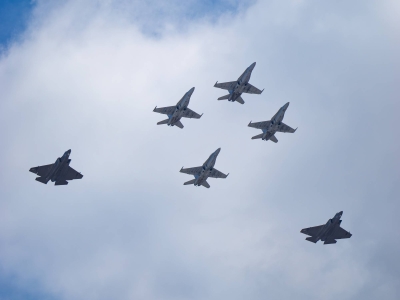
The three nations aim to improve interoperability by flexibly sharing fuel and equipment under the framework.
AI read
What the coverage agrees on, and where it splits
This view is generated from the clustered articles, so it is best read as a map of coverage rather than a replacement for the source reporting.
Broadly agreed
- Sources confirm India and Australia struck a deal for long-term uranium exports to fuel Indian civil nuclear energy.
- Sources confirm Modi and Albanese jointly called for restraint and de-escalation in the Gulf while advancing their bilateral security agenda.
Still unclear
The volume of uranium to be supplied, the pricing mechanisms, and the safeguards arrangements for India's non-NPT nuclear status remain publicly unspecified.
Notable omissions
No source covering the India-Australia deal addresses China's reaction to the deepening Quad security architecture, which would be a significant geopolitical dimension of the story.
Quality check
The bilateral deals are confirmed; note the missing China angle, which would provide fuller geopolitical context.
- Uranium export deal and maritime security cooperation are confirmed by The Hindu
- Modi-Albanese joint call for Gulf de-escalation is confirmed
- No contested framing because coverage is straightforward
- Unknown: uranium volume, pricing mechanisms, and safeguards for India's non-NPT status remain publicly unspecified
Review confidence: 83%
Signal strength
1/5
Narrative divergence
2
Sources compared
1
Days in coverage
How each outlet frames this story
Divergence
1/5
Narrative Divergence
How differently the sources covering this story frame it — measured by tone, emphasis, and what each outlet chooses to highlight or omit.
1 — Sources frame the story almost identically
2 — Minor differences in tone or emphasis
3 — Noticeable differences; some outlets highlight what others omit
4 — Stark contrasts; conflicting narratives
5 — Sources tell fundamentally different stories
Indian
The Hindu frames the Modi-Albanese call and the uranium deal through India's strategic autonomy lens — both leaders calling for restraint in the Gulf while advancing bilateral nuclear and maritime cooperation, balancing non-alignment with deepening security ties.
Indian
The Hindu's video analysis frames the India-Australia deal as a major Indo-Pacific strategic development alongside the West Asia conflict escalation and Sri Lanka dengue surge — treating it as part of India's expanding strategic footprint.
Japanese
Japan Times reports Japan's Air Self-Defense Force beginning logistics cooperation with the US and Australia — sharing fuel and equipment to improve interoperability — framing it as a practical trilateral security architecture development.