Germany loses vote for UN Security Council seat
Fifteen of the 193 UN member states sit on the UN Security Council. Germany was in competition with Austria and Portugal for two seats in the "Western Europe and Others" group.
Germany's unprecedented failure to win a UN Security Council seat, losing to Portugal and Austria in a hotly contested vote, signals declining German diplomatic influence at a moment when Berlin is attempting...
Deutsche Welle leads with "Germany loses vote for UN Security Council seat," treating this as a straightforward institutional defeat and identifying it as unprecedented—"the first time" Germany failed to secure a seat. Daily Sabah calls it a "surprise vote," emphasising the unexpected outcome.
SCMP frames the result differently: "Portugal and Austria defeated Germany for seats on the powerful but deeply divided UN Security Council," positioning the outcome as a symptom of institutional division rather than German diplomatic weakness. The National reports it neutrally as institutional fact without editorialising on cause.
Germany loses unprecedented vote for UN Security Council
Germany fails surprise vote for UN Security Council
Portugal, Austria defeat Germany for Security Council seats
Germany fails to gain UN Security Council seat first time
The specific reasons why UN member states voted against Germany in favour of Portugal and Austria—whether driven by policy disagreements, regional bloc voting, or bilateral relations—remain unspecified in available summaries.
None of the covering articles addresses how Germany's Ukraine diplomacy initiative or its position on the Iran war may have influenced member state voting behaviour.
Deutsche Welle reports Germany losing the vote for the UN Security Council seat for the first time, framing it as a significant institutional setback.
Daily Sabah covers Germany's surprise failure to secure the Security Council seat, treating it as a notable shift in European diplomatic standing.
SCMP reports Portugal and Austria defeating Germany for Security Council seats on the powerful but deeply divided body, framing it through institutional balance-of-power analysis.
The National covers Germany's failure to gain the UN Security Council seat for the first time as five new members were elected, framing it as a significant diplomatic development.
This page maps the coverage. The 4 articles below are the original reports the comparison is drawn from — open them for each publisher's full reporting.
Fifteen of the 193 UN member states sit on the UN Security Council. Germany was in competition with Austria and Portugal for two seats in the "Western Europe and Others" group.
Germany failed on Wednesday for the first time to secure a seat on the U.N. Security Council, with Portugal and Austria receiving more votes for the two Western European spots star...
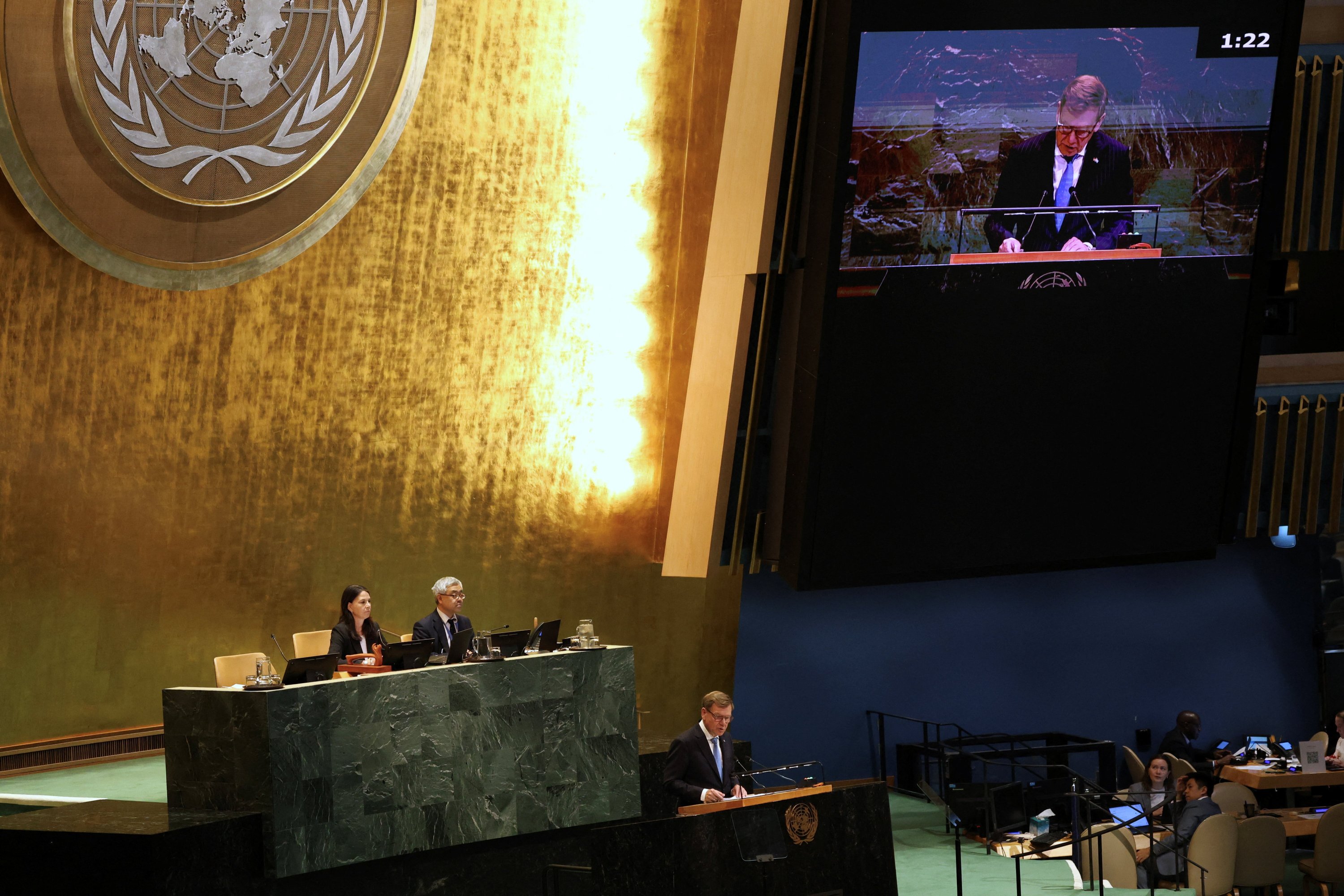
Portugal and Austria defeated Germany for seats on the powerful but deeply divided UN Security Council on Wednesday in a hotly contested race after intense campaigning. The 10 rotating seats on the 15-member Security…

