Armenia election: Prime Minister Pashinyan declares victory
The election result, once confirmed, would cement Pashinyan's Westward push away from Russian influence. It is the first vote since a 2023 crushing military defeat by Azerbaijan.
Pashinyan's re-election victory in Armenia's snap parliamentary vote, if confirmed, cements the country's pivot away from Russia toward the EU and US, representing a significant geopolitical shift on Russia's...
Deutsche Welle and SCMP explicitly frame Pashinyan's victory as cementing Armenia's westward pivot away from Russian influence. Deutsche Welle adds that the election tests public opinion on EU versus Russian alignment, while SCMP characterizes the result as 'setting course for the West.' Le Monde frames the election as both a referendum on peace with Azerbaijan and on rapprochement with the EU and US.
TASS reports only the mechanical fact that Pashinyan's party received 49.81% of votes, offering no geopolitical context or framing. The Hindu notes the pro-Russian opposition came second and contextualizes the vote within Kim's need for Xi's support—a factual framing without geopolitical interpretation.
Le Monde's dual framing—peace with Azerbaijan and EU alignment—differs from Deutsche Welle's emphasis on EU versus Russian alignment as the primary test, showing different causal emphases within the same pro-Western narrative.
Armenia's Pashinyan declares victory, cementing westward pivot
Pashinyan's party received 49.81% of the votes
Armenia's ruling party leads parliamentary vote with 54%
Prime Minister Pashinian claims a historic victory
Legislative elections test Armenia's peace deal and EU rapprochement
Armenia sets course for the West as Pashinyan heads for win
Armenia, once Russia's ally, considers an EU future
Whether final certified results will confirm Pashinyan's majority and whether the pro-Russian Strong Armenia alliance will contest the results remains unconfirmed.
No available summaries address what Armenia's pivot westward means for Russian military basing rights on Armenian territory or the future of the CSTO membership.
Deutsche Welle frames the result as cementing Pashinyan's 'Westward push away from Russian influence,' treating it as a democracy and geopolitical orientation test.
TASS reports only that 'Pashinyan's party received 49.81% of the votes' — a factual minimum with zero engagement of the EU/Russia geopolitical implications.
The Hindu reports the ruling party leads with 54% in early results with the pro-Russian Strong Armenia alliance in second — framing it through regional collective positioning without Western alignment framing.
Le Monde frames the Armenian election as 'decisive for the future of the country and for peace in the region,' treating it as a referendum on EU rapprochement and peace with Azerbaijan.
SCMP frames it as Armenia 'setting course for the West' as Pashinyan heads for election win, consistent with its structural analysis of geopolitical alignment shifts.
Deutsche Welle additionally covered Armenia considering an EU future, framing Armenians as voting on the country's geopolitical direction as a public opinion test.
This page maps the coverage. The 7 articles below are the original reports the comparison is drawn from — open them for each publisher's full reporting.
The election result, once confirmed, would cement Pashinyan's Westward push away from Russian influence. It is the first vote since a 2023 crushing military defeat by Azerbaijan.
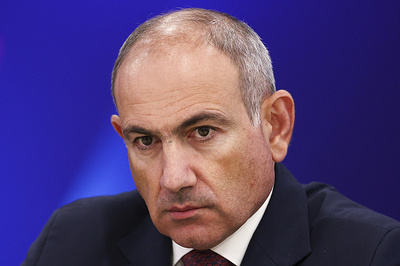
The preliminary data, from about 16% of Armenia's polling stations, showed the pro-Russian Strong Armenia alliance in second place, with about 22% of the votes

According to partial results, the Civil Contract party is well ahead of the Strong Armenia alliance of Russian-Armenian billionaire Samvel Karapetyan.
Sunday's vote represents a referendum on peace with Azerbaijan and on rapprochement with the European Union and the United States to the detriment of Russia. A geopolitical reorientation driven by…
Armenian Prime Minister Nikol Pashinyan’s party led the opposition Monday in early results from parliamentary elections that could cement his Westward tilt, after threats from Moscow and claims of Russian interference.…

Armenians are set to vote on the country's future geopolitical direction on June 7. The election will be a test of public opinion in the long-standing Russia ally, where the population is increasingly eyeing the EU.