Doctors said Wednesday they feared the aftermath of Venezuela’s devastating twin earthquakes could trigger a widening medical crisis marked by untreated injuries, infectious diseases and a healthcare system already on…
How the world covered this
Read the editorial comparison
Prose synthesis of how each outlet framed the story, with side-by-side outlet quotes and divergence notes.
25 articles from 11 sources
01

02
Hernan Gil, a 43-year-old security guard, is trapped inside his booth under a building.
03
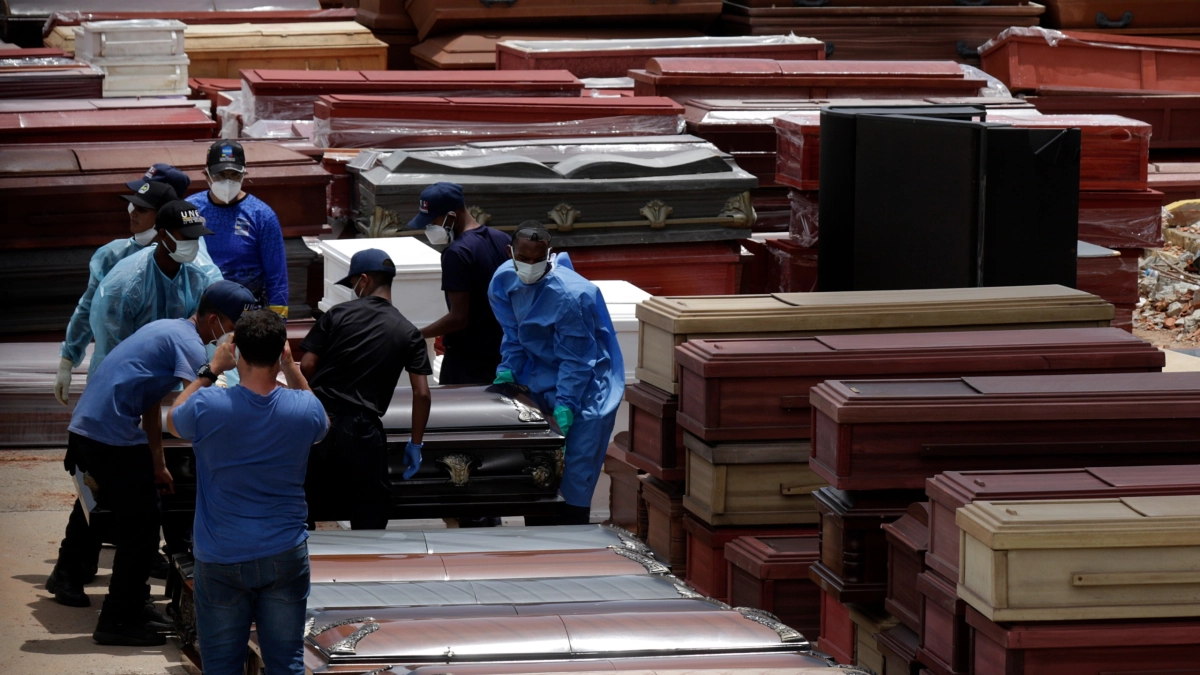
Deaths had risen to 2,295, and more than 11,000 people were injured.
04
"D", which stands for “deceased,” is one of the UN-approved symbols being used by search-and-rescue missions.
05
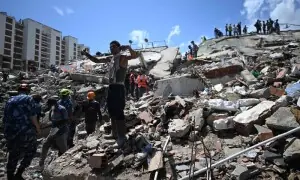
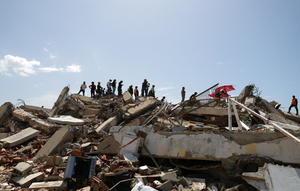
Hundreds of rescuers were working late on Wednesday to save a 43-year-old Venezuelan man who has survived for a week under the ruins of a seven-story building, an AFP reporter witnessed. Hernan Gil, a 43-year-old…
06
Kleiber Moran, 2, was rescued on Wednesday, six days after last week's deadly earthquakes.

07
They landed on Flight 164 just before the twin quakes. Family members are desperately searching for them.

08
Nearly a week after twin earthquakes struck Venezuela, the country continues to grapple with mounting devastation
09
Miss de 23 anos é encontrada morta após terremotos na Venezuela
Venezuelan beauty, model and influencer Skarlent Rodríguez, 23, was found dead next to her boyfriend, José Castro, under the rubble of a building that collapsed during the earthquakes that hit the La…
10
Sobe para 2.295 o número de mortes confirmadas em terremotos na Venezuela
The number of deaths confirmed as a result of the two earthquakes that hit Venezuela a week ago increased to 2,295, the country's regime reported this Wednesday (1st). According to authorities, more than 11…
11
O campo de golfe que era símbolo de opulência e virou refúgio da devastação provocada por terremotos na Venezuela
The level of destruction in the northwest region of La Guaira is difficult to comprehend. Read more (07/01/2026 - 11:21 am)
12
Venezuela impede acesso a local onde morreram deportados dos EUA
Yeison Lamus, 47, crossed half of Venezuela, from the border state of Táchira to the epicenter of the disaster caused by the earthquakes a week ago, the state of La Guaira, in search of his brother. Read more…
13
Mãe que perdeu filho deportado pelos EUA em terremotos na Venezuela levou 5 dias para achar corpo
Oswadeliz del Carmen Nuñez Ramirez, 58, last spoke to her son by phone a week ago for a brief four minutes. That's when he discovered he was in Venezuela after being deported by the United States.
14
EUA dizem não ser momento de questões sensíveis após pedido de María Corina para voltar à Venezuela
After the Venezuelan opposition leader and winner of the Nobel Peace Prize, María Corina Machado, expressed her desire to return to her country, the United States government said this Wednesday (1st) that it was not the time to...
15
Rodríguez decreta 7 días de luto en Venezuela mientras crecen denuncias por trabas en la entrega de cuerpos y ayudas: 'El cadáver no era de mi madre'
The official toll rose to 2,295 dead and more than 11,000 injured. After a week of the double earthquake, they also accuse police of looting.
16
ベネズエラ地震1週間 死者2千人超
17
ベネズエラ地震 6日後に3歳救出
18
ベネズエラ 地震の死者1700人超
19
Doctors said Wednesday they feared the aftermath of Venezuela’s devastating twin earthquakes could trigger a widening medical crisis marked by untreated injuries, infectious diseases and a health care system already on…
20
Impoverished Venezuelan Jews open synagogues to help shelter hundreds of earthquake victims The Times of Israel
21
A week after devastating twin earthquakes struck Venezuela rescue teams are using drones, dogs, cameras and specialised listening equipment to search for survivors.
22
Del rescate al riesgo sanitario: el drama de Venezuela tras terremotos entra en nueva fase entre lluvias, cadáveres y un sistema de salud al límite
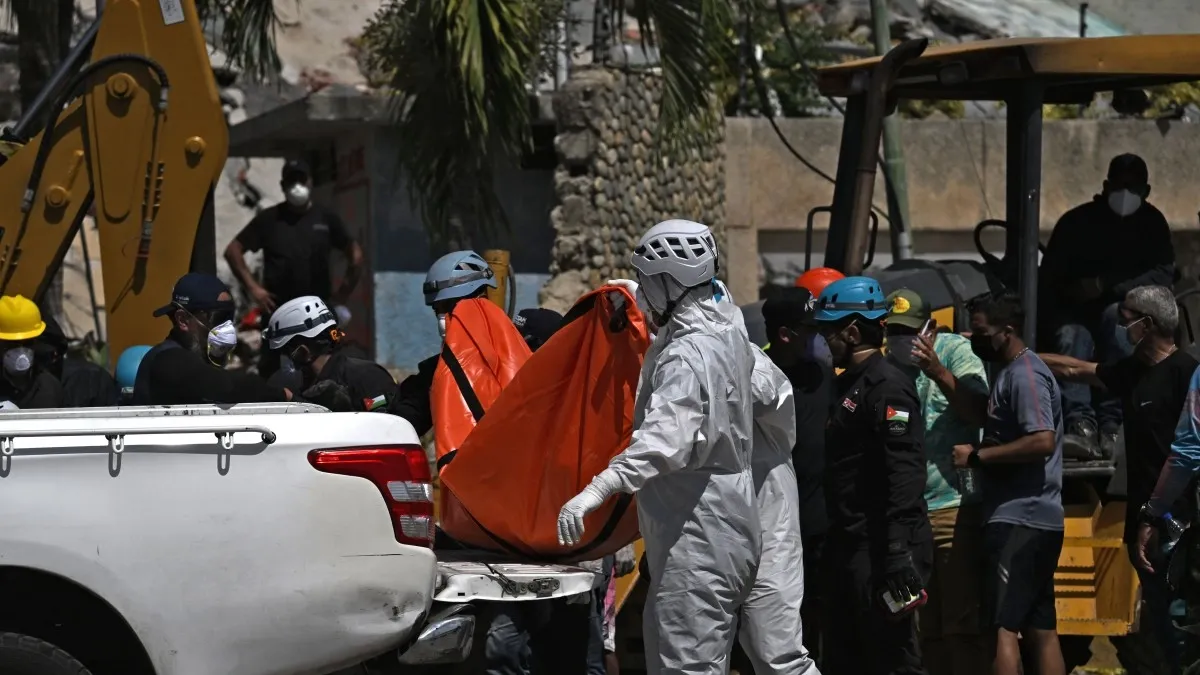
The official balance reports 1,943 fatalities, while a Jordanian mission pulled a minor alive from the rubble this Tuesday.
23
¿Cuánto tiempo puede sobrevivir una persona debajo de los escombros? Este es el caos que viven algunos en Venezuela
Six days after the two earthquakes, rescuers are still finding people alive.

24
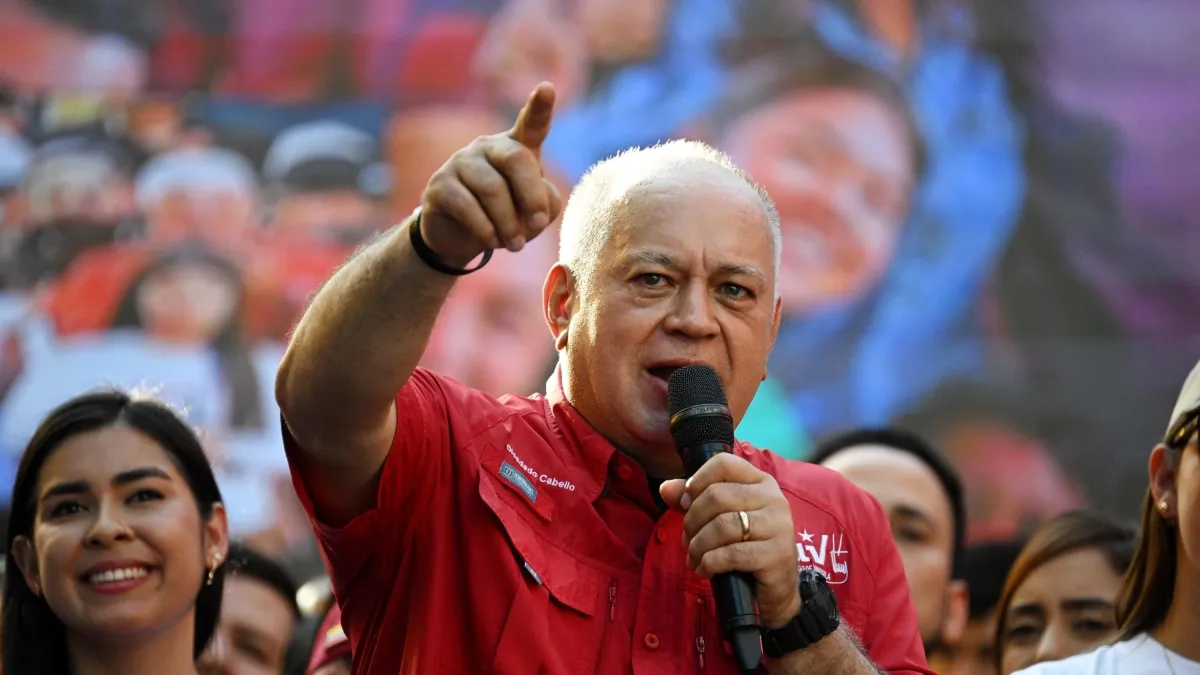
Congresistas de EE. UU. piden pronta captura de Diosdado Cabello tras presuntamente 'obstaculizar' rescates por doble terremoto en Venezuela
Republicans assure that 'he must face the consequences of his countless crimes against humanity.'
25
Gobierno de Donald Trump señala de 'oportunismo' el intento de regreso de María Corina Machado a Venezuela tras emergencia por terremotos
The death toll rose to 2,295, while the number of injured rose to 11,267.

AI read
What the coverage agrees on, and where it splits
This view is generated from the clustered articles, so it is best read as a map of coverage rather than a replacement for the source reporting.
Broadly agreed
- All sources confirm the death toll has risen to at least 2,295 with over 11,000 injured as of reporting.
- Sources agree rescue operations are ongoing more than a week after the initial quakes, with at least one person still trapped alive.
- Multiple sources confirm US-deported Venezuelan migrants were caught in the disaster, some dying in the rubble.
Contested framing
- El Tiempo and CNN frame the US deportation-to-disaster pipeline as a direct accountability issue for US immigration policy; BBC focuses on the human stories without explicitly assigning US institutional blame.
- Colombian and US sources allege Venezuelan authorities (specifically Cabello) are obstructing rescue and aid delivery; Venezuelan government sources (reflected in Folha) describe official mourning and response coordination.
Still unclear
The true scale of casualties among US-deported migrants specifically, and whether Venezuelan government obstruction of rescue access has been independently verified beyond individual testimonies, remains unconfirmed.
Notable omissions
TASS and People's Daily are entirely absent from coverage of this disaster, which reflects both editorial prioritisation and the absence of Russian or Chinese institutional stakes in Venezuelan humanitarian outcomes.
Quality check
Core death/injury figures depend on Venezuelan government reporting; obstruction allegations are contested between sources.
- Death toll (2,295) and injury count (11,000+) sourced only to 'Venezuelan government' via Folha; independent verification not confirmed in summaries
- US deportation-to-disaster pipeline framing is editorial choice, not factual consensus; some outlets frame as coincidence, others as systemic accountability
- Venezuelan government obstruction alleged by Colombian/US sources but not independently verified; testimony-dependent claims should be labeled as such
- True casualty count among deported migrants specifically remains unknown; avoid aggregating into overall death toll
Review confidence: 78%
Signal strength
4/5
Narrative divergence
11
Sources compared
0
Days in coverage
How each outlet frames this story
Divergence
4/5
Narrative Divergence
How differently the sources covering this story frame it — measured by tone, emphasis, and what each outlet chooses to highlight or omit.
1 — Sources frame the story almost identically
2 — Minor differences in tone or emphasis
3 — Noticeable differences; some outlets highlight what others omit
4 — Stark contrasts; conflicting narratives
5 — Sources tell fundamentally different stories
British
BBC humanises the disaster through the story of a two-year-old rescued six days after the quake, and documents the agony of US deportees' families searching for missing relatives.
Brazilian
Folha de S.Paulo integrates personal testimony with structural accountability — a mother taking five days to find her deported son's body, and Venezuela blocking access to sites where deportees died.
Indian
The Hindu documents unprecedented survival struggles and the mounting humanitarian crisis without foregrounding the US deportation angle.
Colombian
El Tiempo reports 2,295 dead, official mourning declared, complaints about obstacles in body delivery, and police harassment of survivors — emphasising institutional failure and political obstruction.
Singaporean
SCMP and Straits Times focus on the medical crisis — doctors fearing infection outbreaks — and the ongoing rescue of a trapped survivor, maintaining operational consequence framing.
South Korean
Korea Herald focuses on the feared medical crisis, echoing SCMP's concern about post-quake infection risk.
Japanese
Yahoo Japan reports the death toll at over 2,000 one week in, and earlier covered the rescue of a three-year-old, emphasising survival stories.
Israeli
Times of Israel highlights Venezuelan Jews opening synagogues to shelter hundreds of earthquake victims, foregrounding the specific vulnerability of a minority community.
Australian
ABC Australia reports on 'cockroach' micro-drones being used by rescue teams to find survivors, emphasising technological response.
Pakistani
Dawn covers the ongoing rescue operation for a man trapped under rubble for one week, emphasising survival endurance.