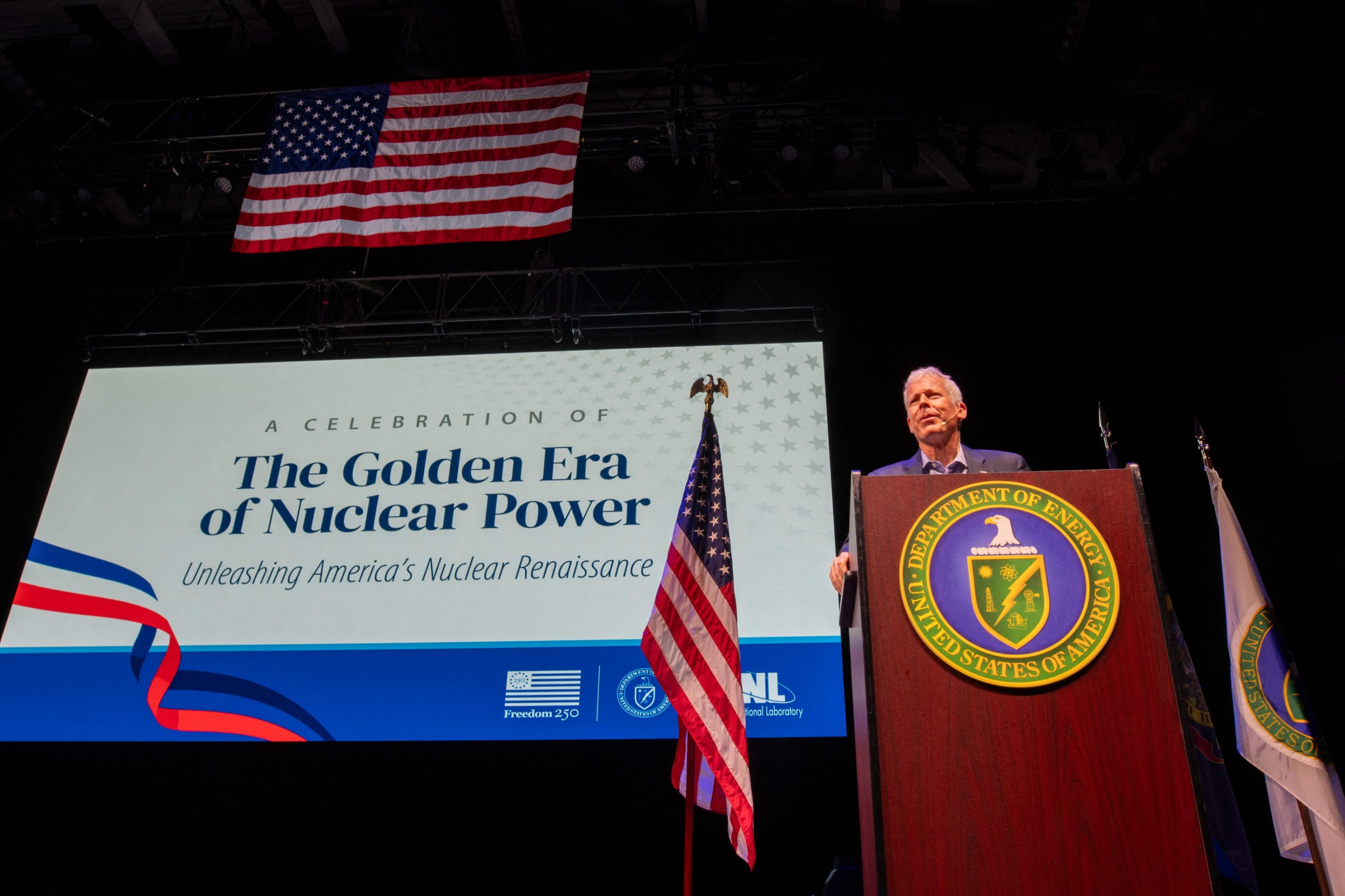
The US Department of Energy says the "peaceful" co-operation agreement will give US firms "great access" to the Saudi nuclear energy programme.
How the world covered this
Read the editorial comparison
Prose synthesis of how each outlet framed the story, with side-by-side outlet quotes and divergence notes.
15 articles from 12 sources
01

02
The BBC's Sarah Smith explains the implications of the landmark cooperation agreement between both countries.

03
The United States and Saudi Arabia announced a landmark agreement on Wednesday to launch a civilian nuclear program in the kingdom, with Washington saying the deal incorporates str...
04
President Donald Trump has reportedly approved a landmark deal to help Saudi Arabia develop a civilian nuclear program, U.S. media reported Tuesday, potentially allowing uranium en...
05
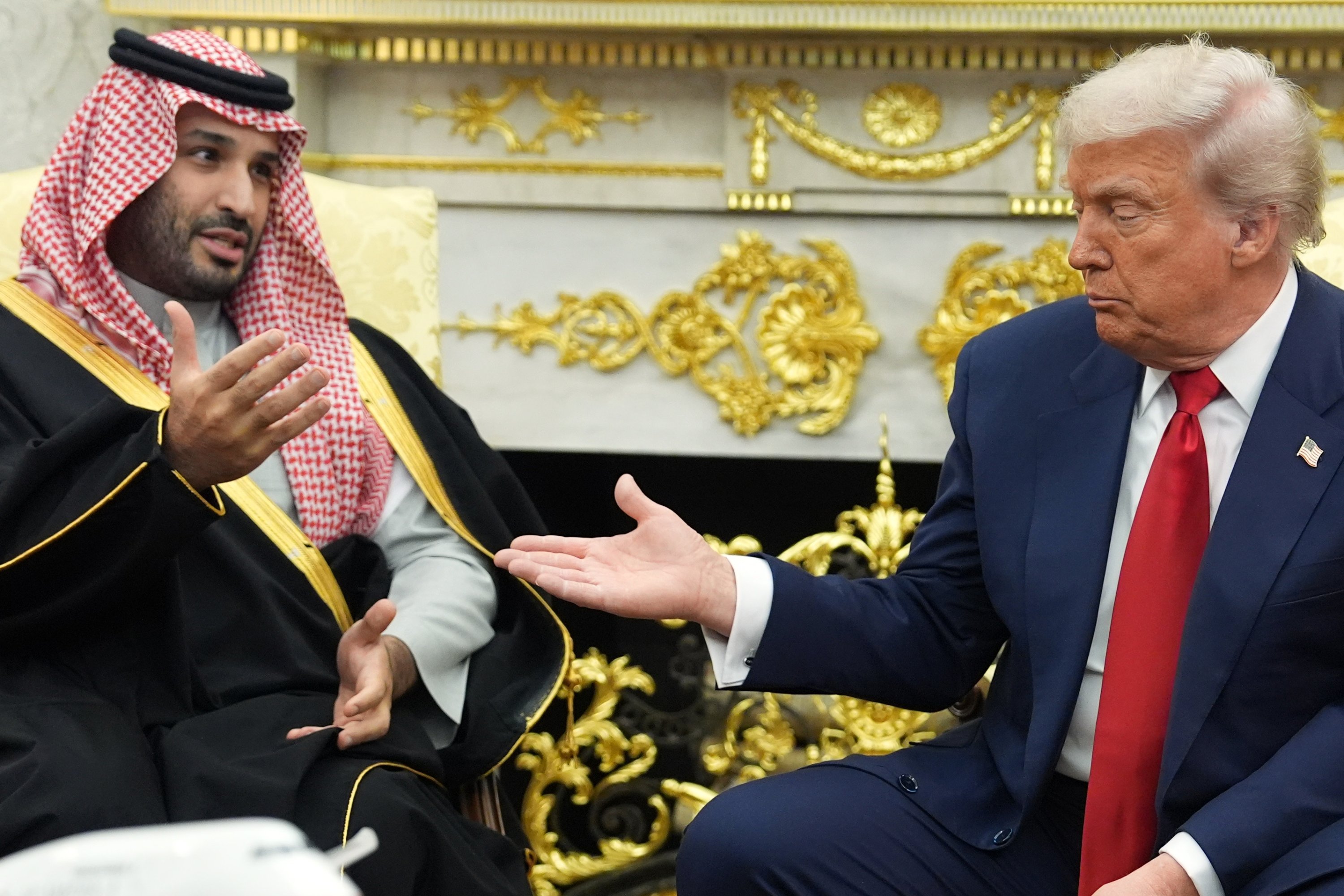
The deal is another sign of growing US-Saudi ties during US President Donald Trump's second term. The agreement, known as a 123 Agreement, would allow Saudi Arabia to build nuclear reactors using US technology.
06
The US on Wednesday announced a landmark deal with Saudi Arabia that would establish a civilian nuclear programme in the Gulf country, with Washington insisting the agreement includes safeguards against…

07
It allows the kingdom to build nuclear reactors using American technology and to enrich uranium.
08
The United States on Wednesday announced a landmark deal with Saudi Arabia that would establish a civilian nuclear programme in the Gulf country, with Washington insisting the agreement includes non-proliferation…
09
Estados Unidos y Arabia Saudí firman acuerdo para crear un programa nuclear civil con estándares de no proliferación en el país árabe
The US Ministry of Energy confirmed the news that had already been reported by local media.

10
EUA e Arábia Saudita anunciam acordo nuclear e geram preocupação de Israel com corrida armamentista
The United States announced this Wednesday (22) an agreement considered historic for nuclear cooperation for civil purposes with Saudi Arabia. American Energy Secretary Chris Wright signed the pact and a…
11
Mbs realizza il sogno atomico, la rivincita per contare ancora
The kingdom will no longer have to rely solely on oil: but uranium enrichment may not stop at civilian uses
12
Worries about security, weapons proliferation and political complications in a tinderbox region have been central concerns.
13
Trump to seek Congress approval for US-Saudi nuclear energy pact without safeguards The Times of Israel
14
"Together, these two agreements lay the legal foundation for a decades-long, multi-billion-dollar partnership that advances several priority economic and strategic objectives, including nuclear nonproliferation," says…

15
It allows the kingdom to build nuclear reactors using American technology and to enrich uranium.
AI read
What the coverage agrees on, and where it splits
This view is generated from the clustered articles, so it is best read as a map of coverage rather than a replacement for the source reporting.
Broadly agreed
- All covering sources confirm the US and Saudi Arabia announced a landmark civilian nuclear cooperation agreement.
- Multiple sources confirm the deal could allow Saudi Arabia to enrich uranium domestically, which distinguishes it from standard 123 agreements.
Contested framing
- Times of Israel frames the deal as lacking standard safeguards and posing a proliferation risk; Deutsche Welle and Dawn emphasise non-proliferation provisions are included.
- La Repubblica and Folha de S.Paulo frame the deal as potentially enabling a nuclear arms race; Daily Sabah and Straits Times frame it as a straightforward cooperation mechanism.
Still unclear
Whether the agreement includes a binding commitment from Saudi Arabia to forgo weapons-grade enrichment, and what specific Congressional approval process Trump will pursue, is not confirmed in the available summaries.
Notable omissions
Chinese and Russian state outlets are entirely silent on the deal's proliferation implications despite its direct relevance to their strategic interests in the Middle East and non-proliferation treaty frameworks.
Quality check
Understand this as a landmark cooperation framework with contested proliferation implications; the absence of mandatory weapons safeguards is the key unknown.
- Critical unknown: whether deal includes binding weapons-grade enrichment safeguards—this is the central proliferation question and sources do not confirm it
- Framing splits on proliferation risk (Times of Israel vs. Deutsche Welle/Dawn) reflect genuine ambiguity in available summaries, not reporting error
- Chinese/Russian silence on proliferation implications is noted but absence of coverage does not confirm or deny their actual positions
Review confidence: 68%
Signal strength
4/5
Narrative divergence
12
Sources compared
2
Days in coverage
→ stable
How each outlet frames this story
Divergence
4/5
Narrative Divergence
How differently the sources covering this story frame it — measured by tone, emphasis, and what each outlet chooses to highlight or omit.
1 — Sources frame the story almost identically
2 — Minor differences in tone or emphasis
3 — Noticeable differences; some outlets highlight what others omit
4 — Stark contrasts; conflicting narratives
5 — Sources tell fundamentally different stories
British
BBC frames the deal as a landmark but carefully examines its 'peaceful' framing, noting US firms gain market access and reporting on proliferation implications.
Turkish
Daily Sabah presents the deal as a sign of growing US-Saudi ties under Trump's second term, framing it as an institutional cooperation mechanism.
German
Deutsche Welle frames the deal as another indicator of deepening US-Saudi relations and notes it is known as a '123 agreement' under US law, without alarmed proliferation framing.
Pakistani
Dawn reports the deal includes non-proliferation safeguards, foregrounding that aspect and noting it establishes a multi-billion-dollar decades-long partnership.
Brazilian
Folha de S.Paulo highlights Israeli concerns about a nuclear arms race as the primary consequence of the deal, integrating humanistic consequence framing.
Israeli
Times of Israel reports Trump is seeking Congressional approval without the standard safeguards and frames this as a serious proliferation risk that could enable Saudi uranium enrichment for non-civilian purposes.
Chinese
SCMP focuses on the strategic business dimensions—US firms gaining nuclear market access in Saudi Arabia—and analyses it through the lens of US-China competition for Gulf influence.
Singaporean
Straits Times confirms the deal allows Saudi Arabia to build reactors using American technology and to enrich uranium, reporting factually without editorial framing.
Italian
La Repubblica frames the deal as Saudi Arabia's 'atomic dream' and MBS's revenge play—allowing the kingdom to reduce oil dependency while leaving open the possibility that uranium enrichment exceeds civilian uses.
Indian
The Hindu reports the deal as establishing a 'decades-long, multi-billion-dollar partnership' and covers Rubio's briefings to Asian leaders on Hormuz alongside it, maintaining non-aligned analytical distance.
Colombian
El Tiempo frames the deal as US institutional decision-making—the Energy Ministry confirmation—rather than geopolitical analysis, consistent with its civic accountability lens.