EN DIRECT, guerre en Ukraine : Volodymyr Zelensky annonce un remaniement à la tête de l’armée ukrainienne après plusieurs jours de manifestations
The demonstrators were demanding the departure of Oleksandr Syrsky, commander-in-chief of the army, which was announced Tuesday evening by the Ukrainian president. He is replaced by the popular commander of the joint forces,…
Novo chefe militar da Ucrânia promete mais ataques; protestos continuam
The new commander of the Armed Forces of Ukraine, General Mikhailo Drapatii, stated this Wednesday (22) that he will increase attacks against Russia "in all domains" and stimulate technological advancement in the service…
Ukraine's president said he discussed reinvigorating diplomacy with US envoys Witkoff and Kushner. The talk followed strikes by Ukraine's military on warehouses belonging to Wildberries — known as "Russia's Amazon."
Ukrainian President Volodymyr Zelenskyy met U.S. Ambassador to NATO Matthew Whitaker in Kyiv on Wednesday to discuss licensing the domestic production of Patriot air defense system...
Zelensky non placa la piazza, a Kiev continuano le proteste: “Fedorov torni alla Difesa”
The dismissal of army chief Syrsky is not enough, the demand to put the popular former minister back in his place is growing. Raid on Russian Amazon warehouses, Rubio-Lavrov meeting today
KYIV, July 22 - Ukrainian President Volodymyr Zelenskiy and U.S. envoys Steve Witkoff and Jared Kushner spoke on Wednesday about the prospects for pursuing more active diplomacy and moving towards an accord to end the…
From humble origins as a family business run out of an apartment near Moscow, Wildberries has grown in under two decades into Russia’s top online retailer and a key economic driver in the country. It has now become a…
В Воронежской области при атаках ВСУ погиб трехлетний ребенок
His parents and another person were injured
⚑ 1 language note
"attacks by the Ukrainian Armed Forces" — Attribution of civilian casualties to Ukrainian military without independent verification; framing characteristic of Russian state media reporting on conflict
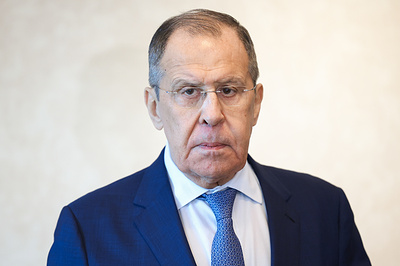
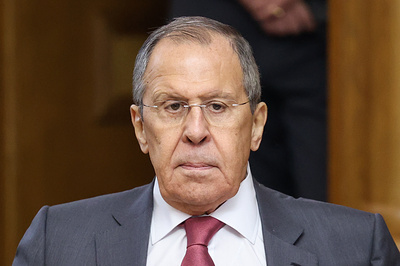
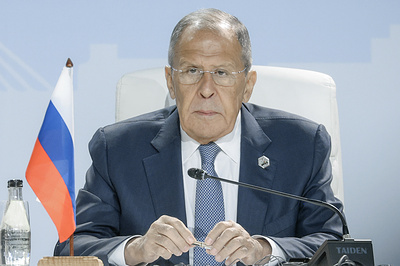
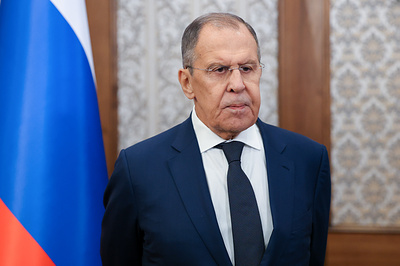
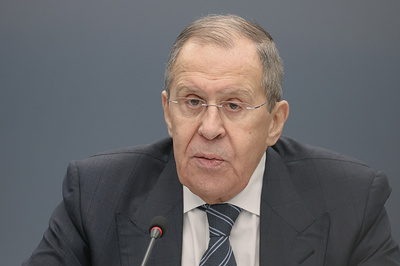
Лавров на встрече с Рубио подтвердил готовность РФ к урегулированию конфликта на Украине
⚑ 1 language note
"resolve the conflict in Ukraine" — Neutral phrasing obscures Russia's specific negotiating position; frames military operation as 'conflict' requiring resolution
Лавров в разговоре с Рубио отметил недопустимость накачки Киева вооружениями
The Russian Foreign Minister brought information to the US Secretary of State about the real state of affairs on the line of combat contact
⚑ 1 language note
"pumping Kyiv up with weapons" — Informal, delegitimizing language for Western military aid; 'real state of affairs' implies Ukrainian/Western accounts are false
MOSCOW, July 23 - One person was killed and four injured in a Ukrainian attack on the Russian-controlled peninsula of Crimea, the Russian-installed governor said.
AI read
What the coverage agrees on, and where it splits
This view is generated from the clustered articles, so it is best read as a map of coverage rather than a replacement for the source reporting.
Broadly agreed
All covering sources confirm Zelensky dismissed army chief Syrsky following protests and appointed Drapaty as replacement.
Sources confirm Lavrov and Rubio held direct contacts and discussed Ukraine, with both sides confirming readiness to continue diplomatic dialogue.
Contested framing
TASS frames Lavrov's Rubio contacts as Russia demonstrating readiness for peace while condemning continued weapons supply to Kyiv; Deutsche Welle frames the same contacts as Ukraine reinvigorating diplomacy on its own terms.
La Repubblica focuses on Drapaty's hi-tech orientation as a sign of Ukrainian military modernisation; TASS frames Ukrainian UAV attacks on Russian civilian areas—including a child killed in Voronezh—as criminal acts warranting condemnation.
Still unclear
Whether Drapaty's appointment reflects a genuine doctrinal shift toward drone warfare or is primarily a political concession to protesters, and what the Lavrov-Rubio talks produced in concrete terms, remains unclear from available summaries.
Notable omissions
Western outlets covering the military reshuffle do not report on Russian civilian casualties from Ukrainian drone strikes that TASS documents extensively; TASS does not report on the content of Zelensky's weapons discussions with US envoys.
Quality check
Military reshuffle and diplomatic contacts are confirmed facts; interpret competing framings about their meaning as provisional analysis pending concrete outcomes.
Drapaty appointment framing (modernization vs. political concession) splits editorial interpretation; actual doctrinal intent unconfirmed
Lavrov-Rubio contact substance is unconfirmed—both sides' readiness confirmed but outcomes remain unclear
Asymmetric casualty reporting noted: Western outlets omit Russian civilian deaths that TASS documents; Russian outlets omit Zelensky weapons discussions
Review confidence: 75%
Signal strength
5/5Narrative divergence
10Sources compared
2Days in coverage
↗ fracturing
How each outlet frames this story
Divergence5/5
Narrative Divergence
How differently the sources covering this story frame it — measured by tone, emphasis, and what each outlet chooses to highlight or omit.
1 — Sources frame the story almost identically
2 — Minor differences in tone or emphasis
3 — Noticeable differences; some outlets highlight what others omit
4 — Stark contrasts; conflicting narratives
5 — Sources tell fundamentally different stories
French
Le Monde covers Zelensky's army reshuffle after protests demanding Syrsky's removal, framing it through elite institutional competence analysis and the parliamentary pressure on the commander-in-chief.
Indian
The Hindu reports the Zelensky sacking factually, noting Drapaty's appointment and the continuation of protests demanding further changes, maintaining regional analytical distance.
Brazilian
Folha de S.Paulo focuses on Ukraine's new military chief's pledge to increase attacks on Russia, integrating testimony from Ukrainian writer Andrei Kurkov's upcoming appearance to humanise the conflict.
German
Deutsche Welle covers Zelensky's talks with US envoys Witkoff and Kushner about diplomacy reinvigoration, framing Ukraine's military reshuffle within a de-escalatory diplomatic lens.
Turkish
Daily Sabah reports Zelensky's discussions with the US NATO envoy about Patriot production licensing, reflecting Turkish institutional positioning in the weapons supply chain.
Italian
La Repubblica profiles incoming army chief Drapaty as a hi-tech, drone-focused commander who rose to prominence in 2014, framing the reshuffle as a generational and doctrinal shift.
Russian
TASS frames Lavrov-Rubio contacts as Russia confirming readiness to resolve the Ukraine conflict, while separately reporting Ukrainian UAV attacks on Russian regions and civilian casualties, maintaining domestic morale-building narrative.
Chinese
SCMP analyses why Ukraine's drone strikes on Russia have not triggered nuclear weapon use, framing nuclear weapons as strategically impotent in this grinding war.
Singaporean
Straits Times reports Zelensky's weapons discussions with US envoys factually, consistent with its terse facts-first approach to logistics and institutional process.
Copied!
Related coverage
More topic clusters connected by category, source overlap, or narrative signal.