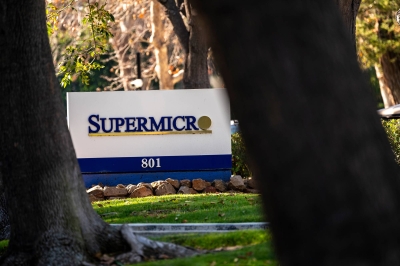
The raids mark an expansion of Taiwan's first public crackdown on artificial intelligence chip diversion after years of pressure from Washington.
How the world covered this
Read the editorial comparison
Prose synthesis of how each outlet framed the story, with side-by-side outlet quotes and divergence notes.
2 articles from 1 source
01
02
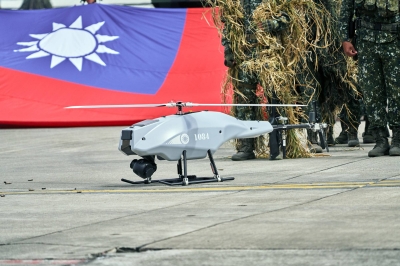
The debate is being closely watched because use of unmanned systems elsewhere has shown how the technology can be leveraged to defend against larger adversaries.
AI read
What the coverage agrees on, and where it splits
This view is generated from the clustered articles, so it is best read as a map of coverage rather than a replacement for the source reporting.
Broadly agreed
- Japan Times confirms Taiwan authorities raided Super Micro facilities as part of a widening AI chip smuggling investigation.
- Multiple sources confirm Taiwan's opposition proposed a $7.5 billion drone programme as an alternative to a stalled government defence initiative.
Contested framing
- Japan Times frames Taiwan's drone debate as a legitimate defence technology assessment; CNA's AI supply-chain framing implicitly positions Chinese tech capability development as a strategic counter-narrative to Western chip restriction efforts.
Still unclear
The specific alleged chip diversion routes and the volume of chips involved in the Super Micro investigation have not been confirmed in the available summaries.
Notable omissions
No outlet examines the US government's direct role in pressuring Taiwan to conduct the Super Micro raids, or what diplomatic consequences non-compliance would have carried.
Quality check
Raids and drone proposal are confirmed; extent of chip diversion and US involvement remain unclear.
- Super Micro raid confirmation is single-source (Japan Times)
- Taiwan opposition drone proposal ($7.5 billion) is confirmed but connection to US pressure is stated in 'Omissions' without being sourced in articles
- Specific chip diversion routes and volumes are 'not confirmed' per summaries—avoid citing numbers without finding them
- US government role is asserted as omission but presence/absence in articles is unspecified
Review confidence: 70%
Signal strength
3/5
Narrative divergence
1
Sources compared
1
Days in coverage
How each outlet frames this story
Divergence
3/5
Narrative Divergence
How differently the sources covering this story frame it — measured by tone, emphasis, and what each outlet chooses to highlight or omit.
1 — Sources frame the story almost identically
2 — Minor differences in tone or emphasis
3 — Noticeable differences; some outlets highlight what others omit
4 — Stark contrasts; conflicting narratives
5 — Sources tell fundamentally different stories
Japanese
Japan Times reports Taiwan's Super Micro raids as an expansion of the first public crackdown on AI chip diversion, treating it as a supply-chain integrity and tech competition story rather than a geopolitical flashpoint.
Japanese
Japan Times separately covers Taiwan's opposition $7.5 billion drone plan as being closely watched because of lessons from drone warfare elsewhere, treating it as a defence technology and infrastructure assessment.