Elon Musk’s SpaceX on Thursday confirmed it will begin trading on the Nasdaq exchange Friday in the biggest initial public offering in history, a blockbuster market debut that could propel the entrepreneur to…
How the world covered this
Read the editorial comparison
Prose synthesis of how each outlet framed the story, with side-by-side outlet quotes and divergence notes.
7 articles from 5 sources
01

02
Blockbuster initial public offerings from tech champions such as Anthropic and SpaceX are about to fundamentally reshape global capital markets. This wave will redirect capital flows and alter valuations across the tech…

03
(Bloomberg) -- SpaceX has made history with the biggest-ever IPO, launching it into the top ranks of the largest public companies and putting founder Elon Musk on the verge of becoming the world’s first trillionaire.

04
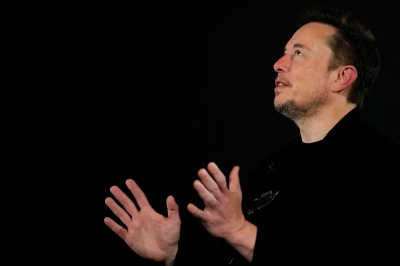
Elon Musk became a household name through Tesla and SpaceX before expanding his influence with the $44-billion acquisition of social media platform Twitter in 2022.
05
Japan and Australia are the only countries in Asia-Pacific where retail investors have direct access to the world's largest-ever IPO.
06
SpaceX, Elon Musk's rocket and AI company, presents potential for investors. But its futuristic, unproven plans also carry significant financial risks.
07
All eyes are on the hotly awaited market debut of Elon Musk’s SpaceX, which has made history with the biggest-ever initial public offering

AI read
What the coverage agrees on, and where it splits
This view is generated from the clustered articles, so it is best read as a map of coverage rather than a replacement for the source reporting.
Broadly agreed
- All covering sources confirm the SpaceX IPO is the largest in US history at $75 billion and that it makes Musk the world's first trillionaire.
- Sources agree the IPO began trading on the Nasdaq exchange on or around June 12, 2026.
Contested framing
- Deutsche Welle frames the investment as carrying significant peril given unproven futuristic plans; The National and SCMP frame it as an unambiguous landmark financial achievement and market-reshaping event.
Still unclear
The exact post-IPO valuation of SpaceX and whether Musk's trillionaire status is sustained beyond opening trading day remain unconfirmed in available summaries.
Notable omissions
No covering source addresses the political implications of Musk simultaneously serving as a government adviser and becoming the world's first trillionaire through a public offering — a potential conflict-of-interest angle entirely absent from available summaries.
Quality check
IPO facts are confirmed; potential government conflict-of-interest is completely unexamined by provided sources.
- IPO size and trillionaire claim confirmed but depends on sustained stock price; post-opening valuation stability unresolved
- Critical conflict-of-interest angle entirely absent: Musk's simultaneous government adviser role not examined
- Asian investor access framing suggests unequal market access but lacks analysis
- Deutsche Welle's 'peril' framing vs. positive framing reveals sharp interpretive divergence
Review confidence: 75%
Signal strength
2/5
Narrative divergence
5
Sources compared
1
Days in coverage
How each outlet frames this story
Divergence
2/5
Narrative Divergence
How differently the sources covering this story frame it — measured by tone, emphasis, and what each outlet chooses to highlight or omit.
1 — Sources frame the story almost identically
2 — Minor differences in tone or emphasis
3 — Noticeable differences; some outlets highlight what others omit
4 — Stark contrasts; conflicting narratives
5 — Sources tell fundamentally different stories
Chinese
SCMP frames the SpaceX IPO alongside Anthropic's as events that will 'fundamentally reshape global capital markets', analysing why blockbuster tech IPOs matter as much in China as in the US for competitive positioning.
Emirati
The National reports the $75 billion IPO as putting Musk on the 'verge of becoming the world's first trillionaire', treating it as a landmark financial achievement without critical framing.
Japanese
Japan Times reports that Japan and Australia are the only Asia-Pacific countries where retail investors have direct access to the IPO, and that locked-out Asian investors are finding alternative ways to bet on SpaceX.
German
Deutsche Welle frames the SpaceX IPO as holding both promise and peril for investors — futuristic and unproven plans alongside genuine commercial potential — reflecting its structural vulnerability analytical lens.
Irish
Irish Times covers the SpaceX IPO debut as part of a broader markets story — stocks rallying and oil hitting a two-month low on Gulf breakthrough hopes — treating it through financial market consequences.