South Korea was eliminated after missing out on a spot among the eight best third-placed teams.
How the world covered this
Read the editorial comparison
Prose synthesis of how each outlet framed the story, with side-by-side outlet quotes and divergence notes.
6 articles from 4 sources
01

02
South Korea's World Cup elimination also earned the team a rebuke from the country's president Lee Jae Myung, who pointed the finger at "incompetent people" and apologised to the nation.

03
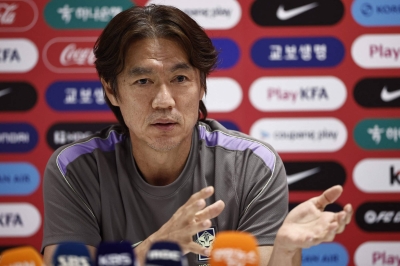
Social media posts showing shops with signs banning the South Korea coach from the premises have gone viral in the country.
04
For South Korean soccer fans, the pain of an early World Cup exit rarely ends with the final whistle. Instead, disappointment spills into days of public anger, resignations and soul-searching, as the country grapples…

05
Jesse Marsch, who was once considered a leading candidate to coach South Korea's national team, is making history with Canada at the 2026 FIFA World Cup. Canada defeated South Africa 1-0 in the Round of 32 at Los…

06
South Korea's World Cup elimination also earned the team a rebuke from the country's president Lee Jae Myung, who pointed the finger at "incompetent people" and apologised to the nation.
AI read
What the coverage agrees on, and where it splits
This view is generated from the clustered articles, so it is best read as a map of coverage rather than a replacement for the source reporting.
Broadly agreed
- South Korea was eliminated from the 2026 World Cup and the coach subsequently resigned.
- President Lee Jae Myung publicly rebuked the team and called for an investigation into the result.
Contested framing
- Korea Herald frames the public reaction as culturally deep-rooted disappointment tied to national identity; Japan Times frames it primarily as an institutional accountability failure requiring governance review.
Still unclear
The specific findings of any official investigation into the South Korean football association's management have not been announced in available summaries.
Notable omissions
No source provides the perspective of South Korean players themselves, or addresses whether the coaching structure or federation governance contributed to the poor performance.
Quality check
Presidential rebuke and resignation confirmed; investigation status and actual causes unconfirmed.
- Investigation findings not announced in available summaries; 'called for probe' does not equal investigation underway
- Players' perspective entirely absent; cannot verify if coaching/federation governance contributed or only results blamed
- Framing divergence (cultural identity vs. governance failure) reflects different analytical lenses but both assume causation
- Viral shop signs story uncorroborated in summaries; relies on Japan Times reporting of social media
Review confidence: 65%
Signal strength
2/5
Narrative divergence
4
Sources compared
2
Days in coverage
→ stable
How each outlet frames this story
Divergence
2/5
Narrative Divergence
How differently the sources covering this story frame it — measured by tone, emphasis, and what each outlet chooses to highlight or omit.
1 — Sources frame the story almost identically
2 — Minor differences in tone or emphasis
3 — Noticeable differences; some outlets highlight what others omit
4 — Stark contrasts; conflicting narratives
5 — Sources tell fundamentally different stories
British
BBC reports the South Korean coach quit and the president called for a probe into the World Cup loss, treating the event as an institutional accountability story.
South Korean
Korea Herald notes President Lee Jae Myung personally rebuked the team and called for a review of football leadership, while viral shop signs banning the coach reveal the depth of public anger.
Japanese
Japan Times covers President Lee blasting the coach and soccer leaders with viral shop signs, framing it as an institutional accountability story consistent with its corporate/institutional lens.