The victory of President Lee Jae Myung's party symbolizes the strength of Lee's popularity and highlights how the opposition People Power Party is struggling to rebuild itself.
How the world covered this
Read the editorial comparison
Prose synthesis of how each outlet framed the story, with side-by-side outlet quotes and divergence notes.
6 articles from 2 sources
01
02
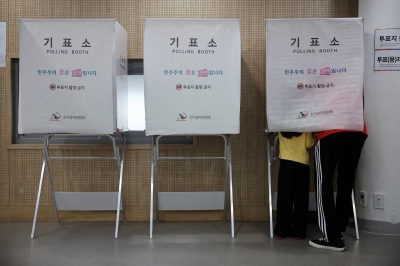
South Korean voters handed the ruling Democratic Party of Korea a decisive victory in the local elections, but kept Seoul and much of the conservative southeast out of its reach, tempering the triumph while giving the…

03
South Korea's major television networks once again set out to package Wednesday's local elections as prime-time entertainment, layering CGI animation, pop-culture parody and, for the first time on a large…

04
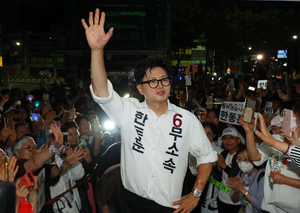
Han Dong-hoon, who ran as an independent candidate, won the National Assembly by-election in Busan's Buk-A district on Wednesday, defeating rivals from both major parties and securing his first elected office.…
05
Veteran liberal politician and former Justice Minister Choo Mi-ae, 67, shattered another political glass ceiling, becoming South Korea's first woman elected to lead a provincial or metropolitan government after…

06
Oh Se-hoon is set to become Seoul’s first five-term mayor, giving the conservative politician an unmatched chance to set the capital’s course for years beyond a single election cycle. His new term, to begin July 1, is…

AI read
What the coverage agrees on, and where it splits
This view is generated from the clustered articles, so it is best read as a map of coverage rather than a replacement for the source reporting.
Broadly agreed
- All sources confirm the Democratic Party of Korea won decisively in nationwide local elections while losing Seoul to the conservative opposition.
- Sources confirm Choo Mi-ae became South Korea's first female governor, a historic milestone.
Contested framing
- Korea Herald emphasises the election as a validation of President Lee's popularity; Japan Times focuses on the geographic split between national Democratic dominance and conservative Seoul retention as the defining feature.
Still unclear
Whether the election results will translate into legislative momentum for the governing party or whether Seoul's conservative retention will constrain national governance remains to be seen.
Notable omissions
The international implications of the election results for US-Korea alliance dynamics and Korean semiconductor industry policy are not addressed in available summaries.
Quality check
Election results are confirmed, but implications for future governance and international relations remain uncertain.
- Legislative momentum implications and Seoul conservative retention constraining power remain speculative—'remains to be seen'
- International implications for US-Korea alliance and semiconductor policy entirely absent despite geopolitical significance
- Limited source diversity: only Korean and Japanese outlets cover; no independent verification of election mechanics or fraud concerns
Review confidence: 83%
Signal strength
2/5
Narrative divergence
2
Sources compared
1
Days in coverage
How each outlet frames this story
Divergence
2/5
Narrative Divergence
How differently the sources covering this story frame it — measured by tone, emphasis, and what each outlet chooses to highlight or omit.
1 — Sources frame the story almost identically
2 — Minor differences in tone or emphasis
3 — Noticeable differences; some outlets highlight what others omit
4 — Stark contrasts; conflicting narratives
5 — Sources tell fundamentally different stories
South Korean
Korea Herald covers the Democratic Party's decisive victory symbolising President Lee Jae Myung's popularity, while noting conservatives retained Seoul; former prosecutor Han Dong-hoon's by-election win as an independent revives opposition dynamics; first female governor makes history.
Japanese
Japan Times focuses on the left's big win in nationwide votes but loss of Seoul, framing it through the strength of President Lee's popularity and the opposition's continued urban stronghold.