The former UK PM said: "I don't know what warped logic drove Putin to blow up a stationary Ukrainian locomotive on the Polish border this morning".
How the world covered this
Read the editorial comparison
Prose synthesis of how each outlet framed the story, with side-by-side outlet quotes and divergence notes.
12 articles from 12 sources
01

02
L’Ukraine dénonce une « attaque systémique » contre son réseau ferroviaire, tandis que la Pologne, membre de l’OTAN, craint une « escalade » de la part de Moscou. Un autre train, avec à son bord des personnalités…
03
KYIV/MOSCOW Sept 13 (Reuters) - A Russian drone hit a passenger train on Ukraine's border with NATO member Poland on Sunday, shortly after former British Prime Minister Boris Johnson and other European…
04
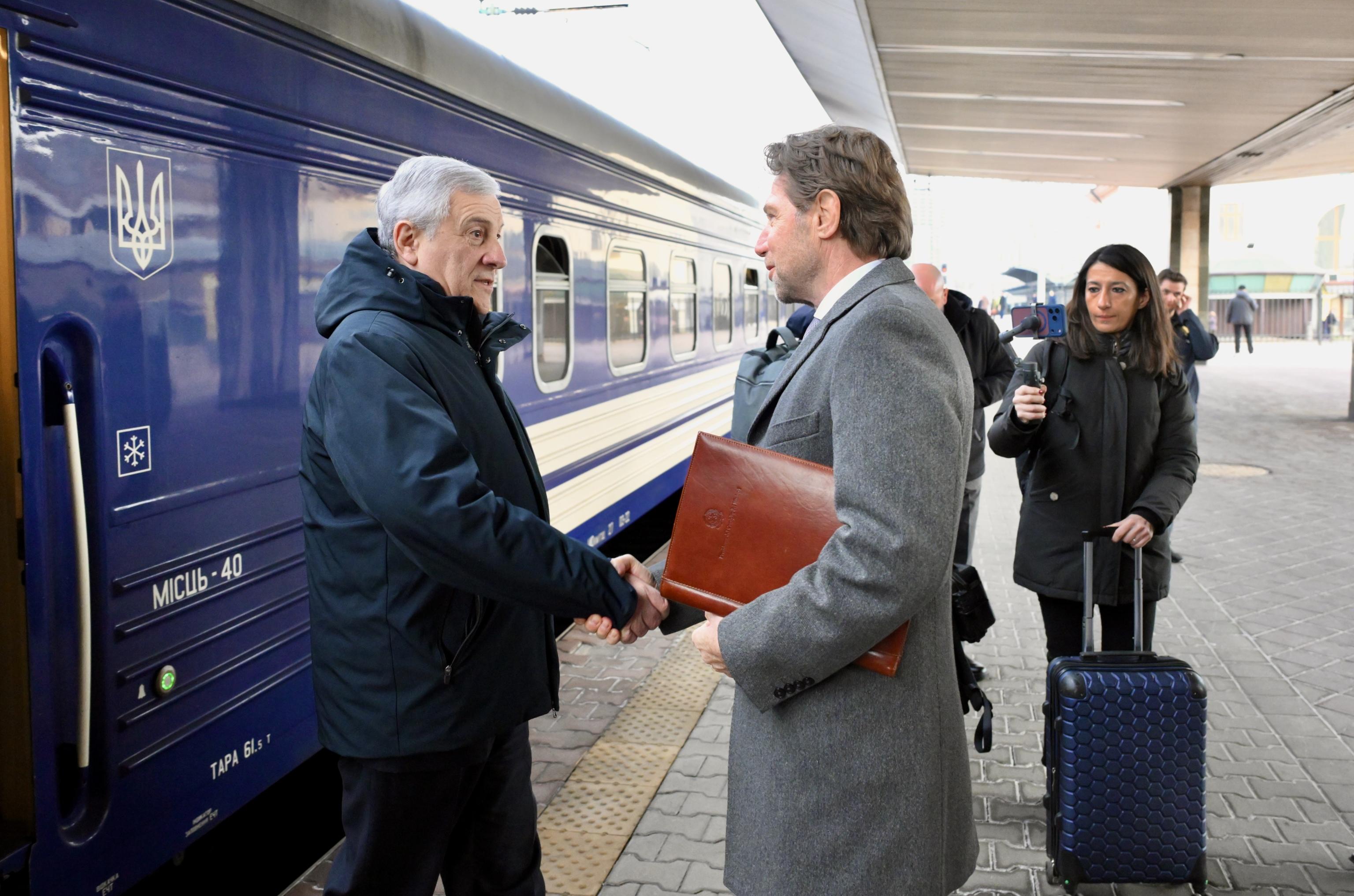
The train, on a route frequently used by foreign delegations returning from Kyiv, was attacked just 2 kilometers from the Polish border.
05
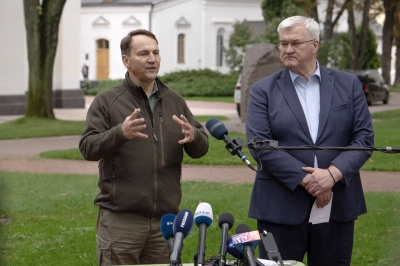
The strike hit a locomotive of a passenger train headed to Warsaw with reports that senior Western figures were at the station shortly before the attack.
06
Poland and Ukraine on Sunday denounced Russian strikes close to the Polish border, including on a Warsaw-bound train and near a frontier checkpoint – as an “escalation” in the war. Ukraine’s rail operator said former…

07
Colpita una locomotiva non lontana dal convoglio di Boris Johnson e degli ambasciatori Ue. A bordo anche il consigliere di Meloni
08
Um drone russo atingiu neste domingo (13) um trem de passageiros na fronteira da Ucrânia com a Polônia , país membro da Otan . O ataque ocorreu pouco depois de o ex-primeiro-ministro britânico Boris Johnson e outros…
09
There were no immediate reports of casualties on any of the trains; the diplomatic train carrying security advisers from several European Union states had purposely left the station at Yahodyn ahead of schedule

10
In a separate incident, a truck was also struck around 800 metres from a border crossing with Poland.
11
Ex-CIA boss was at Ukrainian station when Russian drone struck train CNN
12
If the strike was targeting current and former US and UK officials, it would represent a significant escalation.
AI read
What the coverage agrees on, and where it splits
This view is generated from the clustered articles, so it is best read as a map of coverage rather than a replacement for the source reporting.
Broadly agreed
- All covering sources confirm a Russian drone struck a passenger train on the Ukraine-Poland border shortly after Boris Johnson and EU officials departed the station.
- Multiple sources confirm no casualties were reported on the diplomatic or struck train.
- Poland and Ukraine both officially condemned the strike as a deliberate escalation targeting NATO-border infrastructure.
Contested framing
- BBC and Notes from Poland frame this as deliberate targeting of Western officials and NATO-adjacent infrastructure; TASS makes no mention of the train strike, instead reporting Ukrainian attacks on Russian border regions.
- Straits Times frames it as a potential significant escalation if officials were targeted; La Repubblica frames it as 'Putin's warning' directed at Europe.
- CNN focuses on US institutional proximity (former CIA director present); Le Monde focuses on European collective security implications for NATO.
Still unclear
Whether Russia deliberately targeted the train because of the diplomatic passengers or whether the timing was coincidental remains unconfirmed publicly.
Notable omissions
TASS omits all reporting on the train strike, instead covering Ukrainian drone strikes on Russian territory; People's Daily provides no coverage of the incident.
Quality check
Strike facts are well-sourced; intention to target officials remains speculation across all outlets.
- Deliberate targeting of Western officials remains unconfirmed; timing proximity does not establish causation.
- TASS omission is pattern-noted but doesn't undermine consensus on strike facts; use as signal of coverage gaps.
- La Repubblica's 'Putin's warning' framing is interpretive without explicit source basis.
- No confirmation whether Johnson/EU officials were actual targets versus proximity coincidence.
Review confidence: 81%
Signal strength
5/5
Narrative divergence
12
Sources compared
1
Days in coverage
How each outlet frames this story
Divergence
5/5
Narrative Divergence
How differently the sources covering this story frame it — measured by tone, emphasis, and what each outlet chooses to highlight or omit.
1 — Sources frame the story almost identically
2 — Minor differences in tone or emphasis
3 — Noticeable differences; some outlets highlight what others omit
4 — Stark contrasts; conflicting narratives
5 — Sources tell fundamentally different stories
British
BBC News foregrounds Boris Johnson's direct quote condemning Putin's 'warped logic' and frames the strike as a deliberate institutional provocation, examining whether the train was targeted because of the diplomatic passengers.
French
Le Monde frames the strike as causing 'international emotion' and highlights Polish NATO concerns about a 'systemic attack' on Ukraine's rail network, using elite institutional analysis.
Polish
Notes from Poland reports both the train strike and a separate truck strike near a border crossing, framing it as Russian escalation against Poland's borders with direct NATO security implications.
Brazilian
Folha de S.Paulo emphasizes the timing—the strike occurred shortly after European diplomats departed—framing it through humanistic consequence analysis as a targeted intimidation of diplomatic missions.
Italian
La Repubblica describes the strike as 'Putin's warning' noting an advisor to Italian PM Meloni was aboard the diplomatic train that had just passed through.
Singaporean
Straits Times frames it as a potential significant escalation if Russia was deliberately targeting former and current US and UK officials, analyzing institutional security implications.
American
CNN reports the former CIA director was at the Ukrainian station when the drone struck, framing it through US intelligence institutional accountability and proximity to American officials.
Chinese
SCMP covers Polish and Ukrainian denunciations of the strike, noting it occurred on a route frequently used by foreign delegations returning from Kyiv.
Indian
The Hindu reports the train strike occurred after Boris Johnson and other European dignitaries passed through, with no immediate casualty reports, framing it as a factual security incident.
Japanese
Yahoo Japan briefly notes Trump's demand that Ukraine halt diesel strikes, linking the train attack to broader Russia-Ukraine tensions without deep analytical framing.