The explosion took place on Sunday (August 2, 2026) when the Swat Peace Rally was in progress right across the police station in Kabal town in Swat district
How the world covered this
Read the editorial comparison
Prose synthesis of how each outlet framed the story, with side-by-side outlet quotes and divergence notes.
4 articles from 2 sources
01

02
IT is a bitter irony that terrorists struck a protest against violence in Swat on Sunday, causing at least 17 fatalities . Both policemen and civilians were martyred in the atrocity.
03
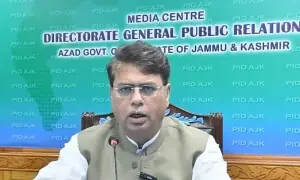
Azad Jammu and Kashmir (AJK) Information Secretary Muhammad Rashid Hanif on Monday said that seven law enforcement personnel, including those of police and Rangers, were martyred during recent unrest in the region. The…
04
What is the political relationship between Islamabad and PoK? What has India said about the Rawalakot protests?

AI read
What the coverage agrees on, and where it splits
This view is generated from the clustered articles, so it is best read as a map of coverage rather than a replacement for the source reporting.
Broadly agreed
- All covering sources confirm a suicide bombing at a Swat peace rally killed at least 17 people on August 2.
- Sources confirm AJK protests resulted in security personnel deaths and significant civil unrest.
Contested framing
- Dawn frames security personnel deaths in AJK as martyrdom while BBC News documents civilian deaths from security force responses, creating opposing victim framings.
- The Hindu frames AJK unrest through India's strategic interests in the region; Dawn frames it as a domestic governance challenge.
Still unclear
Whether the Swat bombing was claimed by TTP or another group, and whether AJK protests have been resolved or are ongoing, has not been confirmed in available summaries.
Notable omissions
No international outlet outside BBC News, Dawn, and The Hindu covers Pakistan's simultaneous security crises; the perspectives of Swat civilian survivors and AJK protesters are documented primarily through BBC's on-the-ground access.
Quality check
Multi-front security crisis is confirmed; extent of violence and underlying causes remain contested by source perspective.
- Bombing death toll and AJK unrest confirmed but TTP claim status explicitly unconfirmed
- AJK protest resolution status unspecified; whether unrest is ongoing or resolved unclear
- Victim framing opposition: security personnel deaths framed as martyrdom vs civilian deaths from security response—no independent casualty assessment
- The Hindu frames through India's strategic interests; Dawn frames as domestic governance—geopolitical framing divergence not reconciled
Review confidence: 70%
Signal strength
2/5
Narrative divergence
2
Sources compared
1
Days in coverage
How each outlet frames this story
Divergence
2/5
Narrative Divergence
How differently the sources covering this story frame it — measured by tone, emphasis, and what each outlet chooses to highlight or omit.
1 — Sources frame the story almost identically
2 — Minor differences in tone or emphasis
3 — Noticeable differences; some outlets highlight what others omit
4 — Stark contrasts; conflicting narratives
5 — Sources tell fundamentally different stories
Pakistani
Dawn frames the Swat bombing as a bitter irony of terrorists striking a protest against violence, and the AJK unrest through security personnel martyrdom framing, sustaining governance accountability analysis.
Indian
The Hindu explains the political relationship between Islamabad and Pakistan-administered Kashmir, providing context for the Rawalakot protests through a South Asian strategic lens.