The NATO alliance's European members and Canada have signaled a readiness to fully take over the financing of Ukraine's fight against Russia.
How the world covered this
Read the editorial comparison
Prose synthesis of how each outlet framed the story, with side-by-side outlet quotes and divergence notes.
11 articles from 8 sources
01
02
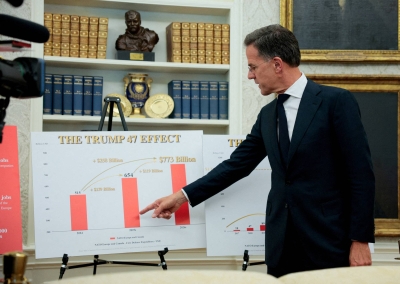
NATO members are also set to pledge $80 billion in military assistance to Ukraine for 2026 and "at least equivalent levels" of support in 2027.
03
European Nato allies have mostly replaced the assets that the US has cut from its rescue plans in case of a war in Europe, Deputy Supreme Allied Commander Europe John Stringer said in an interview. Stringer made the…

04
US President Donald Trump’s rhetoric toward NATO has prompted a rethink of defence spending in Europe.
05
In a meeting with Baltic leaders, Germany's Chancellor Friedrich Merz played up Germany's defense spending. It comes after new criticism from President Donald Trump that Germany is lagging behind other NATO allies.
06
Do the job seriously or do not bother

07
Vehicles known for frequently breaking down would have been a hindrance instead of a help
08
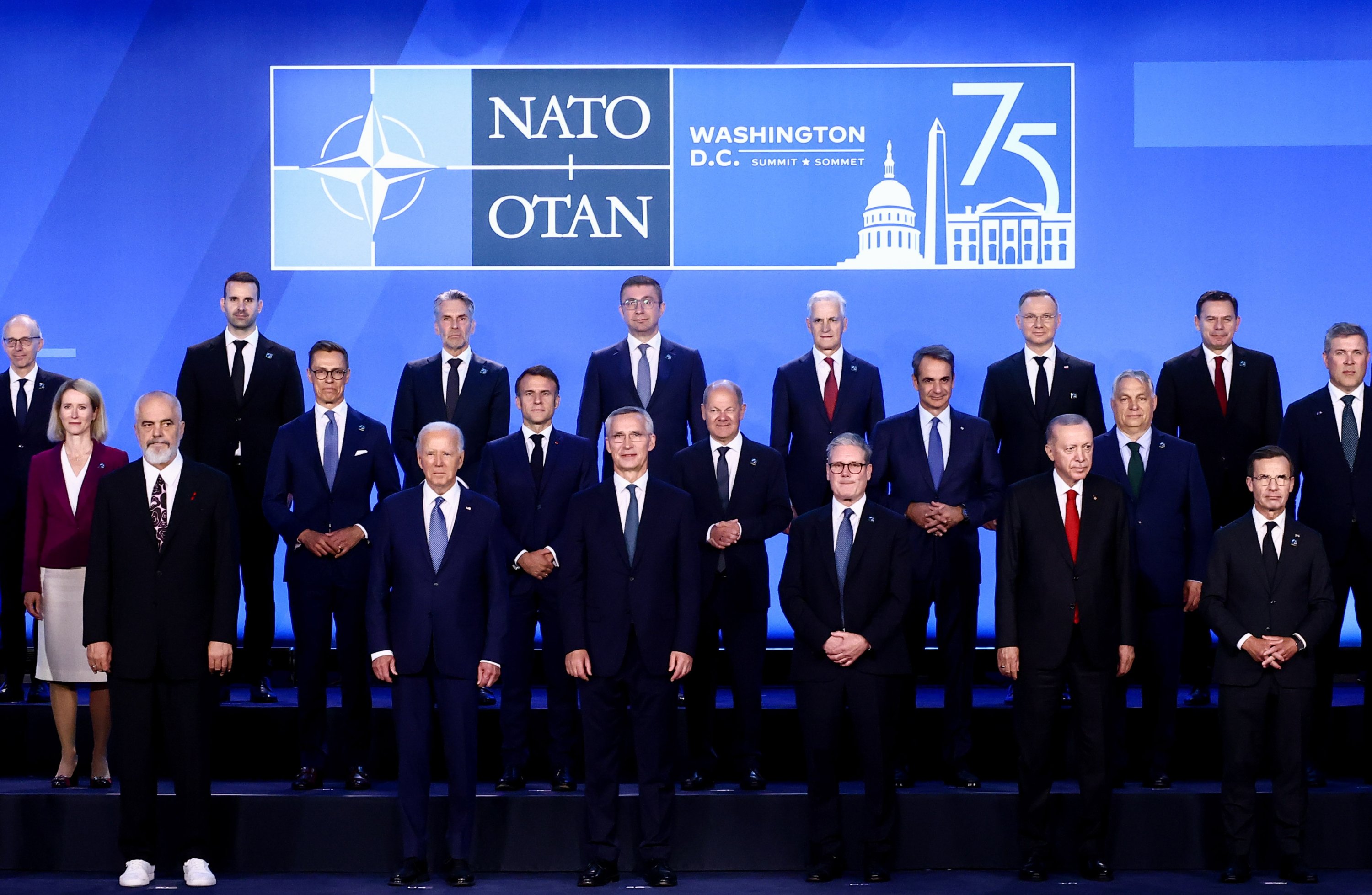
Türkiye is set to host the NATO Heads of State and Government Summit on July 7-8 in Ankara as officials highlight the country’s central role in the alliance’s security architecture...
09
Às vésperas de cúpula, Trump diz que é ridículo que EUA mantenham atual apoio à Otan
President Donald Trump said on Thursday (2) that it is ridiculous for the United States to continue its "unilateral" relationship with NATO, the Western military alliance. The statement was made less than a week before…
10
Nuovi tagli alle forze Usa in Europa, scontro Hegseth-Rubio al Pentagono
According to the Wall Street Journal, the announcement was expected in Brussels last month. The opposition of the Secretary of State backtracks
11
Do the job seriously or do not bother
AI read
What the coverage agrees on, and where it splits
This view is generated from the clustered articles, so it is best read as a map of coverage rather than a replacement for the source reporting.
Broadly agreed
- Multiple sources confirm European NATO members have substantially replaced US force reductions and are committing to long-term Ukraine financing.
- Sources broadly agree the NATO Ankara summit is scheduled for July 7–8, with Ukraine funding as the central agenda item.
Contested framing
- Deutsche Welle frames European pledges as institutional sustainability achievement; Brazilian Folha frames the same context through Trump's public dismissal of US NATO obligations — different actors foregrounded.
- Italian La Repubblica highlights internal Pentagon friction (Hegseth-Rubio clash) over European force cuts; Singaporean Straits Times reports the same net outcome — capability replacement — without noting internal US discord.
Still unclear
Whether the $80 billion Ukraine pledge represents new commitments or repackaged existing ones is not confirmed in available summaries.
Notable omissions
The perspective of Eastern European frontline states — Poland, Baltics — beyond the Polish PM's warning is largely absent from summit-focused coverage.
Quality check
European commitment to Ukraine financing is confirmed; whether this represents new money vs. reallocation remains unclear.
- $80 billion pledge unclear whether new commitments or repackaged existing funding—readers should not assume additive amount.
- Eastern European frontline states (Poland, Baltics) perspective largely absent beyond Polish PM warning—NATO expansion beneficiaries' views under-represented.
- Internal US Pentagon friction (Hegseth-Rubio) noted in La Repubblica but absent from Straits Times reporting same outcomes—significant institutional context gap.
- Trump's NATO dismissal treated as context in Folha but not centered in Deutsche Welle's 'achievement' framing—same event, opposite causation emphasis.
Review confidence: 76%
Signal strength
3/5
Narrative divergence
8
Sources compared
1
Days in coverage
How each outlet frames this story
Divergence
3/5
Narrative Divergence
How differently the sources covering this story frame it — measured by tone, emphasis, and what each outlet chooses to highlight or omit.
1 — Sources frame the story almost identically
2 — Minor differences in tone or emphasis
3 — Noticeable differences; some outlets highlight what others omit
4 — Stark contrasts; conflicting narratives
5 — Sources tell fundamentally different stories
German
Deutsche Welle covers NATO European members pledging to 'fully take over' Ukraine financing if the US steps back, framing this as institutional sustainability rather than US abandonment.
Japanese
Japan Times reports NATO leaders including Trump affirming 'ironclad commitment' to collective defence and $80 billion military assistance for Ukraine in 2026 — treating the summit as alliance-logistics confirmation.
Singaporean
Straits Times confirms Europe has replaced most US cuts based on deputy supreme commander's statement — pragmatic infrastructure capability reporting.
Turkish
Daily Sabah emphasises Türkiye hosting the NATO summit in Ankara on July 7–8 and highlights Türkiye's growing military reach across the alliance — foregrounding Turkish institutional positioning.
German
Deutsche Welle separately covers German Chancellor Merz rebuking Trump's criticism of Germany's defence spending at a Baltic leaders event, treating it as institutional credibility defence.
Irish
Irish Times publishes two pieces critical of Ireland's NATO-adjacent posture — arguing Ukraine support is 'lip service' and that offered armoured vehicles were substandard — explicit institutional accountability.
Brazilian
Folha de S.Paulo covers Trump calling US NATO support 'ridiculous' on the eve of the summit — using Trump's own framing to examine US institutional decision-making accountability.
Italian
La Repubblica reports cuts to US forces in Europe and a Hegseth-Rubio Pentagon clash over the announcement — foregrounding internal US institutional friction over the European security commitment.